Crate Training a Chihuahua and Preventing Separation Anxiety
General training information. Every dog is an individual; for health or behavior concerns, see your veterinarian.
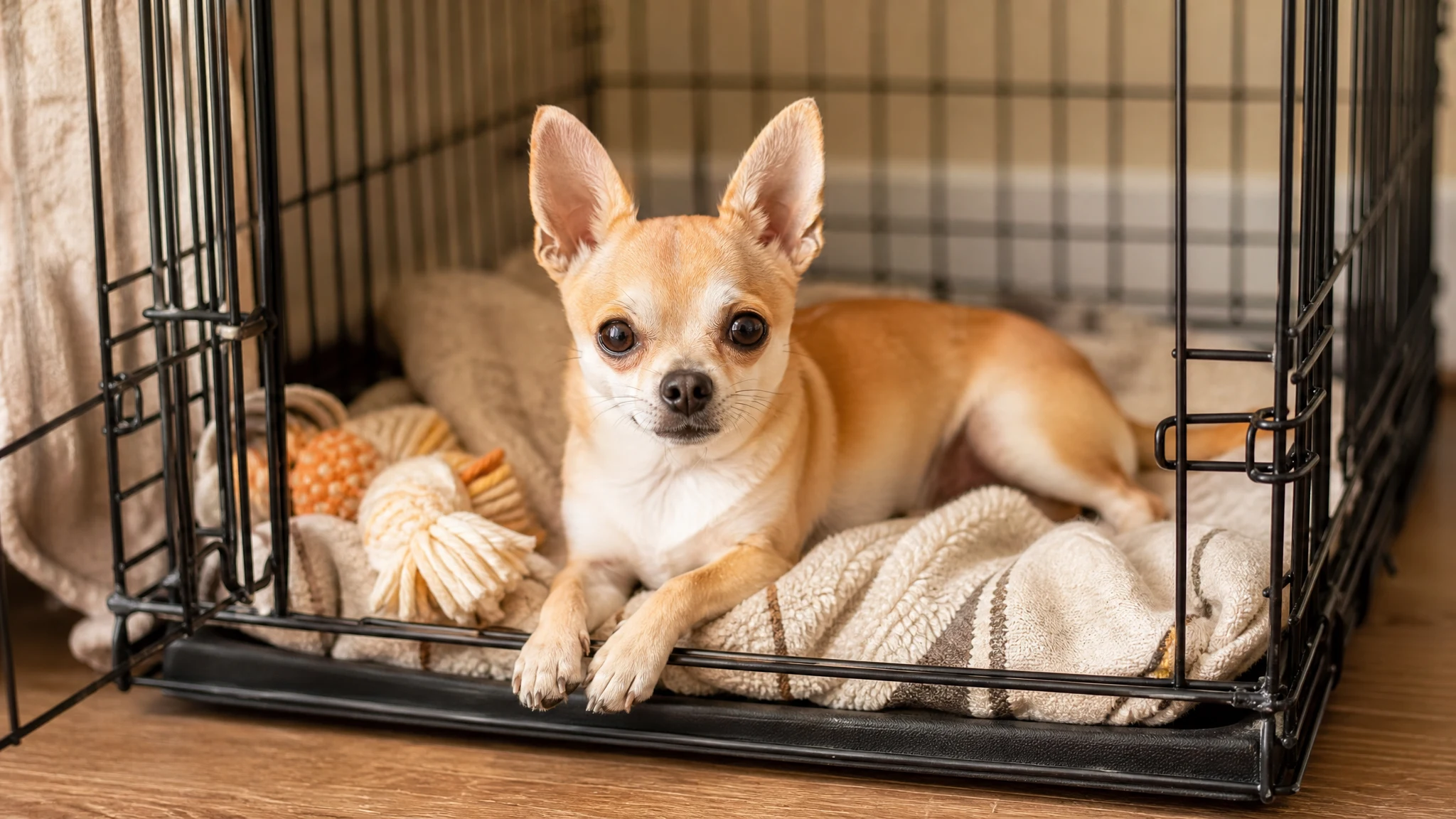
Chihuahua crate training is one of the most useful skills you can teach a small dog. A crate gives your dog a quiet den, keeps a tiny body safe when you can't watch, and makes travel and vet visits less stressful.
It also ties in closely with Chihuahua separation anxiety. The PDSA, a UK pet charity, lists difficulty being left alone as a known challenge for the breed. Teaching a calm relationship with the crate and with alone time early is one of the kindest things you can do.
This guide walks through crate training a Chihuahua step by step, using reward-based methods only. For the wider picture, see our complete guide to training a Chihuahua.
What You Need
- A correctly sized crate. More on sizing below.
- A soft, washable bed or blanket that fits the floor of the crate.
- Small, soft treats your dog loves. Pea-sized pieces work well for a toy breed.
- A safe chew or food-stuffed toy that suits a small mouth. Ask your veterinarian if you are unsure what is safe for your dog.
- A cover or light blanket for part of the crate, if your dog likes a darker den.
- A quiet spot in a room where the family spends time.
- Patience and a few short sessions each day.
Step 1: Choose the Right Crate Size for a Chihuahua
The Chihuahua Club of America breed standard says the Chihuahua's weight should not exceed 6 pounds. That makes this one of the smallest breeds, so many standard "small dog" crates are far too large.
Heights reported by sources vary, so measure your own dog instead of relying on a breed number. Check the crate maker's size guidance as well.
- Measure your dog from nose to base of tail while standing.
- Measure from the floor to the top of the head or ears.
- Pick a crate where your dog can stand up, turn around and lie down comfortably, with only a little room to spare.
A crate that is too big can make potty training harder, because a dog may use one corner as a toilet. If you have a puppy, choose a crate with a divider so you can enlarge the space as your dog grows. Check the divider is secure and has no gaps a small body could slip through.
Confirm that your adult dog's weight fits within the crate maker's stated limits. If your dog is outside the standard range, ask the breeder or your veterinarian for guidance.
Step 2: Set Up a Welcoming Den
Place the crate in a living area where people are nearby, not in a distant room. Keep it away from drafts, direct sun and heating vents. Small dogs can be sensitive to temperature, so ask your veterinarian about comfort in cold or hot weather.
Add the bed and a safe toy. Leave the door tied open so it cannot swing shut and startle your dog.
Step 3: Introduce the Crate Slowly
The goal is for your Chihuahua to walk in because good things happen there. Never push or drop your dog inside.
- Toss a treat near the crate door. Let your dog eat it and leave.
- Toss the next treat just inside the entrance, then deeper over several sessions.
- When your dog steps all the way in, praise softly and give a treat.
- Feed meals near the crate, then just inside it, then at the back.
Keep sessions to a few minutes. End while your dog still seems relaxed. If your dog backs away, go back to the last step that felt easy.
Step 4: Teach a Cue and Close the Door
Once your dog goes in eagerly, add a cue such as "bed" or "crate" just before they step in. Reward when they enter.
Now practice closing the door for one or two seconds. Treat through the bars, then open the door before your dog gets upset. Build up in small steps:
- Door closed for a few seconds while you stay close.
- Door closed while you sit nearby and read.
- Door closed while you stand up and sit down.
- Door closed while you walk out of sight and return.
Only open the door when your dog is quiet. If you open it during frantic barking, your dog may learn that barking works. If your dog is struggling, you went too fast. Make the next session easier.
Step 5: Build Alone Time Gradually
This is the step that matters most for preventing Chihuahua separation anxiety. Alone time should grow in tiny steps, so your dog never gets pushed past what feels manageable.
- Start with seconds. Give a food-stuffed toy, close the door, step out of the room and come back before your dog worries.
- Add minutes. Increase the time slowly. Mix short and slightly longer absences so they are not predictable.
- Practice leaving the house. Pick up keys, put on shoes, step outside for a moment, then return calmly.
- Keep arrivals and departures low key. A calm "see you later" and a quiet hello help your dog treat comings and goings as ordinary.
- Lengthen the time only as your dog stays relaxed. If you see stress, shorten the next session.
Before a longer absence, give your dog a chance to relieve itself and some exercise. The PDSA suggests a minimum of half an hour a day, ideally split into two walks, plus play in a secure area. A dog that has had a walk and a bit of play may settle more easily.
Avoid using the crate as punishment. It should always be a safe, pleasant place.
Step 6: Keep Consistency
The PDSA notes that Chihuahuas need consistency and respond well to reward-based methods with a firm but fair approach. In practice, that means the same cue, the same routine and the same rules from every person in the home.
The PDSA also recommends socialising from a young age. Introduce new people, sounds and places gently, with treats, so your dog builds confidence. A confident dog may cope better when left alone.
Signs of Separation Distress
Some crate protest is normal at first. Distress that is intense or does not ease is different. Watch for these signs when you leave:
- Barking, howling or whining that continues for long stretches
- Pacing, panting or trembling
- Refusing food or treats while you are gone
- Toileting indoors in a dog that is otherwise reliable
- Scratching or chewing at the crate door or at doors and furniture
- Drooling or visible panic as you get ready to leave
A phone or pet camera can help you see what happens when you are out. If you notice these signs, go back to shorter absences and keep the crate positive. A tiny dog can hurt itself on crate bars, so never leave a distressed dog to "cry it out".
Hill's Pet notes that Chihuahuas may be more prone to barking than some larger dogs, so some noise does not always mean anxiety. Look at the whole picture: body language, eating, and how quickly your dog settles.
When to See a Veterinarian
Talk to your veterinarian if your dog shows strong distress signs, injures itself trying to escape, or stops eating. Sudden changes in toilet habits, panting, shaking or restlessness can also have medical causes, and only a vet can tell the difference.
The PDSA lists several health conditions seen in the breed, including luxating patellas, heart disease, tracheal collapse and dental problems. Discomfort or pain may make a dog restless or reluctant to settle. Your vet can check for these and discuss whether a referral to a qualified behavior professional makes sense.
Do not give any medication or supplement for anxiety unless your veterinarian prescribes or recommends it.
Common Mistakes to Avoid
- Using a crate that is too large. It can slow potty training and feel less like a den.
- Moving too fast. Jumping to hours alone before your dog is ready can set training back.
- Letting out a barking dog. It teaches that noise opens the door.
- Using the crate for punishment. This can create fear of the very place you want your dog to enjoy.
- Long stretches in the crate. Dogs need exercise, company and toilet breaks.
- Making big goodbyes. Dramatic farewells can raise excitement and worry.
- Using harsh methods. The American Veterinary Society of Animal Behavior supports reward-based training. Avoid shock, prong or choke collars and any dominance-based techniques.
What Results to Expect
Many dogs can learn to accept and even enjoy a crate with steady, positive practice. Progress varies from dog to dog, and some Chihuahuas take longer than others. Your dog may relax more quickly if you keep sessions short and rewarding.
With gradual alone-time practice, you may see less distress when you leave, though results are not certain. Some dogs need extra support from a veterinarian or a qualified behavior professional. If you feel stuck, that is a good time to ask for help.
Quick Recap
- Choose a snug crate sized to your dog's own measurements.
- Place it in a calm family area with a soft bed.
- Introduce it with treats and an open door.
- Add a cue, then short door closures.
- Build alone time in small steps.
- Stay consistent and socialise gently.
- Watch for distress and call your veterinarian when needed.