Leash Training a Chihuahua: Pulling, Lunging and Loose-Leash Walking
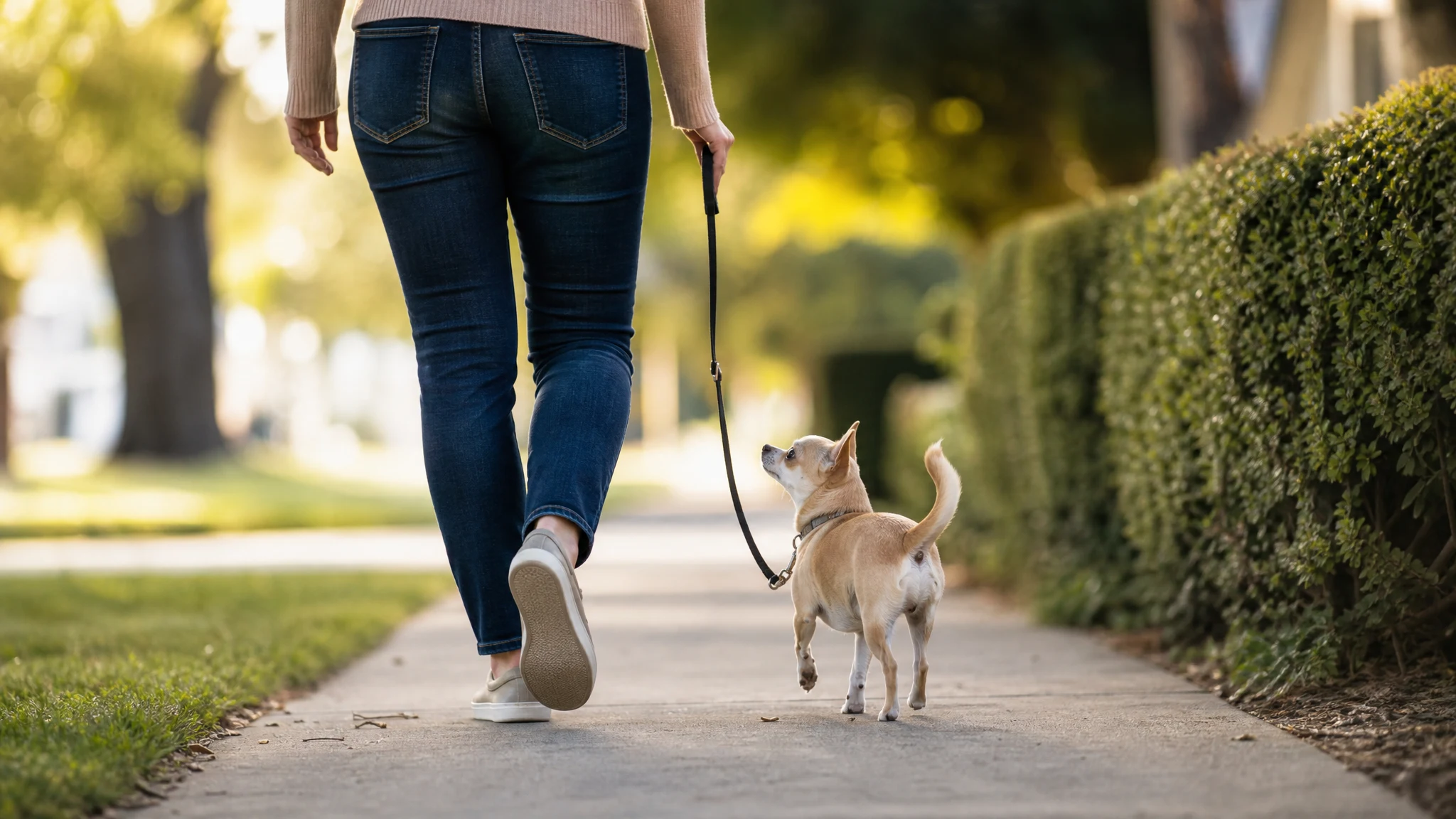
General training information. Every dog is an individual; for health or behavior concerns, see your veterinarian.
A Chihuahua on a leash can look like a tiny sled dog. Tugging forward, choking on the collar, spinning at the end of the line. Or it can look like a tiny bouncer, barking and lunging at every dog and stranger who passes.
Both problems are common, and both are workable. This guide covers how to leash train a Chihuahua with reward-based methods, from the gear to the daily practice. It also covers what to do when your dog lunges at triggers. For the wider picture, see our complete guide to training a Chihuahua.
Why Chihuahuas Pull and Lunge
Pulling is not stubbornness for its own sake. Dogs walk faster than people, and the world outside is full of smells, sights and sounds. Forward motion is rewarding, so a dog who pulls and gets where they want to go learns to keep pulling.
The breed adds some of its own flavor. The Chihuahua Club of America breed standard describes the temperament as alert, with terrier-like attitudes of self importance, confidence and self-reliance. Hill's Pet describes the breed as active and likes to be kept occupied, despite being a lap dog. An alert, confident, busy little dog will often have strong opinions about where the walk should go.
Lunging and barking at triggers have a related source. Hill's notes that Chihuahuas may be more prone to barking than some larger dogs, and both Hill's and the PDSA, a UK pet charity, mention a reputation for snapping at strangers or small children. The PDSA also lists difficulty being left alone as a known challenge. A dog who feels nervous or overexcited on a walk may bark and lunge to make the scary or exciting thing go away or come closer.
Individual dogs vary a lot, so watch your own dog. Does yours pull toward things, or lunge at things and bark? Pulling toward is usually excitement. Lunging with barking is often a mix of excitement and worry. The training plan below works for both, with extra steps for triggers.
Materials You Will Need
- A flat collar or a well-fitted harness. A front-clip harness is a popular choice for pullers because it gently turns the dog sideways when they surge ahead. Make sure it fits a tiny frame and cannot slip off over the shoulders.
- A light 4 to 6 foot leash. Heavy leashes weigh on a very small dog. Skip retractable leashes while training, because they teach the dog that pulling extends the line.
- Small, soft treats. Pea-sized or smaller. Use something your dog finds exciting, and count the treats toward the day's food so walks do not cause weight gain.
- A treat pouch so rewards are quick to reach.
- A quiet starting place, such as a hallway, a fenced yard or a calm driveway.
What not to use
Do not use shock, prong or choke collars. The American Veterinary Society of Animal Behavior (AVSAB) supports humane, reward-based training, and these tools rely on pain or discomfort. They can also make fearful dogs more reactive. Jerking the leash is not needed either.
Health matters when picking gear. The PDSA lists tracheal collapse, luxating patellas and eye problems among the conditions seen in the breed. If your dog coughs or honks on the leash, or you are unsure whether a collar or harness suits them, ask your veterinarian before you buy anything.
How to Leash Train a Chihuahua: Step by Step
Step 1: Get comfortable with the gear
Put the collar or harness on indoors, feed a few treats, and take it off again. Repeat over several short sessions. Then clip on the leash and let your dog drag it around while you play or feed treats. The goal is that gear predicts good things, not that it means the fun is over.
Step 2: Teach your dog that your side is the best place
Stand still in a quiet room with treats in your hand. When your dog is near your leg, say a marker word such as "yes" and give a treat right at your side. Add a step. Mark and treat again if your dog stays with you.
For a very small dog, drop the treat low near your shoe or hold it down by your knee so they are not craning upward. Keep sessions to two or three minutes.
Step 3: Practice walking a few steps indoors
Walk three or four steps with your dog beside you, marking and rewarding every step or two while the leash hangs loose. Gradually ask for more steps between treats. Change directions often. If your dog moves ahead and the leash tightens, stop, wait for them to return, then mark and reward.
Step 4: Make pulling stop the walk
This is the heart of loose-leash walking. When the leash goes tight, you stop moving forward. No yanking, no scolding. The moment your dog turns back or the leash loosens, say "yes" and reward at your side, then walk on.
Your dog learns two simple rules: a tight leash means we stop, a loose leash means we go. Stay consistent. The PDSA notes that Chihuahuas need consistency and respond to reward-based methods with a firm but fair approach. Firm here means clear and predictable, never rough.
Step 5: Take it to the yard, then the street
Move to a low-distraction outdoor spot. Expect your dog to be much less focused at first, because everything outside is more interesting than you. Go back to rewarding often, even every step. Slowly raise the difficulty with a longer walk, a busier street or a more interesting smell.
Step 6: Give sniffing a job
Constant heel-style walking is not the goal. Pick moments to say a release cue such as "go sniff" and let your dog explore on a loose leash. Sniff breaks are a reward your dog actually wants, so use them to pay for good walking. This also suits an active dog who likes to be kept occupied.
Loose-Leash Games to Practice
Short games are easier on both of you than a long, frustrating walk. Try these.
- Follow me. Walk in a zigzag path or a circle. Reward your dog each time they catch up and stay near you.
- Treat scatter. After a stretch of good walking, toss a few treats on the ground and say "find it." This resets excitement and lets your dog use their nose.
- U-turn. When your dog starts to pull, say a cheerful cue, turn around and walk the other way. Reward when they catch up. It teaches them to keep an eye on you.
- Stop and sit. Pause every so often. If your dog offers a sit, mark and reward. Over time they begin to pause when you pause.
- Pace changes. Walk slowly, then quickly, then slowly again. Reward your dog for matching you.
Dealing With Lunging at Triggers
Triggers might be other dogs, strangers, children, bikes or skateboards. The key is distance. A dog who is too close to a trigger cannot learn, so start far enough away that your dog notices the trigger but can still take a treat.
- Find your dog's threshold distance. This is the spot where your dog sees the trigger but stays calm enough to eat.
- Mark and treat when they notice the trigger. Say "yes" the moment they look, then feed. The trigger starts to predict treats instead of panic.
- Add distance if needed. If your dog starts to stiffen, bark or lunge, calmly turn and walk away. You are not failing. You started too close.
- Close the gap gradually over many sessions. Move a few steps closer only when your dog stays relaxed.
- Have an exit plan. Be ready to step behind a parked car, turn around or cross the street.
With a small dog, there is a temptation to scoop them up at the first sign of a trigger. Sometimes picking up your dog is the right safety call, but if it happens every time, the dog may never learn to handle the situation. Balance safety with practice, and always keep other dogs and strangers from rushing your dog.
Socialization matters too. The PDSA recommends socializing Chihuahuas from a young age. Pair new people, places and sounds with treats and calm, short exposures, and never force an interaction. If your dog has a history of snapping or bites, or lunging is intense, a qualified trainer who uses reward-based methods can help. Check their methods before you hire them, and ask your veterinarian to rule out pain or other medical causes for sudden behavior changes.
Tips for Better Walks
- Exercise first. The PDSA suggests at least half an hour of exercise a day for the breed, ideally split into two walks, plus play in a secure area. A dog with some energy burned off, or who has had a game at home, may find it easier to focus.
- Keep training sessions short. Five minutes of good practice beats twenty minutes of frustration.
- Pay well, and pay fast. Use higher-value treats near distractions.
- Keep the leash loose and your hands quiet. Tension on the line can make reactive dogs more nervous.
- Watch the weather. Small dogs may find hot pavement or cold air hard going. Ask your veterinarian what is safe for your dog.
- Get the whole household on the same page. If one person lets the dog pull and another does not, progress is slower.
Common Mistakes to Avoid
- Yanking or "popping" the leash. It can hurt a small dog's neck and teaches nothing useful.
- Using punishment-based tools. Shock, prong and choke collars are not part of humane training.
- Letting pulling work some of the time. If pulling gets your dog to the lamp post even once in a while, they will keep trying.
- Going too fast. Jumping to a busy sidewalk before the skills are solid is the most common reason for setbacks.
- Forgetting rewards. Stop paying too soon, and the behavior fades.
- Scolding barking or lunging. Fear or excitement is the cause, and punishment can make both worse.
- Treating the dog as a challenger. You are teaching a skill, not winning a contest. Dominance methods are not recommended by the AVSAB.
What Results to Expect
Every dog learns at their own pace. Many dogs begin to walk more calmly within a few weeks of daily practice, and some take longer, especially if lunging or fear is involved. Progress is rarely a straight line. A good week can be followed by a rough one when something new shows up on your route.
If you stay consistent, reward generously and build distractions slowly, you may see less pulling and an easier time with triggers over time. Results cannot be promised, and a dog with strong reactivity may need professional support. Celebrate small wins, like a few loose-leash steps past a mailbox or a glance back at you when another dog appears.
Final Thoughts
Chihuahua leash training comes down to a few ideas: use comfortable gear, reward the position you want, stop when the leash tightens, and keep your distance from triggers while your dog learns. A confident, alert little dog can become a pleasant walking partner with patient, humane practice. Stay kind and consistent, and keep the walks fun for both of you.