Socializing a Chihuahua With Kids, Dogs and Strangers
General training information. Every dog is an individual; for health or behavior concerns, see your veterinarian.
Chihuahua socialization is one of the most useful things you can do for a small dog with big opinions. The breed is tiny, but it has plenty of confidence. The Chihuahua Club of America breed standard describes the temperament as alert, with terrier-like attitudes of self importance, confidence and self-reliance. That is a lot of personality in a dog that, per the same standard, should not exceed 6 pounds.
Confidence plus a fragile body is why early, careful exposure matters. This guide walks you through a calm, reward-based plan for children, other dogs and strangers. Individual dogs vary, so treat the steps as a framework and adjust to the dog in front of you.
What Socialization Actually Means
Socialization is not the same as letting everyone pet your dog. It means helping your Chihuahua learn that new people, dogs and situations are safe and predictable. The goal is a relaxed dog, not a dog who tolerates things while stressed.
PDSA, a UK pet charity, advises socializing Chihuahuas from a young age and being consistent. Both ideas shape the plan below. Ask your veterinarian when your puppy's vaccinations allow outings and meetings with unfamiliar dogs.
What You Need Before You Start
- Small, soft treats your dog loves, cut into tiny pieces
- A well-fitted harness and a standard leash
- A playpen, baby gate or crate for safe breaks
- A raised spot, such as a couch or chair, where your dog can retreat from children
- A quiet room for breaks
- A few patient, calm friends and neighbors willing to follow your rules
- A notebook to track what your dog finds easy and what worries them
If you are still building basic skills like sit, come and settle, read our complete guide to training a Chihuahua first or alongside this one. Those cues give you tools in tricky moments.
Know the Challenges Going In
Being honest about the breed makes the plan easier. PDSA lists snapping at strangers or small children, barking and difficulty being left alone among the known challenges. Hill's Pet says Chihuahuas may be more prone to barking than some larger dogs. Hill's also says they can be good family pets when treated respectfully, but have a reputation for snapping at strangers or small children.
So if you wonder, "Are Chihuahuas good with kids?", the fair answer is that it depends on how the dog is raised and how the children behave. Respectful handling matters a great deal. A dog this small can be hurt by a hug that a bigger dog would shrug off.
Step 1: Build a Calm Base at Home
Before you introduce anyone, make sure your dog has a safe spot and knows it. Choose a bed or crate and feed treats there. Let your Chihuahua go there any time without being bothered.
Practice a simple settle on that bed. Reward your dog for lying down while normal household activity goes on. A dog who can relax at home is better prepared for the rest.
Step 2: Introduce Strangers One at a Time
Strangers are often the hardest part for this breed, given the snapping and barking noted above. Go slowly.
- Start at a distance. Let your dog see a calm person from far enough away that your dog stays relaxed. Reward calm looks and quiet.
- Let your dog choose. Ask visitors to ignore your dog at first, with no reaching, no bending over and no direct staring.
- Pair people with treats. When a visitor is in the room and your dog stays calm, give a treat. Visitors can toss treats on the floor rather than hand them over.
- Allow touch only on invitation. If your dog walks over, a visitor can offer a brief pet on the chest or shoulder. Stop if your dog moves away.
- Keep sessions short. A few minutes is plenty. End while your dog is still doing well.
Do not pick your dog up to "save" them from a stranger unless you must. Being held up high can make some small dogs more reactive, and it teaches them that barking works.
Step 3: Introduce Children With Supervision
This is where an adult needs to stay involved at all times. Because of the breed's small size and its reputation for snapping at small children, never leave a young child alone with a Chihuahua.
Teach the children first
Practice with the kids before they meet the dog. Show them how to:
- Stay calm and use quiet voices
- Sit on the floor rather than hovering over the dog
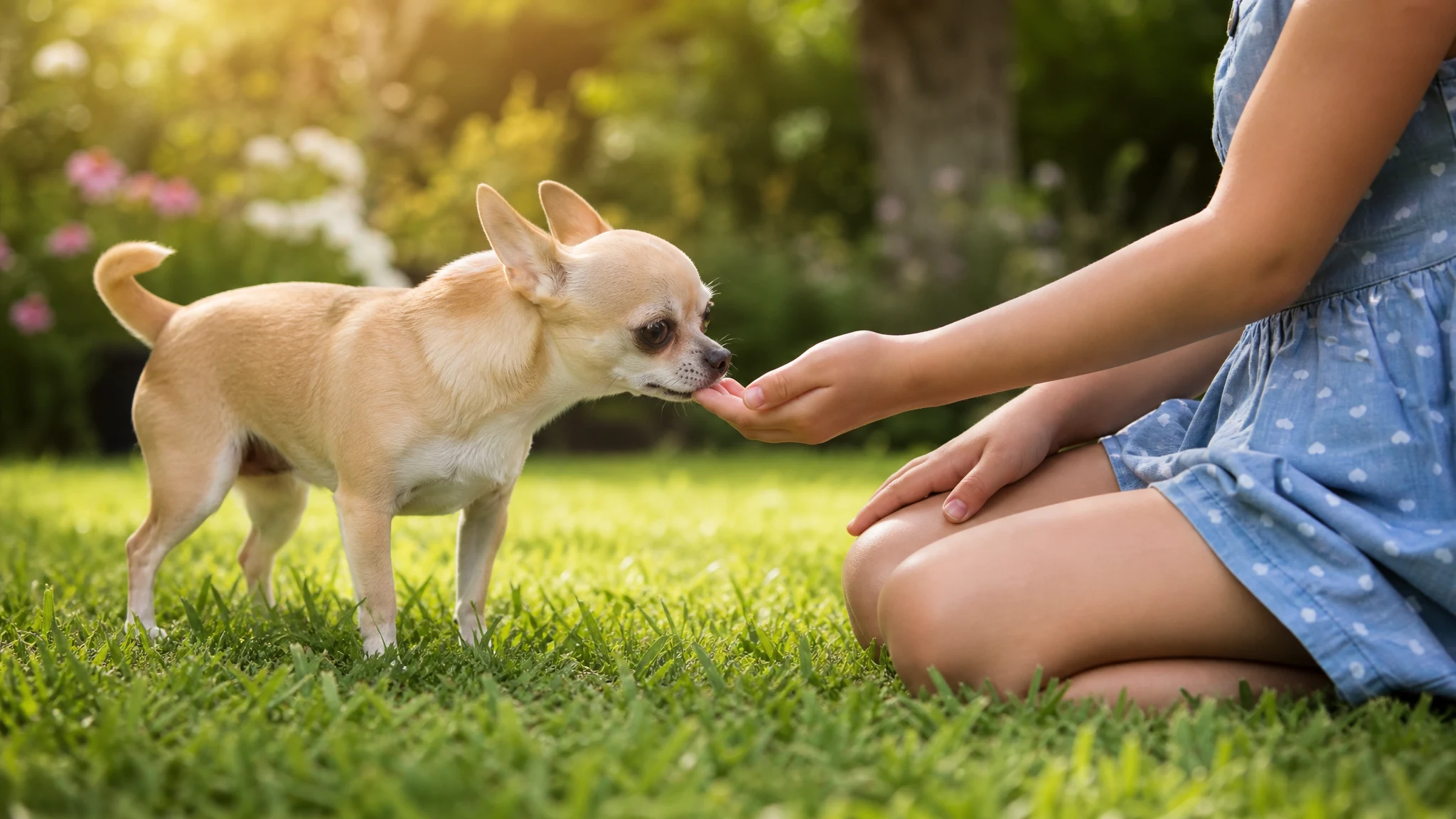
- Offer a closed hand to sniff and let the dog decide whether to come closer
- Pet gently on the chest or shoulder, not on the head or face
- Leave the dog alone when it is eating, sleeping or in its bed
Many puppies have a molera, a soft spot on top of the head. The Chihuahua Club of America says its presence does not mean a medical problem, but gentle handling around the head is still wise. Questions about your own dog's head or health belong with your veterinarian.
Run short, structured sessions
- Have the child sit on the floor or couch with an adult beside them.
- Give the child a few treats to drop near the dog, so the child becomes a source of good things.
- Let your Chihuahua approach and leave freely.
- Watch for stress signs: lip licking, yawning, turning away, a tucked tail, freezing or trembling. End the session if you see them.
- Give your dog a break in the quiet room before things get tense.
Children should not carry the dog around. Teach them to pet the dog while sitting, and ask an adult to lift the dog if needed. Drops and squeezes are a real risk for a dog this size.
Step 4: Introduce Other Dogs Carefully
The sources available do not give a rating for how Chihuahuas get along with other dogs, so check with the Chihuahua Club of America or your veterinarian if you want breed-specific guidance. What matters most is the individual dog and the partner you choose. A Chihuahua with other dogs can do well when the match is calm and the size difference is managed.
- Pick a good partner. Choose a friendly, well-mannered, vaccinated dog. Avoid rowdy dogs and dog parks to start.
- Meet in neutral space. Walk side by side at a comfortable distance, with both dogs on leash. Parallel walking lets them get used to each other without pressure.
- Close the gap slowly. If both dogs look loose and relaxed, let them move closer. Keep the leash loose and greetings brief.
- Interrupt early. Call your dog away after a few seconds, reward, and repeat. Short, happy meetings build trust.
- Manage size. A big dog's play can injure a tiny dog by accident. Supervise closely and end play that gets too rough.
Do not force greetings. If your dog stiffens, growls or hides, increase the distance and go back to a stage that felt easy.
Step 5: Add Variety Over Time
Once your dog is comfortable with the basics, widen the circle. Visit quiet places, meet different kinds of people, and hear everyday noises at low volume. Keep your dog's energy and exercise in mind. Hill's describes the breed as active and liking to be kept occupied despite being a lap dog, and PDSA suggests at least half an hour of exercise a day, ideally split into two walks, plus play in a secure area. A dog who has had a walk and some play is usually better able to cope with new things.
Tips for Better Sessions
- Reward calm, not just contact. Pay your dog for relaxed behavior near the thing that used to worry them.
- Keep it short. Several brief, positive sessions beat one long one.
- Be consistent. PDSA notes the breed needs consistency. Everyone in the house should use the same rules.
- Use a firm but fair approach. PDSA says Chihuahuas respond to reward-based methods used this way. That means clear rules and calm follow-through, never fear or force.
- Practice alone time too. Since difficulty being left alone is a known challenge, build short, calm separations into the routine.
- Watch body language. Learn your dog's early warning signs so you can step in before a snap.
Common Mistakes to Avoid
- Flooding. Throwing your dog into a crowd or a dog park does not teach confidence. It can make fear worse.
- Letting strangers grab. Say no politely. You are your dog's advocate.
- Punishing growls. A growl is a warning. Punishing it can teach a dog to skip the warning and go straight to a bite.
- Using harsh tools or methods. The American Veterinary Society of Animal Behavior (AVSAB) supports humane, reward-based training. Avoid shock, prong or choke collars, alpha rolls, scruffing and dominance methods. They risk fear and aggression.
- Carrying the dog everywhere. Constant carrying can stop your dog from learning to handle the world on their own four feet.
- Leaving children unsupervised. Even a gentle child and a friendly dog need an adult nearby.
- Skipping breaks. A tired or overwhelmed dog is more likely to react.
What Results to Expect
With steady, positive practice, many Chihuahuas become calmer around visitors, more comfortable with respectful children and more relaxed on walks. Progress often comes in small steps, and some dogs may stay cautious in certain situations. Results vary with the dog's background, age and personality, and nothing here can promise a particular outcome.
If your dog snaps, lunges or seems fearful despite your efforts, talk to your veterinarian first, since pain or illness can change behavior. They can also point you to a qualified, reward-based behavior professional. Do not try to diagnose or treat a problem on your own.
Final Thoughts
Socialization with a Chihuahua is about safety and trust. Go slowly, protect your dog's small body, and teach children how to behave around them. A little patience goes a long way with a dog who has this much character.