 Chihuahua
Ordinary advice says to leave a guarding dog alone, or to snatch the item away and move on. Neither works well for a Chihuahua. The trade-based rules are the same ones every dog needs, but a toy-sized dog who lives on laps and in arms changes where and how you practice them.
Guarding in this breed also reaches past the food bowl. Many owners describe Chihuahuas who guard a lap, a sofa spot or a favorite person. Handled badly, a stiff look becomes a snap. Handled well, you get a relaxed dog who lets you near their things.
This guide covers resource guarding behavior, from the belief that only big dogs do it to the one trade you can practice today, with each common myth checked against what we know about the breed.
Resource Guarding Behavior Is Not Only a Big-Dog Problem
The belief: guarding is a big-dog issue, and a dog who fits in a tote bag can't do much with it. This one needs settling first, because it decides whether you ever train.
Guarding is a behavior, not a size. The signs of food guarding look the same on a Chihuahua as on a Labrador: standing stiffly over the bowl, gulping food, freezing, staring, growling, snapping. The motive is usually the same too. Reasons differ from dog to dog, yet guarding is typically based in anxiety.
Many small-dog owners never work on food or toy guarding, even though the same rules apply. Size explains why. A tiny dog's growl is easy to step around, and a small body is easy to scoop up and carry off.
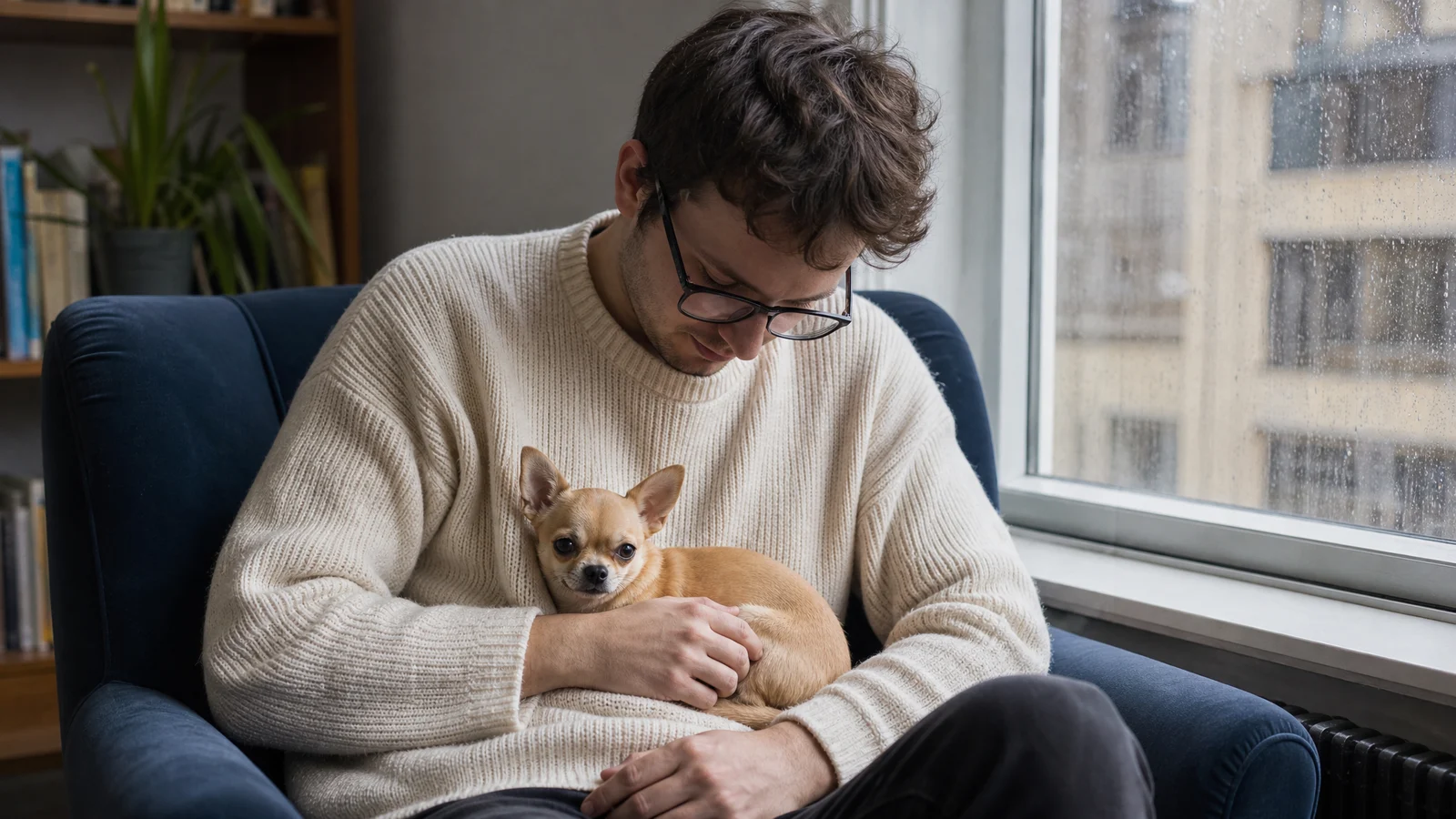
The breed adds a twist. Chihuahuas spend much of the day in arms and on laps, so what they guard is often a person or a resting spot rather than a bowl. Small dogs who feel threatened also tend to put on surprisingly big displays.
Verdict: busted. Treat a Chihuahua's stiff, frozen posture over a chew exactly as you would a large dog's.
Chihuahua Food and Toy Guarding Behavior Is Rarely Trained
The belief: a Chihuahua growling over a treat is cute, and nobody gets hurt. It is the reason the training never starts.
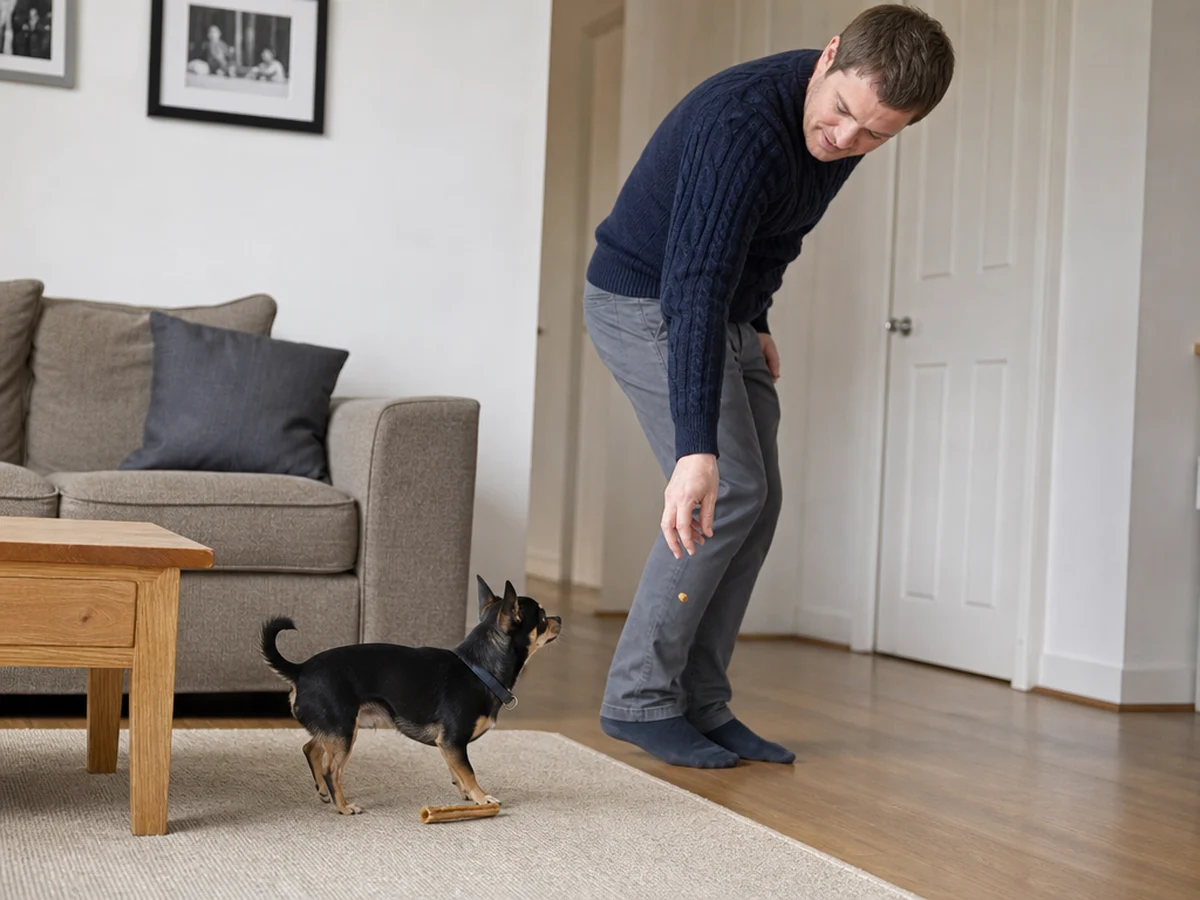
Owners often manage around the problem instead. They carry the dog away, pick the toy up after the growl, or simply stop reaching. That keeps the peace today and teaches the dog nothing about hands near their things. Some owners also report that time-outs, a kennel as time-out, and a firm "no" or "leave it" did not stop the snapping. Time-outs riled up some dogs and gave others bad feelings about the kennel.
First, prevent rehearsals. Then apply these management steps in order:
- Feed dogs in separate rooms, and give each dog their own space, as feeding in separate rooms advice suggests.
- Stop walking up to a dog who is eating or chewing, and let them finish.
- Put away anything your dog guards hard until you are ready to train it.
- Begin trading with low-value items, which the last section walks through.
Food guarding in Chihuahuas is described by owners as aimed mostly at other dogs, such as a dog who wanders near the bowl at dinner. In a young dog it can extend to people, over anything found on the floor. A trainable breed is not the same as a trained one, as we explain in Chihuahua temperament and trainability.
Verdict: not harmless. It is an early, quiet chance to train that most households skip.
Is a Guarding Chihuahua Just Jealous?
The belief: your Chihuahua is jealous, so the fix is more attention or less. Owners use the word constantly, especially when a second dog arrives.
The behavior behind it is real. Owners describe a resident Chihuahua guarding the owner's lap and bed, toys and attention, with scuffles while the order between dogs settles. Others report a dog who is fine with other dogs until the owner is in the room, then barks or snaps from the lap.
Jealousy is a human label for something simpler. The dog is protecting access to something they value. That makes it guarding, and it responds to guarding methods. The table below separates the common cases.
| What owners see | What the dog is protecting | First move |
|---|---|---|
| Snapping when moved off the sofa or lap | A resting place | Invite the dog down with a treat, and don't lift them |
| Growling at another dog on your lap | Their person | Keep laps free of both dogs for now |
| Stiffening near the bowl | Food | Feed in separate rooms |
| Snapping after someone ate on the bed | Crumbs and the bed | Keep food off shared beds |
Some bites come in one situation only, such as phone calls or bedtime when the dog is tired. Note when it happens before you try anything. If the trouble is being moved off the sofa, invite the dog down with a small treat instead of lifting them, so getting down becomes something they choose and are paid for.
Verdict: half right. The feeling may be real, but the fix is the same as for any guarding.
Guarding Their Person Is Protective Chihuahua Behavior
The belief: guarding a person is just bad manners. In this breed it is better read as protectiveness, and that changes what you do about it.
Chihuahuas are known for their alert temperament and devotion to their handler. They can be very protective of their humans and may take on more than they can handle. A dog who stands against your leg while you pet another dog is doing what the breed does.
Owners describe Chihuahuas who pick one person and guard them. The dog may guard from a partner, from another dog or at the food bowl. Mild cases stand against a leg. Harder ones mark around the person or snap at the partner. Many of the hardest cases are dogs in their first days or weeks after adoption, and owners of older dogs say the clinginess eased with age.
Confidence work comes first. Use these steps to address the protective pattern:
- Let the dog take distance from what worries them, since distance helps them feel secure.
- Pair the person or dog they guard against with rewards, so the sight of them predicts good things.
- Have the person the dog avoids hand over every bit of food and treats. Many owners find this helps rebuild trust, because that person comes to predict good things, and some report that months as the main caregiver did the same. Dogs vary.
- Keep house rules consistent for everyone, as we describe in house rules from day one.
Verdict: not bad manners. It is a confidence job, and the avoided person does most of the work.
Does Taking a Guarded Chew Away Fix the Behavior?
The belief: grab the item once and the dog learns it isn't theirs. This is the most common advice and the one that backfires most.
Taking the item confirms the dog's worry. Hands approaching mean loss, so the next time the dog guards earlier, faster and harder. Owners describe bites around handling that grew after unpleasant experiences, such as a bad nail trim, vet shots, then baths and being picked up. Our guide on handling training for vet exams covers that side.
When you must get something back, use distance instead of reaching. Getting an item back safely means setting food down well away from the item. That draws the dog off and gives you room and time to collect it.
Scale each step to the dog's size. Keep these details in mind:
- Toss the treat past the dog, not at them, so they turn away from the item.
- Pick up the dropped item without looking at the dog or hovering over them.
- If the item is something dangerous, swap with something better rather than pulling.
Regular vet visits matter too, so mention any new snapping at your next appointment. A sudden behavior change may have a physical cause.
Verdict: it raises the stakes. Trading beats taking every time.
Prevent Guarding Behavior When Introducing Dogs
The belief: dogs will work it out among themselves. Sometimes they do, but guarding of toys or food can trigger real conflict, so it is often best to remove high-value items such as favorite toys before introducing dogs.
Chihuahuas make this more pressing because their valuables include you. Owners who added a second Chihuahua describe jealousy at the start over laps, beds, toys and attention. How long the resident dog took to accept the newcomer varied widely, from the first minute to a year, and in one home not yet. Most became close companions.
Keep the sequence consistent. Owners report success with this order:
- Meet on neutral ground, such as walking side by side.
- Separate the dogs with a baby gate or a spare room for a day to a week.
- Put away food, bones and toys before any contact.
- Keep both dogs off laps for the first weeks.
- Give high-value treats when the dogs are together, so each newcomer predicts good things.
- Choose a personality that complements the resident dog.
Expect noise. Owners say Chihuahua play is loud and mouthy, with growls, snorts and face "bites", and two dogs squaring up nose to nose is a terrier-like posture rather than a fight. Stiff bodies, trying to get away and pinned ears are the signs to stop on. Similar-sized playmates are the safest.
Verdict: they don't simply work it out. Set the stage first.
A Chihuahua Who Trades Stops Needing to Guard
The trade game works because it removes the worry. When your hand arrives and something better comes with it, the dog stops expecting a loss. Over time, the approaching hand becomes a good sign, and the reason to guard fades.
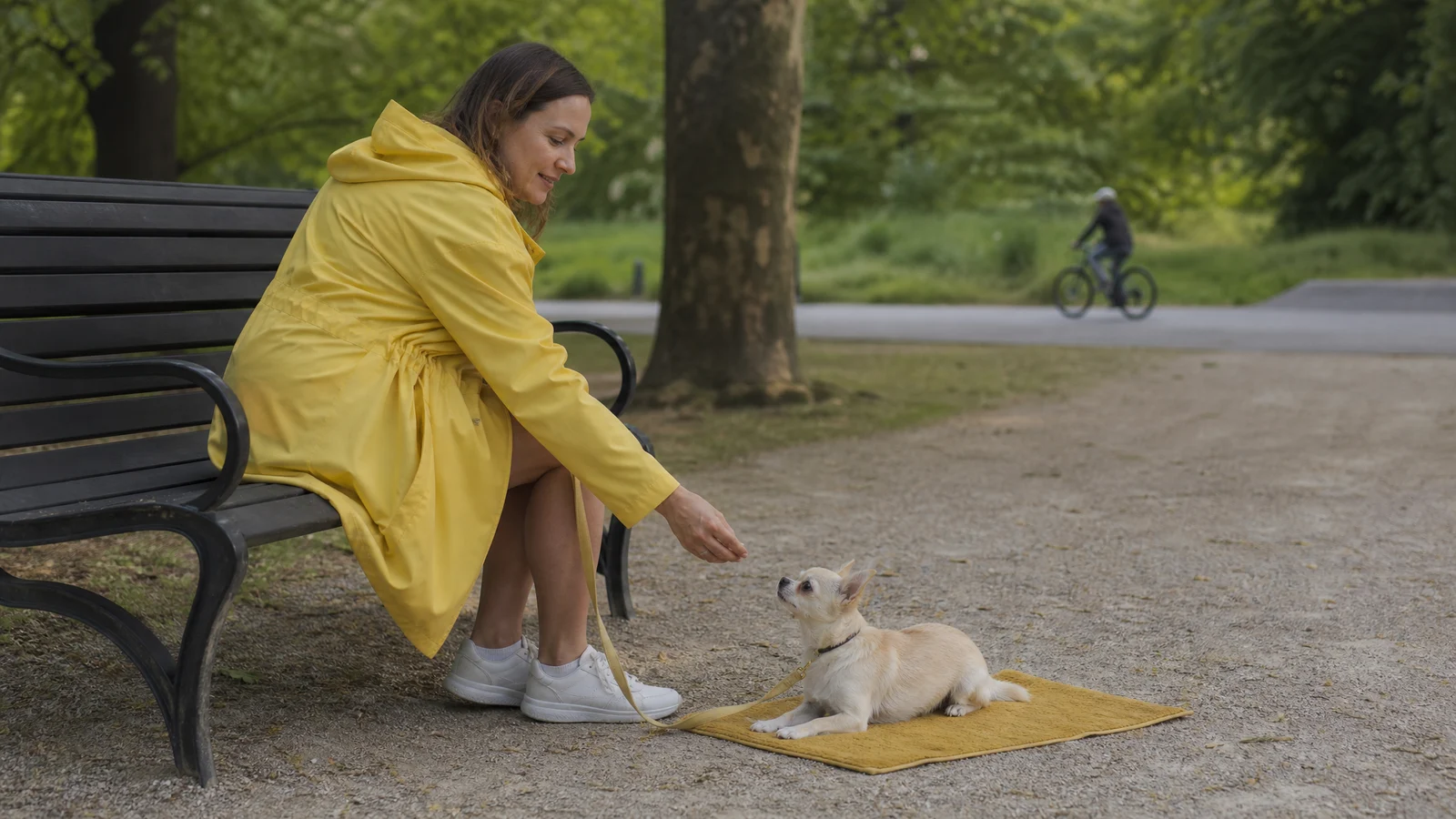
The breed changes where you play. Practice at floor level, with the dog loose, before you ever try on a lap. Do the first rounds with low-value items so there is nothing to fight about. If lap guarding is your issue, let the person the dog avoids do the trades and the feeding. Keep sessions short and calm, and keep the other dog out of the room.
Here is your one thing to do today. Pick a low-value item your dog likes only a little, such as a dull chew or a plain toy. Offer something better, like a small piece of chicken, held just beside their nose. When they drop or leave the first item, hand it right back and let them keep it. Then stop. That last step teaches the game is safe, and a Chihuahua who learns it on a boring item is ready to try it on a better one tomorrow.
 Shaking at noisesHow to Help a Scared or Nervous Chihuahua
 Training basicsChihuahua Behavior and Temperament: Are Chihuahuas Easy to Train?
 Barking for attentionHow to Stop a Chihuahua From Barking