 Chihuahua
The usual dog advice says to be consistent, and for a Chihuahua that advice fails in a specific way. The change is not more strictness but fewer exemptions. Owners carry, excuse and reward a tiny dog in ways they would never try with a Labrador, so a growl at the sofa earns a laugh, a demand bark earns a lap, and the rule quietly stops existing.
The cost comes later. A habit that was cute in a puppy becomes a snap over a resting spot in an adult, often just as social maturity settles in. Done well, the same rules give you a confident, relaxed companion who knows exactly what earns affection.
This article looks at why small dog syndrome is mostly learned behavior and answers the questions owners ask most about sofas, laps, guests and growling. Read on to learn how to make affection conditional, how to defuse lap guarding calmly, how to build routines and a visitor plan, and what to check after two weeks.
Small Dog Syndrome Is Mostly Owner Habit
Small dog syndrome is a popular label, not a diagnosis, and no source treats it as a Chihuahua trait. It usually describes a dog who barks at guests, snaps over the sofa or demands the lap, and the behavior behind it is mostly learned. Breed experts note that Chihuahuas seem well aware of how cute they are and learn how to get their way, and that without training they can end up running the household.
Research on small-dog owners points the same direction. Across all sizes, the more consistent the owner, the more obedient the dog, yet owners of small dogs were found to be more inconsistent than owners of large dogs. They also spent significantly less time on shared activities such as training and play. Yappy and reactive is a reputation, not an intrinsic small-dog trait, and small dogs are simply dogs.
The breed itself explains why the gap matters. The standard describes self-importance, confidence and self-reliance, so you are living with a confident dog by design rather than a timid lap ornament. Trainability sits at 3 of 5, with an independent streak, yet Chihuahuas are happy to please when asked. The operative words are "when asked": ask clearly, and pay well for the answer.
The best moment to start is before the dog arrives. Deciding house rules such as sofa, bed and off-limits rooms in advance, and making sure everyone sticks to them, pays off because a habit is harder to break than to make. A useful test for every puppy privilege is whether you would accept it from the adult dog.
Earned Cuddles Prevent Small Dog Syndrome in Chihuahuas
Making affection conditional sounds cold, but it is the opposite of a power struggle. You are not withholding love. You are giving your dog one simple, reliable way to ask for it, and a sit is the easiest place to begin.
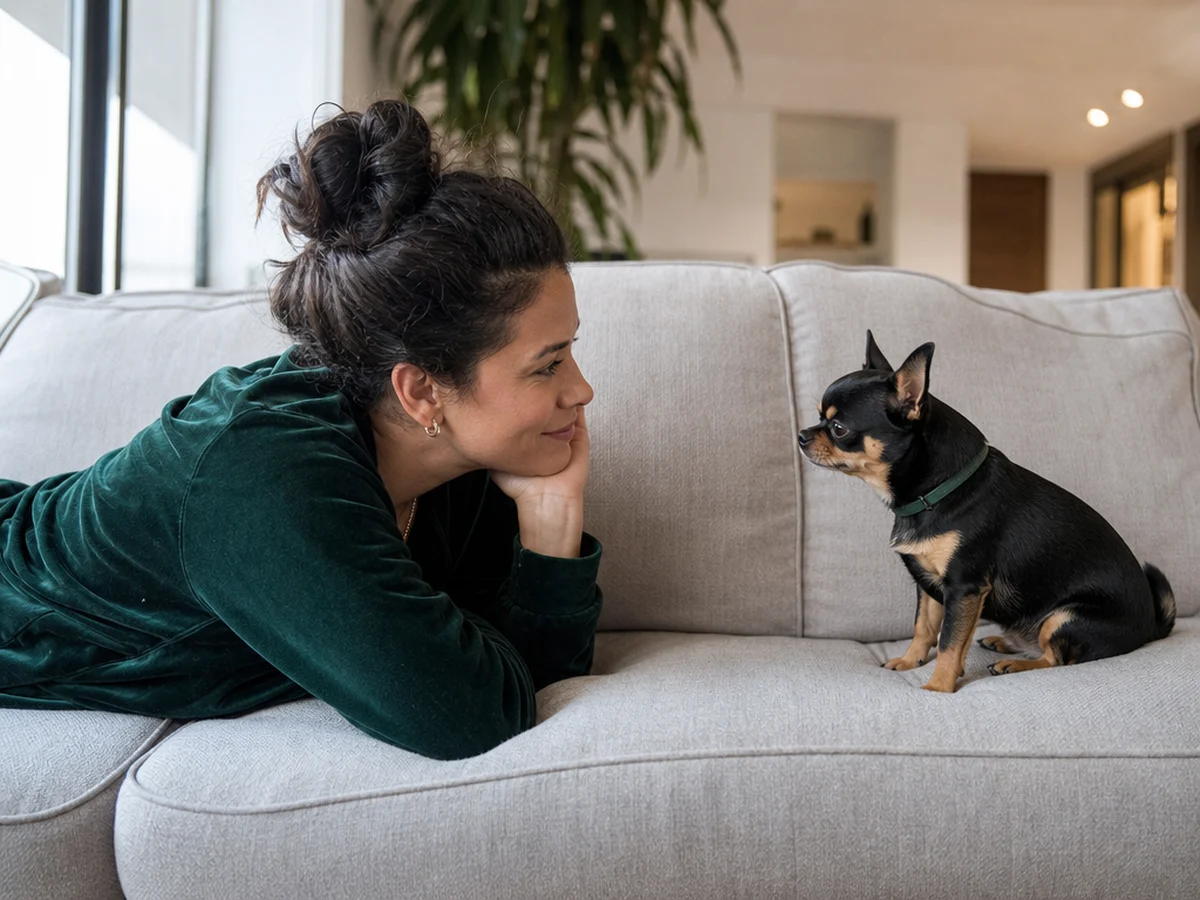
The lap is the most valuable reward you own, because the breed loves warmth and closeness. Some owners describe velcro dogs who follow them into the bathroom and howl if shut out, while others report a Chihuahua who walks away from the bathroom and is perfectly happy alone. Check which dog you have, then spend lap time on good behavior rather than on pushing, pawing or barking.
- Let meals, treats and open doors all begin with your dog's rear on the floor, then release with a cheerful word so the sit always pays.
- Invite your dog onto your lap with a cue and a pat, and end the session calmly when you choose, not when they demand it.
- Mark the instant all four paws are on the floor and the barking stops, and give attention at that moment.
Common advice says to ignore demand barking until it stops. That works only if everyone in the house ignores it every time, and a cute dog can easily find a soft-hearted family member. A single lap given mid-bark teaches that persistence pays, so agree on the rule together and reward quiet instead.
Chihuahua Rules Apply Equally on the Floor and in Your Arms
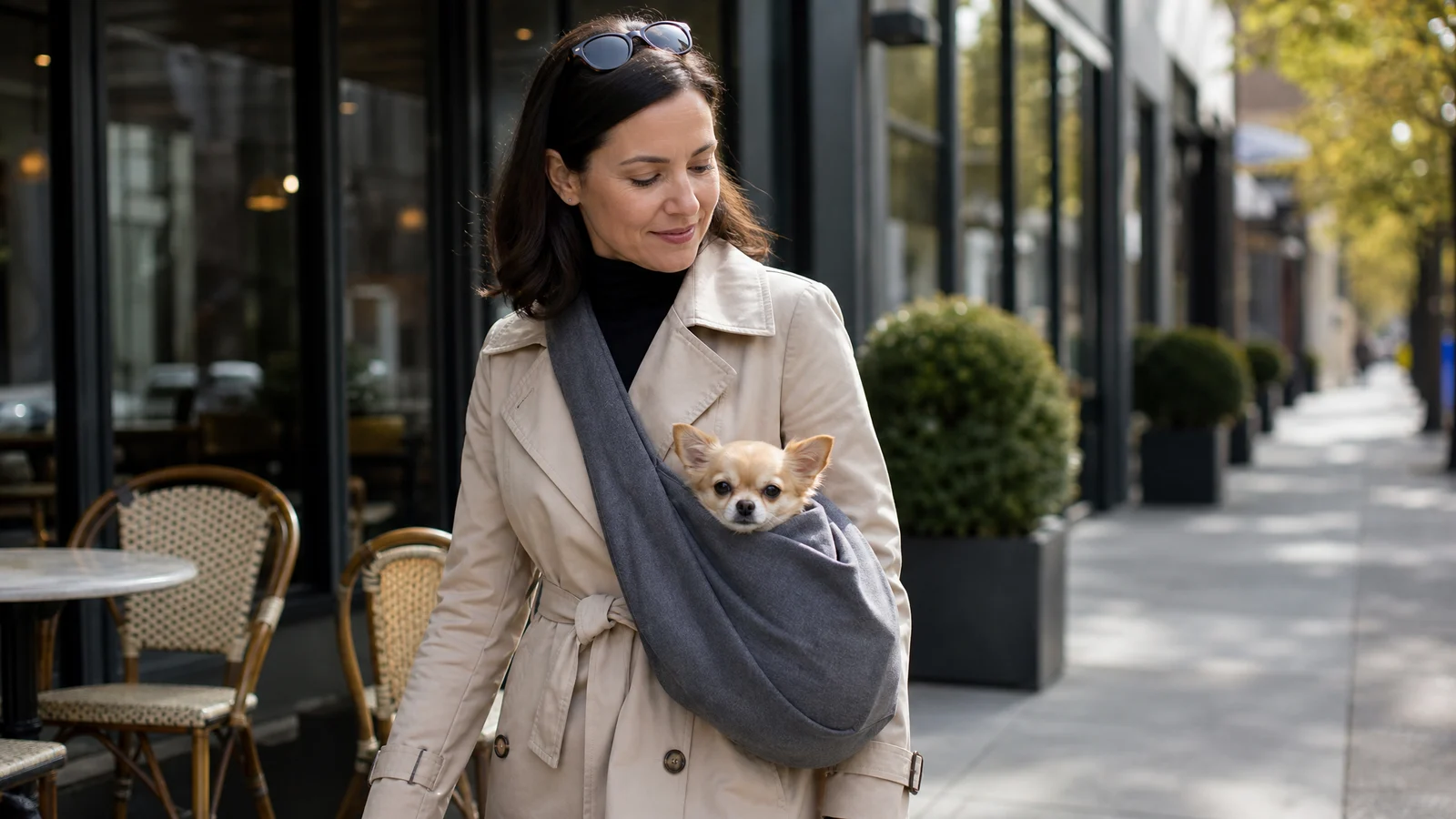
A carried dog never has to wait at a doorway, pass a stranger politely or sit at a curb. Carrying everywhere also gives a small dog height and a safe perch to bark from, so the habit removes the very consequences that teach manners. Set one standard that holds whether your Chihuahua is at your ankle or in your arms.
Start with furniture, where the decision matters most. If the sofa is off limits, play on the floor to teach that fun happens off the sofa. If the sofa is allowed, make it an invitation, and teach "off" as a rewarded cue by tossing a bit of kibble onto the floor, marking the jump down and paying. Pay for every step off the sofa and then handle your dog calmly, so being moved becomes something that earns a treat rather than a fight.
Apply the same logic at thresholds and when setting the dog down. Ask for a sit at doors, and lower your dog to the ground only when they are calm, because putting down a wriggling dog rewards the wriggle. Carry for safety, such as lifting a Chihuahua out of the path of a large dog or a crowd, but not for convenience.
Handling also deserves a slow, predictable style. The breed's parent club advises that extremely quick, unexpected movements can distress this small breed, and swooping down to scoop up a dog does exactly that. Let your Chihuahua see your hands, say the cue, then lift.
Growling From a Chihuahua's Lap Gets Calm Handling
We reviewed 415 Chihuahua owners' first-hand accounts, and some owners describe snapping at their own people that arrives in one situation only. Typical triggers are phone calls, a tired dog being moved off the sofa at bedtime, a favorite sofa spot being touched, or someone eating on the shared bed. Because the trigger is predictable, you can plan around it.
A growl is information, not defiance, so answer it with calm. Stop what you are doing, keep your hands still, and scatter a few treats on the floor away from you so the dog can step off and be rewarded for it. Some owners report that time-outs, a kennel used as a time-out, and repeating "no" or "leave it" did not stop the snapping, and some saw time-outs wind a dog up more or turn the kennel into a place they disliked.
Then change the circumstances instead. Do not lift a tired dog off a resting spot, offer a cue and a treat, give the dog a bed of their own for sleepy hours, and take phone calls somewhere the dog is not on your lap. For more on reading the warning, see why a Chihuahua growls and guarding of people, food and favorite spots.
Some Chihuahuas pick one person and guard them, from a partner, from another dog, or at the food bowl, with behavior ranging from standing against a leg to snapping. Owners say what helped was the avoided person handing over every meal and treat, or months spent as the main caregiver. Steady, pleasant contact rebuilds trust faster than any lecture.
Handling bites can follow a similar path. They start after an unpleasant vet shot or a nail trim that hurt, then spread to baths and finally to being picked up at all. Owners read the panic as fear, since the dog is calm and affectionate once it is over, and several dogs behave far better for a vet or groomer than at home. Go slower, pay for each small step, and see our guide to stopping a Chihuahua from biting.
This is general information, not medical advice. Schedule regular vet visits, and ask your veterinarian to check your dog whenever snapping, handling resistance or a change in mood appears suddenly, since pain can be behind it.
Jobs and Routines Ease Small Dog Syndrome
A dog with no structure invents some, usually by deciding who sits where and who gets to move. Short, repeatable rituals around meals, walks and practice give a Chihuahua a place in the day, so there is less to guard. Predictability also suits a breed whose standard calls for confidence, because confident dogs are rarely the ones guessing what happens next.
Keep each ritual small and rewarded. Meals at set times with a sit first, a walk at similar times, and a few very short practice sessions a day beat one long lesson. Jobs can be tiny: fetch a toy, find a treat under a cup, touch your hand, or go to the mat when the doorbell rings.
Shared activity is the real lever. Dogs who train and play more with their owners look more obedient, and owners of small dogs spend significantly less time in shared activities. Chihuahuas want to play, learn and be active, so put those sessions on the calendar. The wider plan is laid out in our complete guide to training a Chihuahua.
Think in months and life stages. Social maturity develops between 12 and 36 months, which is also when aggression and anxiety problems develop, so rules that are routine well before then cost far less than rules introduced later. Owners of older dogs say the clinginess eased in old age, which is a reason to keep the routine steady rather than hope a habit fades.
Small Dog Syndrome Barking at Visitors and Strange Dogs
Chihuahuas are vocal and inclined to bark at strangers and unexpected noise. Training can reduce this but will not make them silent, so aim for a shorter, calmer bark and a dog who settles. Decide before the doorbell rings what everyone will do.
- Set up a retreat spot, a bed or mat in a quiet room, and stock it with a chew so the dog learns it is where good things happen.
- Ask guests to ignore your dog until they are calm, and have them reward a sit rather than scooping the dog up.
- If your Chihuahua barks, calmly lead them to the retreat spot and pay for settling, rather than soothing mid-bark.
- Feed dogs in separate spots, since food guarding is mostly aimed at other dogs near the bowl.
Greeting practice with a helper works well. In this exercise, if the dog stands up from the sit as the helper approaches, the helper immediately turns and walks away, and the dog soon learns that staying seated brings the person closer. It is a mild, reward-compatible consequence, and it suits a dog who loves attention.
Strange dogs call for distance. Chihuahuas can be very protective of their humans and may try to bite off more than they can chew, and the breed is described as clannish, preferring companions of their own breed.
Ask owners of big dogs not to let them rush up, step aside rather than holding your dog up face to face, and supervise every meeting with children, since children's rough play is too much for a dog this small. If the snapping goes beyond your plan, read why Chihuahuas snap and how to help.
Two Weeks to Undo Small Dog Syndrome Habits
Two weeks is long enough to remove the exemptions and short enough to keep everyone committed. Week one is about the household and the earn-it routine, and week two adds guests and lap-guarding practice.
- Sit down together and write the rules for sofa, bed, rooms and lap, so every person applies the same ones.
- Make a sit the price of meals, treats, doors and lap invitations, and release with a cheerful word.
- Teach "off" with kibble, and set your dog down only when calm.
- Run several very short play or practice sessions a day, and keep fixed meal and walk times.
- Practice greetings with a helper who turns away when the dog stands, and stock the retreat spot.
- Rehearse calling your dog off your lap with scattered treats, and move tired-time resting to the dog's own bed.
- If your dog guards one person, have the avoided person give all meals and treats.
- Practice slow, predictable handling of paws, nails and lifting, paying for each tiny step.
By day fourteen you should see a dog who sits at the bowl and the door without being asked, leaves the sofa for a treat, barks briefly at a guest and then goes to the retreat spot, and tolerates being moved without a snap. The thread running through all of it is the same: a confident little dog does best when no one in the house makes exceptions for size, and when every bit of affection has a clear, rewarded way to be earned.
 Crate cryingCrate Training a Chihuahua: Crates, Dens and Carry Bags
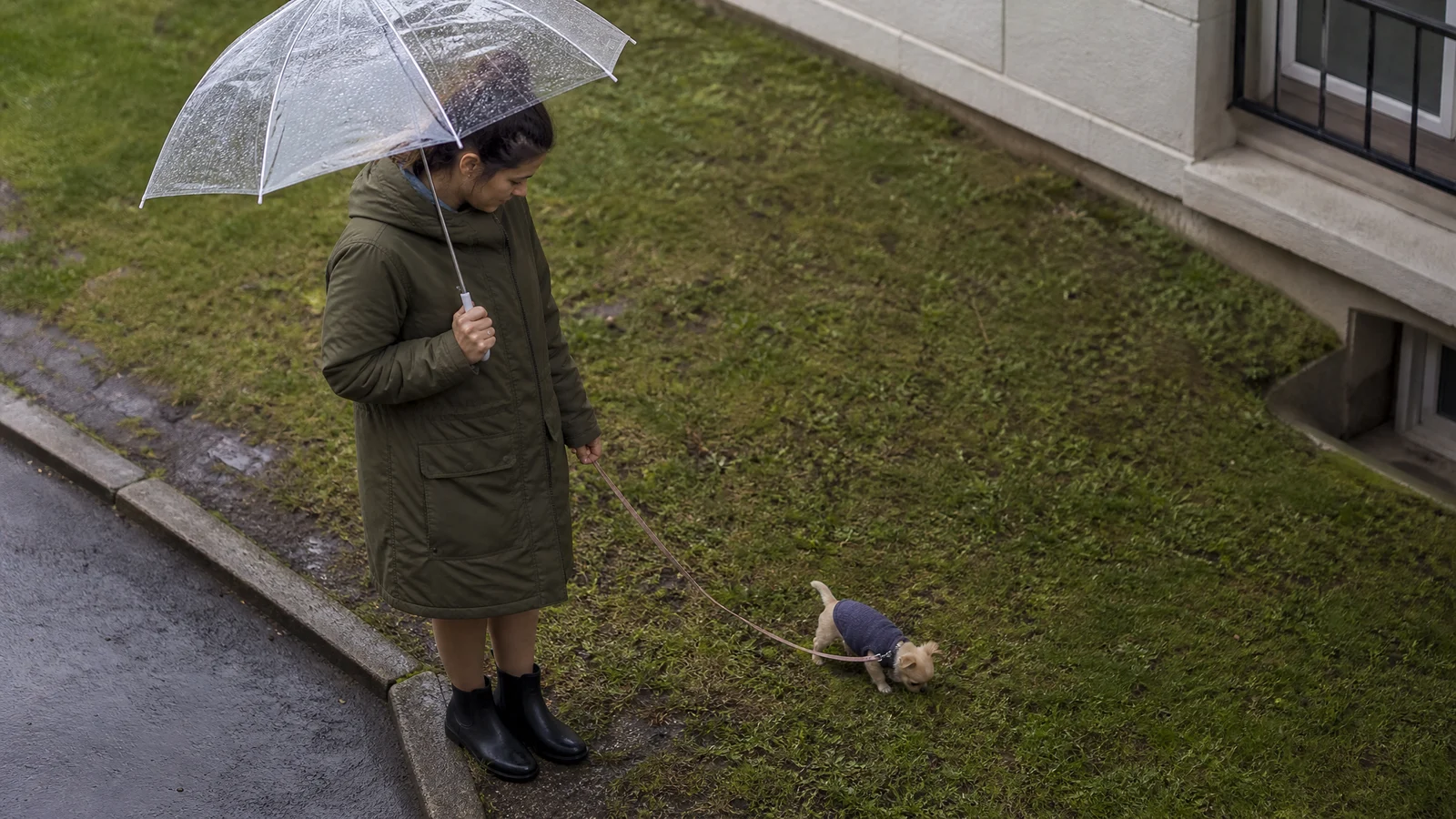 Puppy nippingHow to Potty Train a Chihuahua Puppy
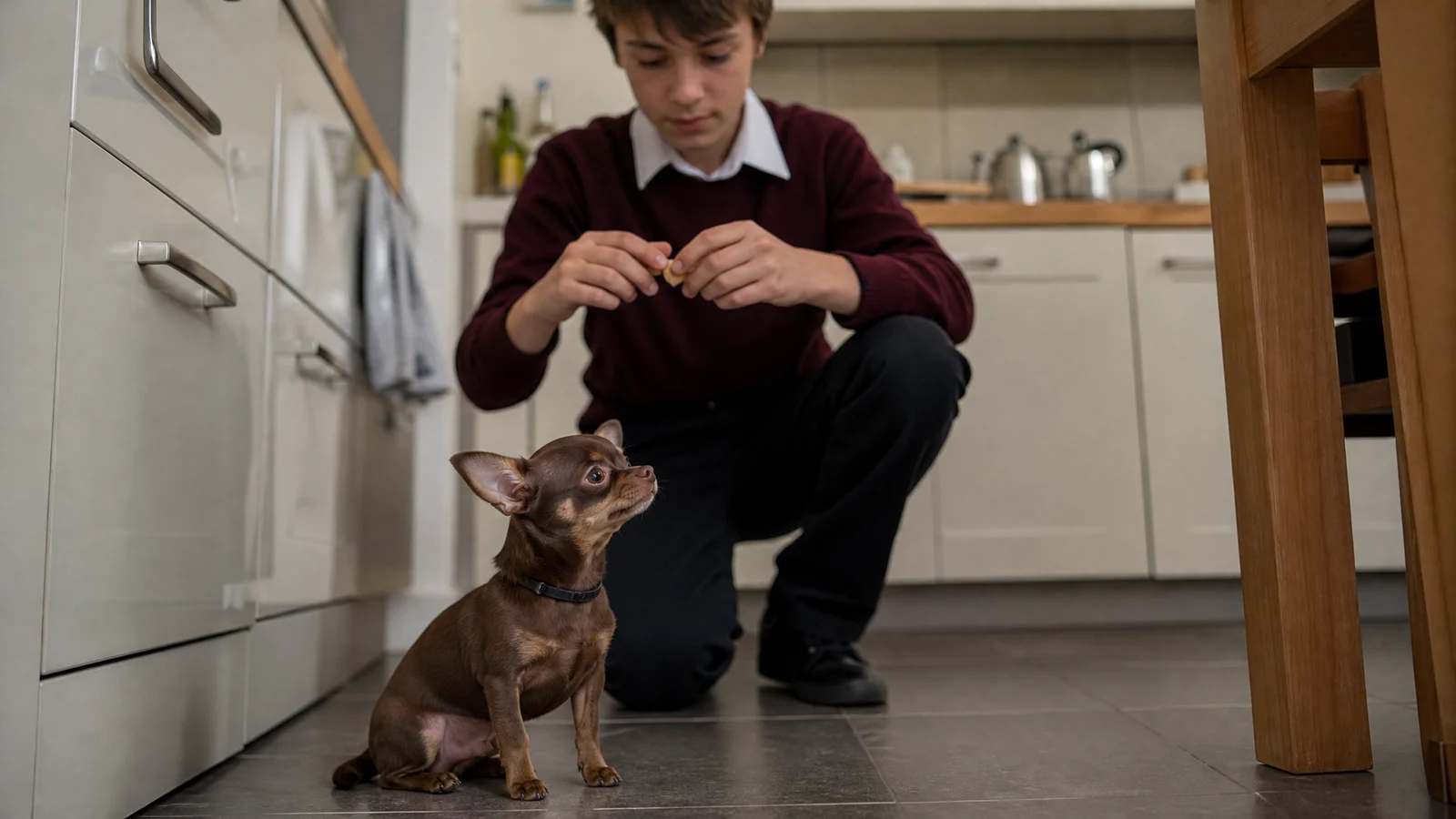 Barking at visitorsHow to Train a Chihuahua: The Complete Guide