Chihuahua Puppy Training Timeline: 8 Weeks to 2 Years
General training information. Every dog is an individual; for health or behavior concerns, see your veterinarian.
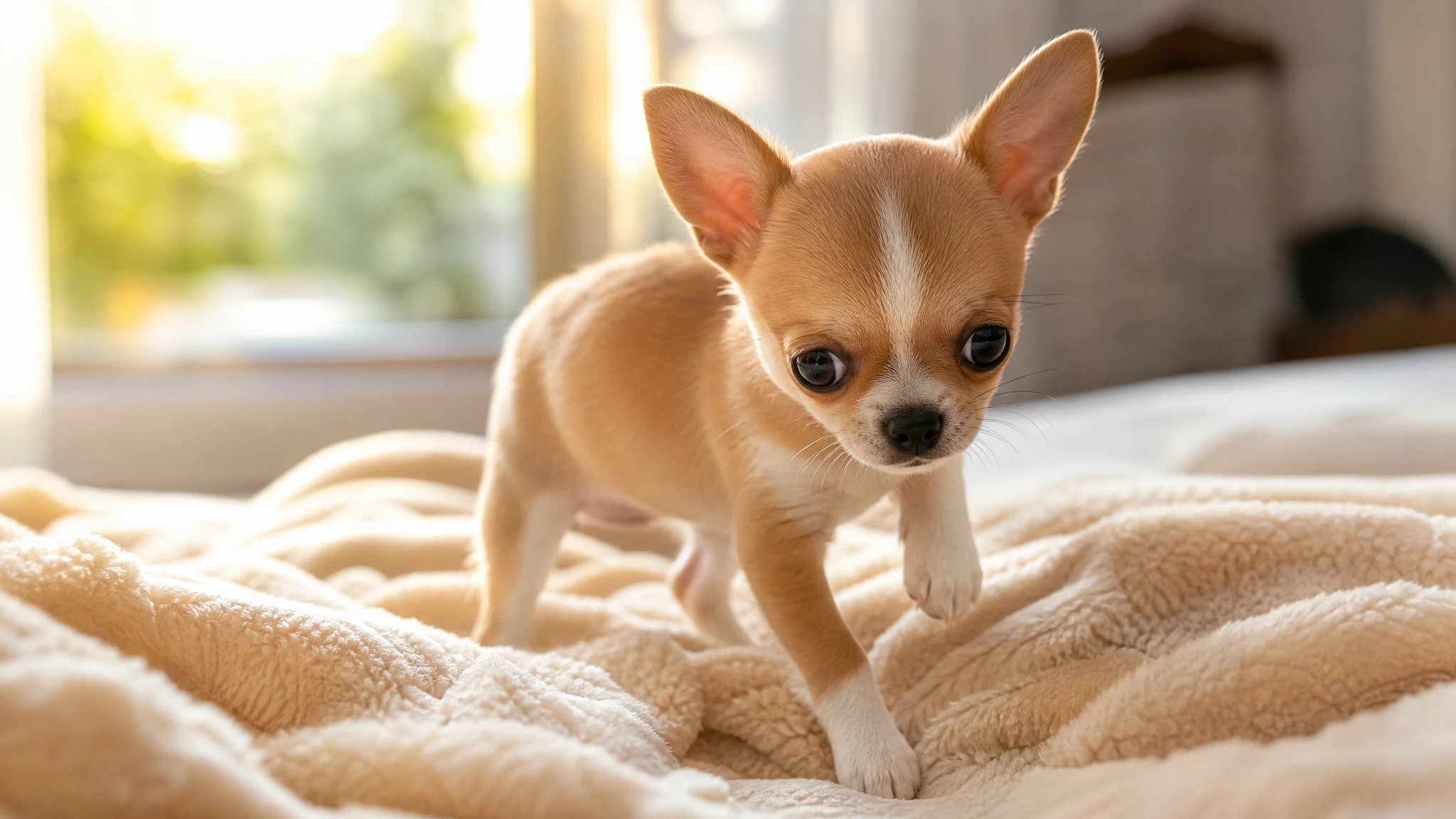
A Chihuahua puppy fits in your hands, but the training job is the same size as for any other dog. This guide walks through Chihuahua puppy training stage by stage, from the day you bring your puppy home to the second birthday. Use it as a flexible Chihuahua puppy training schedule, not a strict calendar.
Every puppy moves at their own pace. If your dog is ahead or behind the ages below, that is normal. Keep sessions short, keep rewards flowing and keep going.
Key Takeaways
- Use reward-based training only. Pay your puppy for what you like, and manage the setting so mistakes are rare.
- The Chihuahua Club of America describes the breed standard temperament as alert, with terrier-like self importance, confidence and self-reliance. Expect a dog with opinions.
- The PDSA, a UK pet charity, says Chihuahuas need consistency, respond to reward-based methods and should be socialised from a young age.
- Known trouble spots are barking, snapping at strangers or small children, and difficulty being left alone. Start working on all three early.
- Ask your veterinarian about exercise limits, joint care and vaccine timing before busy outings.
Table of Contents
- What to Know About the Breed Before You Start
- Weeks 8 to 12: Settling In and Early Socialization
- Months 3 to 6: House Training, Bite Inhibition and Manners
- Months 6 to 12: Adolescence
- Year 1 to Year 2: Maturity
- Common Chihuahua Training Challenges
- A Sample Daily Chihuahua Puppy Training Schedule
- Frequently Asked Questions
What to Know About the Breed Before You Start
Good chihuahua puppy training starts with knowing who you are training. A few sourced facts shape the plan.
Temperament
The Chihuahua Club of America breed standard describes the Chihuahua as alert, with terrier-like attitudes of self importance, confidence and self-reliance. That is a standard, not a promise about your individual puppy. Some are bold, some are shy, and many are both in the same afternoon.
Energy and exercise
Hill's Pet describes the Chihuahua as active and liking to be kept occupied, despite being a lap dog. The PDSA recommends a minimum of half an hour a day for Chihuahuas, ideally split into two walks, plus play in a secure area. Those figures are written for dogs in general, so ask your veterinarian how much exercise is right for a young puppy, and what to avoid while the joints are still developing.
Size
The Chihuahua Club of America breed standard says weight should not exceed 6 pounds. Size matters for training because a tiny dog can be hurt by a fall, a dropped step or a rough hug. Teach children and guests how to handle your puppy from the first day.
Health points that touch training
The PDSA lists luxating patellas, hip dysplasia, eye conditions, heart disease, tracheal collapse and dental problems among the concerns for the breed. Two of these affect daily handling. Talk with your veterinarian about whether a harness is better than a collar for your dog, and about jumping on and off furniture.
Hill's Pet notes that some Chihuahuas have a soft spot on top of the head, called a molera. The Chihuahua Club of America says many puppies are born with one and about as many without, and that its presence does not mean a medical problem. If you are unsure, ask your veterinarian. Handle the head gently either way.
Training approach
The PDSA says Chihuahuas need consistency and respond to reward-based methods with a firm but fair approach. Here, "firm" means clear and predictable, never harsh. This guide follows the position of the American Veterinary Society of Animal Behavior (AVSAB) in favor of reward-based training. Do not use shock, prong or choke collars, alpha rolls, scruffing or any dominance method on a puppy.
Weeks 8 to 12: Settling In and Early Socialization
Most puppies come home around eight weeks. This first stretch is about safety, routine and good first impressions.
Set up the home
- Pick one small, gated area for the puppy to live in when you cannot watch.
- Add a crate or pen with a bed, water and safe chews.
- Block stairs and high furniture. A small puppy can be injured by a jump or fall.
- Keep a few treats in every room so you can reward good choices as they happen.
Start socialization gently
The PDSA advises socialising Chihuahuas from a young age. This matters more for a breed with a reputation for snapping at strangers or small children, as Hill's Pet describes it. The aim is calm, positive exposure, not forcing meetings.
Good early experiences include:
- Different floor surfaces, such as tile, carpet and grass.
- Household sounds like the vacuum, doorbell and dishwasher, at low volume at first.
- Calm visitors who let the puppy approach on their own terms.
- Being carried, and being set down, in new places.
- Gentle handling of paws, ears, mouth and the body, followed by a treat.
Ask your veterinarian when it is safe for your puppy to visit public spaces and meet unfamiliar dogs. Until then, carry your puppy to new places, invite healthy, vaccinated adult dogs over, and let the puppy watch the world from your arms.
First skills to teach
- Name response: say the name, mark with a cheerful "yes," and give a treat.
- Sit: lure with a treat over the nose, reward the moment the bottom hits the floor.
- Come: run backward, call happily and celebrate every arrival.
- Crate comfort: feed meals in the crate and toss in treats while the door is open.
Keep each session to a couple of minutes. A Chihuahua puppy tires fast, and ending early keeps them keen.
Months 3 to 6: House Training, Bite Inhibition and Manners
This is the busiest period for Chihuahua puppy training tips, because the habits you build now carry into adulthood.
House training
House training is about management and timing. A small puppy has a small bladder and cannot hold on for long, so plan for frequent trips outside.
- Take the puppy out first thing in the morning, after meals, after naps, after play and before bed.
- Go to the same spot and wait quietly. Say a cue word once as the puppy starts to go.
- Reward right away, within a second or two, with a treat and praise outside.
- Supervise indoors. If you cannot watch, use the crate or pen.
- If an accident happens, clean it with an enzymatic cleaner and say nothing to the puppy. Punishing accidents teaches a puppy to hide, not to wait.
Weather can be a real barrier for a tiny dog. If your puppy balks at cold or wet ground, make the trip short and rewarding, and talk to your veterinarian about practical options. Do not give up and let the puppy go inside by habit.
Check with your veterinarian if house training stalls or the puppy seems to need to go very often. That can be a health matter, not a training one.
Bite inhibition
Puppies explore with their mouths. Your job is to teach a soft mouth and to give chewing a better target.
- When teeth touch skin, calmly stop the game and turn away for a few seconds.
- Offer a chew toy and praise when the puppy takes it.
- Keep hands out of wrestling play. Use toys as the middle.
- Reward calm, gentle moments so the puppy learns that quiet earns attention.
Do not hold the muzzle shut, flick the nose or scruff the puppy. These methods can make a small dog fearful, and fear is a common root of snapping.
Teaching a calm handling routine
Because of the breed's small size and the health issues the PDSA lists, your Chihuahua will be handled often, by you and by a veterinarian. Practice short, gentle handling sessions daily. Touch a paw, lift a lip, look at an ear, then reward. Make it boring and pleasant.
More skills to build
- Down and stay: start with one second and build slowly.
- Leash and harness: let the puppy wear it indoors for short stretches with treats before any walk.
- Leave it and drop it: trade, never grab.
- Settle on a mat: reward a puppy for lying on a mat while you watch TV.
Teaching alone time
The PDSA lists difficulty being left alone as a known challenge for the breed. Start practicing now. Give the puppy a chew in the pen, step out of the room for a few seconds, return, and gradually add time. Keep arrivals and departures calm. If your puppy panics, shorten the steps and ask your veterinarian or a qualified reward-based trainer for help.
Months 6 to 12: Adolescence
Around six months many puppies start to act as if they have forgotten everything. This is a common pattern in adolescent dogs generally. It does not mean you failed.
What you may see
- Selective hearing when there are better things to sniff.
- More barking at sounds, people and dogs outside.
- New fears of things that were fine last month.
- House training slips, especially if the routine changed.
How to respond
Go back a step. Use higher-value treats, shorter distances and quieter places. Reward the behavior you want and keep the schedule steady. The PDSA stresses consistency for the breed, and adolescence is when it pays off.
Barking
Hill's Pet notes the Chihuahua may be more prone to barking than some larger dogs. Do not try to remove barking altogether. Instead:
- Notice what sets it off, such as the window, the doorbell or hallway noise.
- Reduce access to the trigger, for example by blocking the view from the couch.
- Teach a quiet cue. Let the puppy bark twice, say "thank you," then reward the pause.
- Reward a calm behavior, like going to the mat, when the trigger appears.
Never use a shock or spray device. They suppress the signal without changing the feeling behind it.
Strangers and children
Hill's Pet says Chihuahuas can be good family pets when treated respectfully, but have a reputation for snapping at strangers or small children. Adolescence is the time to prevent problems:
- Let visitors ignore the puppy until the puppy chooses to approach.
- Ask guests to toss treats rather than reach over the dog's head.
- Supervise every child interaction. Teach children to sit on the floor and let the puppy come to them.
- Give the puppy a safe place to retreat, and respect it.
If your puppy growls, stiffens or snaps, do not punish the warning. Back off, make a note of what happened and consider getting help from a qualified reward-based trainer.
Exercise during adolescence
Aim toward the PDSA guidance of at least half an hour a day, ideally split into two walks, plus play in a secure area, as your veterinarian allows for your dog's age and joints. Add mental work as well. Puzzle feeders, scent games and short training sessions all help, which suits a breed Hill's Pet describes as liking to be kept occupied.
Joint care in a growing small dog
The PDSA lists luxating patellas and hip dysplasia as concerns. You cannot diagnose these at home, and this guide does not try to. Practical steps to discuss with your veterinarian include:
- Ramps or steps for the couch and bed instead of jumping.
- Non-slip rugs on slick floors.
- Keeping your dog at a healthy weight.
- What to do if you see skipping, limping or sudden pain.
Year 1 to Year 2: Maturity
After the first birthday, your Chihuahua looks like an adult. The training does not stop. Most dogs keep maturing mentally for some time after they reach adult size, and individual dogs vary a lot. Treat the second year as a period of polishing.
What to focus on
- Reliability: practice known cues in new places, with distractions, and keep paying for good responses.
- Recall: keep practicing in a secure area. A small dog can slip through gaps that a larger one cannot.
- Social manners: keep exposing your dog to calm, positive experiences so early socialization does not fade.
- Alone time: stretch the duration slowly and keep a routine.
- Grooming and vet handling: keep practicing, especially for teeth and ears.
Ongoing health care
The PDSA lists dental problems and tracheal collapse among the breed's concerns. Teach your dog to accept tooth care early, and ask your veterinarian about home dental routines. Ask about the best way to walk your dog on a harness. If you see coughing, breathing trouble or sudden changes in behavior, see your veterinarian.
The Chihuahua Club of America is the parent club for the breed. Check its site, or ask your breeder, about health testing recommended for the breed. Do not assume a particular test is or is not recommended without confirming it with the club or the Orthopedic Foundation for Animals.
Life with an older Chihuahua
Hill's Pet and the PDSA both describe the Chihuahua as a fairly long-lived breed, though their figures differ, so ask your veterinarian what to expect for your dog. That is a long relationship. A training habit that costs you ten minutes a day now pays back over many years.
Common Chihuahua Training Challenges
The PDSA names snapping at strangers or small children, barking and difficulty being left alone as known challenges. Here is how they fit into the timeline.
| Challenge | Start working on it | Reward-based approach |
|---|---|---|
| Barking | Weeks 8 to 12, then through adolescence | Manage triggers, teach a quiet cue, reward calm |
| Snapping at strangers or small children | From the first week | Let the dog choose contact, supervise, give a safe retreat |
| Being left alone | Weeks 8 to 12 | Short absences, calm exits and returns, chews |
| House training | Day one | Frequent trips, rewards outside, supervision |
| Mouthing | Months 2 to 6 | Stop play, redirect to toys, reward gentle mouths |
If any of these gets worse despite steady work, ask your veterinarian to rule out pain or illness. Then consider a qualified trainer who uses reward-based methods in line with AVSAB guidance.
About the "dominate" myth
Some breed descriptions, including one from Hill's Pet, suggest a Chihuahua may try to dominate its owner. Do not read that as a reason to use force. A confident little dog needs clear rules, consistent routines and generous rewards. Dominance methods are not part of modern, humane training.
A Sample Daily Chihuahua Puppy Training Schedule
This sample shows how to fit training into normal life. Adjust it for your household and your veterinarian's advice. It is a template, not a rule.
| Time of day | Activity |
|---|---|
| Wake up | Potty trip, reward outside, short play |
| Breakfast | Feed in the crate or from a puzzle toy, then another potty trip |
| Mid-morning | Two-minute training session, then nap in the pen |
| Midday | Potty trip, play, handling practice |
| Afternoon | Short walk or carried outing as your vet allows, socialization practice, nap |
| Evening | Potty trip, dinner, a second short training session, calm time on the mat |
| Bedtime | Final potty trip, settle in the crate |
Month-by-month snapshot
- Weeks 8 to 12: routine, crate comfort, gentle socialization, name, sit and come.
- Months 3 to 4: house training focus, bite inhibition, harness and leash introduction.
- Months 5 to 6: down, stay, leave it, alone-time practice, increasing outings.
- Months 6 to 12: adolescence, back-to-basics refreshers, barking management, strangers and children rules.
- Months 12 to 24: proof skills in new places, keep social experiences going, maintain grooming and health routines.
Frequently Asked Questions
When should I start training my Chihuahua puppy?
On the first day. Start with routines, rewards and gentle socialization. Formal cues can begin in short sessions right away.
How long should training sessions be?
A few minutes at a time is plenty for a young puppy. Several short sessions a day work better than one long one.
How much exercise does a Chihuahua need?
The PDSA says a minimum of half an hour a day, ideally split into two walks, plus play in a secure area. Ask your veterinarian how that applies to a growing puppy.
Is my puppy's soft spot a problem for training?
The Chihuahua Club of America says a molera does not mean a medical problem. Handle the head gently, and ask your veterinarian if you have concerns.
Can I train a Chihuahua without treats?
You can use praise, play and real-life rewards such as going outside. Treats are simply the quickest way to say "yes, that was right," and tiny soft treats suit a tiny dog.
Does my adult Chihuahua still need training?
Yes. Keep practicing and rewarding, because skills fade without use.