 Chihuahua
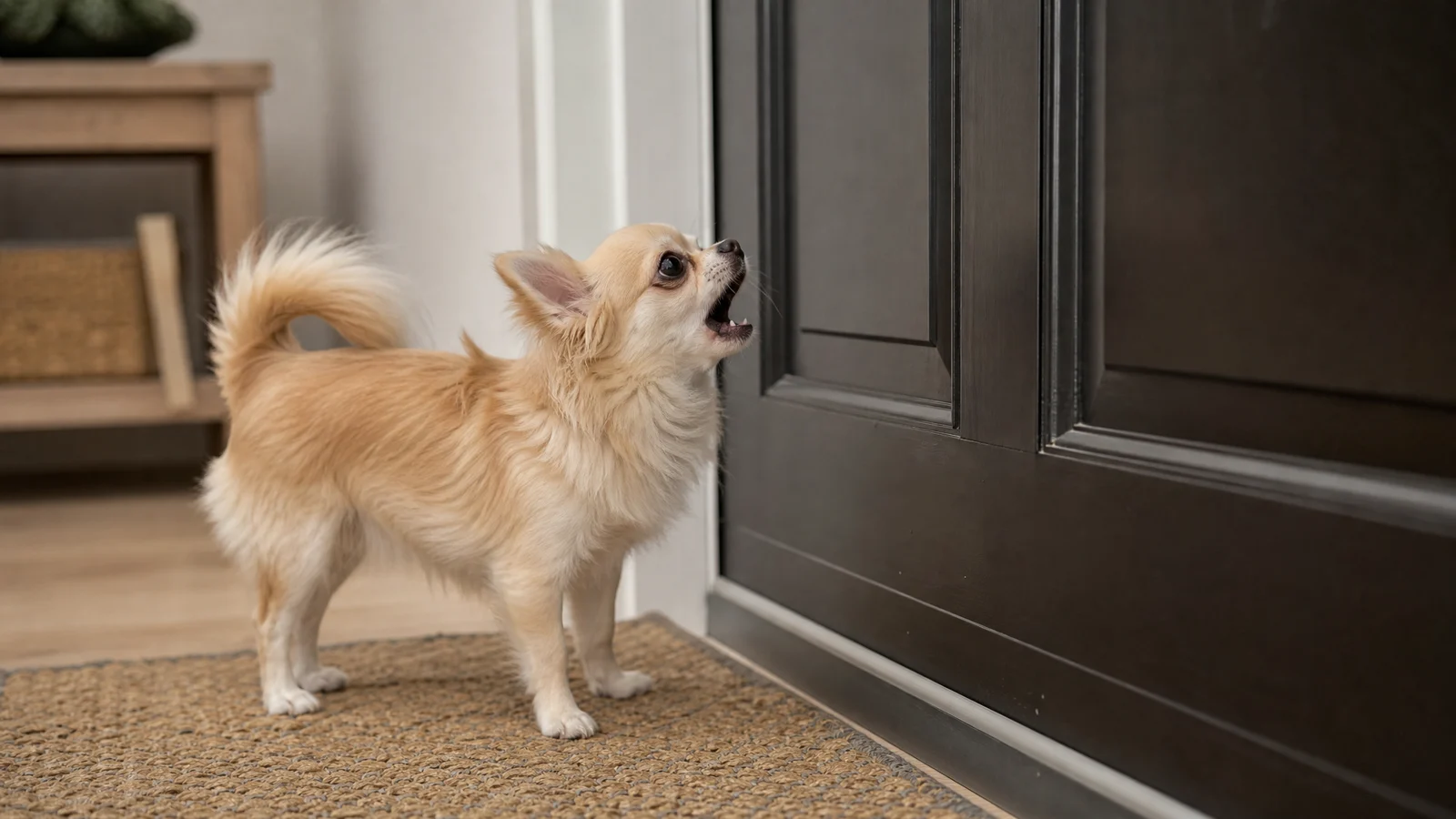
Most bark advice rests on two plans: ignore the noise until the dog gives up, or teach one quiet cue and consider the matter closed. Both meet a different animal in a Chihuahua. The breed rates 5 of 5 on the scale that runs from only to alert up to very vocal, and the body doing the barking spends much of its day held, carried and set on laps, which changes what ignoring and cueing can accomplish.
Handled badly, alarm barking spreads to every sound and hardens into a habit that keeps the whole household on edge. Handled well, you get a watchful companion who sounds the alert once and stops on request. This article looks at barking at home and the problems that trouble owners most.
Ahead, we cover what to expect, how to build a doorbell routine, what to do about barking from your arms and at the window, how attention barking gets paid for, and what barking while you are out does and does not mean.
Why Standard Bark Advice Falls Short for a Chihuahua
Start by resetting the goal, because everything else depends on it. The AKC rates Chihuahua barking at 5 of 5, calls the breed very vocal, and says owners should expect frequent barking even after training. Some training does help with excessive barking. That is the realistic promise: a quieter dog, never a silent one.
Modest expectations make sense because the barking has a job. A long-time judge describes the breed as barking an alarm, which is what makes them desirable as watch dogs, and watchdog nature is rated 4 of 5. Owners praise an alertness with guardian-like ability. We have trained Chihuahuas for many years, and the plans that last always work with that alertness, teaching what happens after the alert instead of trying to erase it.
Why Ordinary Advice Stumbles
Two pieces of ordinary advice stumble here. Ignoring works on barking that is paid for with attention, but alarm barking pays for itself: the knock stops, the visitor leaves, and the dog concludes the bark worked. A quiet cue also fails when it is first tried at full volume, because a Chihuahua deep in an alarm cannot take in instructions. Teach the cue in calm moments, then use it a few seconds after the alert.
Plan on a longer timeline too. Owner reports range from dogs who sound off at almost anything to a quiet minority who bark only at a knock, and the voice can change with age, with some dogs finding it at adolescence. Yappiness is not an intrinsic small-dog trait, and how far your own dog can be shaped is covered in Chihuahua trainability and temperament.
Decide now what you want to keep: the alert, minus the encore.
Chihuahua Owners and Doorbell Barking
Doorbells are where most owners first feel the problem, and the reports are broad. Chihuahuas sound off at doors and doorbells, including the doorbell on a television show, at family members coming downstairs or arriving home, at workmen, at wildlife, and at noises outside in the evening.
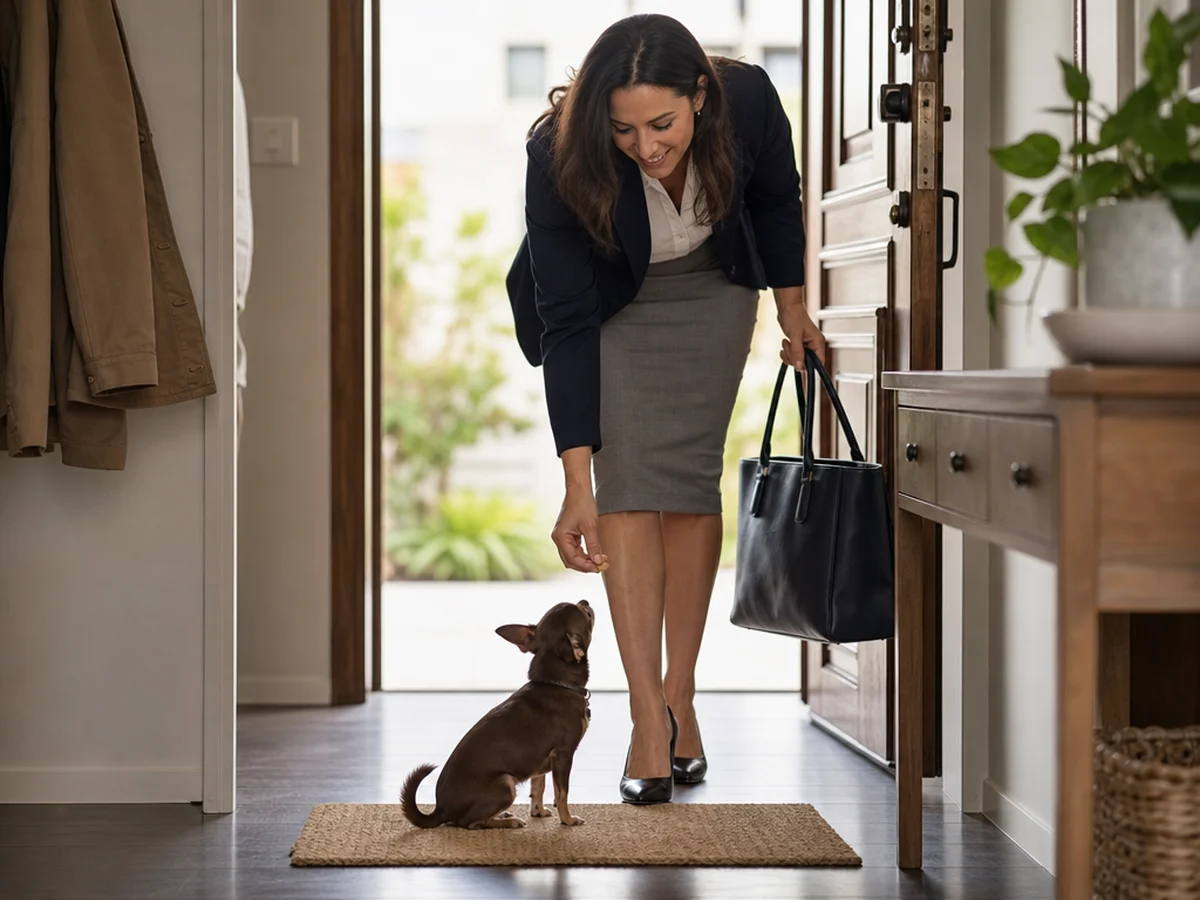
Some owners with several Chihuahuas say the chorus never stops. A smaller group has dogs who bark only at an actual knock. Whatever your dog's range, one routine covers it: a place to go and a greeting that earns attention.
Build the place first, with no doorbell at all, and then add the trigger in stages.
- Choose a mat or bed a few steps back from the door, out of the doorway, and pay your dog each time they step on it, until they head there by themselves.
- Add the trigger quietly, such as a recording of the bell or a light tap on the door, and pay on the mat before the barking starts.
- When they do bark, let a couple of alerts pass, then calmly say Quiet and deliver a constant trickle of tiny treats, the method behind teaching a Quiet cue, which dogs usually learn over several days or more.
- Raise the realism by ringing the real bell, playing the television clip, or having a family member come through the door, and keep paying at the mat.
- For guests, ask them to ignore your dog at first and stay at a distance, because openness to strangers is rated low for this breed at 2 of 5. Let your dog approach them for treats when ready.
Your own state matters more than most people expect. Owners say that tensing up feeds the barking, while a calm or cheerful voice, standing between dog and door, and quiet reassurance help. Family homecomings work the same way, so greet your dog only after they settle on the mat. If visitors keep rattling a dog who is reserved with strangers, build their confidence through socializing with strangers as well.
A good result is a bark or two, a walk to the mat, and a treat.
Barking From a Chihuahua Held in Arms
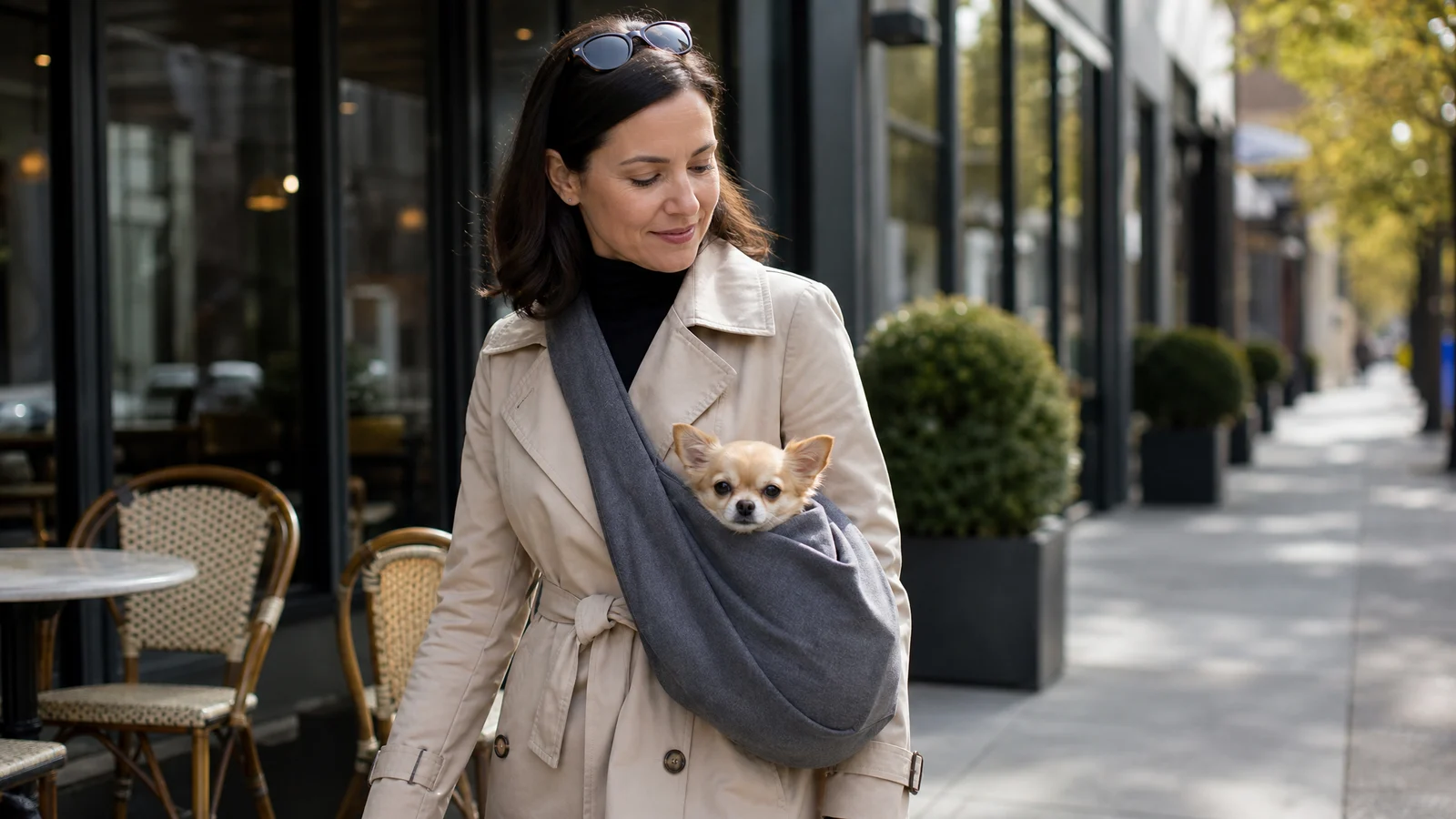
Arms change the barking. Owners describe dogs who bark or growl when people hug or touch them, and a minority lift their dog the moment another dog or a walker comes near because it keeps the dog calm, some knowing that trainers advise against it. We understand the appeal. Carrying works today, and a planner asks what it costs later: a dog who never practices coping on the floor, and arms that become the only place where calm happens.
From arms, a Chihuahua also has height, a close view of the street and a human body behind them, so the likely effect is a louder alarm. The fix starts with how you pick up. Lifts on a cue, with the dog's choice respected, are covered in picking up a Chihuahua calmly. Hold your dog when they are calm, not to rescue them from a bark already in progress.
Rules for Putting Down
Put-down rules matter just as much. When your dog barks from your arms, stand still and wait for a breath, mark that pause with a word, and feed a few tiny treats. Then set them down while quiet, so the lesson is that calm earns both treats and the floor. Setting them down mid-bark would teach that barking buys freedom. If the barking continues, a brief calm time-out on a bed is enough.
Touch needs the same patience. Give a small dog's early discomfort signs, like licking their lips or turning their head away, the weight you would give a growl, and never laugh off their distress as cute. Handle in small steps: touch, treat, and stop before they object. Read the whole dog too, because flattened ears can be a greeting, not fear. A dog who trusts you to step in at the first sign of distress tends to grow more confident.
Hold when calm, set down when quiet.
Window and Sidewalk Barking at Passersby
Many owners report the reverse of walk reactivity: a Chihuahua who is meek or even sociable out walking but does the barking at home, at the door, in the courtyard or yard, and at people in front of the house. The home patch belongs to them, so the view of it becomes a constant supply of triggers. Barking at people and dogs on walks is a separate topic, so here the focus stays at home. Management comes first, because every rehearsed bark builds the habit.
- Block the perch by moving the sofa back from the window or covering the lower panes with frosted film, so your dog cannot patrol the sidewalk all day.
- Limit yard time during the busiest hours or add a solid screen to the fence line, so fewer passersby are visible.
- Run steady white noise or soft music in the main room to soften outside sounds.
- Offer a chew or food puzzle during the busiest stretch of the day, so your dog has a better job than watching.
Then train around what remains. Learn the signs that a bark is coming, such as a stiff stare or pricked ears, and practice asking for a rewardable action like a sit before it starts. If the barking has already begun, lure your dog off the window using a recall or a watch-me cue, and reward that response.
Timing is everything. Owners who got walk barking to settle say the food worked when they gained attention before the reaction, and failed when the dog was already worked up, with some dogs eating and barking at once. The same rule holds at the window. Add distance, let your dog take space, and pair each trigger with treats so passersby start to predict food, not alarm.
Change the view first, then change what the view means.
Attention Barking Rewarded by Accident
Alarm barking is instinct, but attention barking is learned, and owners often teach it with the best of intentions. A Chihuahua barks, and you look over, say their name, lift them onto your lap, or hand over a treat to end the noise. Each of those pays. Barking that is paid even occasionally becomes stubborn, because the dog learns that persistence works if it goes on long enough.
Household changes can sharpen the habit. Owners report barking that got worse after a shift, such as a calm dog who now erupts at visitors, or a homecoming barker who stopped settling once a new puppy arrived. When barking jumps, look at what changed in the routine and who is paying for it. Mention a sudden change at your regular veterinary visit as well, so other causes can be ruled out.
Reward Quiet Instead
What you reward instead is quiet, however brief. Use a marker word at the first pause and feed within a second. Over the following weeks, ask for slightly longer gaps before marking. That is the planner's version of patience: you are building length in small steps and accepting that early progress looks tiny. Reward calm on the mat, a settled look at you, or a sit, all of which are incompatible with barking.
Consequences stay mild. If a bark demands your attention, a calm turn away or a brief step out of the room removes the thing your dog wanted, and you return and pay the moment they quiet. Give the exercise and play your dog needs beforehand, so they are not hunting for attention for lack of anything else to do.
Pay for the pause, not the performance.
Barking While You Are Out
Owners describe barking, wailing and sometimes howling when left alone, and for some dogs it happens only then. Company does not always solve it. Several owners found that a brother, a kitten, or a second dog in the kennel did not stop the howling, while others report a dog who is fine with any person or dog present. Because the causes differ, sort boredom from anxiety before choosing a plan.
Boredom is the simpler case. Dogs need plenty of exercise and company along with things to do, and when they lack them, barking can fill the empty hours. A bored Chihuahua tends to bark in bursts, quiets with a chew or food puzzle, and settles after a good walk and play session. Some owners also find white noise helps.
Anxiety looks different. Continuous wailing, pacing, drooling, panting, or a dog who refuses food as you leave points to real distress. When comfort items and crating don't settle a dog like this, the barking is a symptom, and the plan needs to work on the leaving itself.
- Practice short absences and lengthen them slowly over weeks and months, always ending before your dog starts to bark.
- Keep departures and returns calm and low-key, which also helps dogs who erupt at homecomings.
- Reward calm on the mat while you move around the house, so quiet becomes the normal state when you are busy.
- If the distress seems real, talk with your veterinarian or a qualified behavior professional instead of pushing through.
Meet the need first, then lengthen the absence.
A Quieter Chihuahua, Never a Silent One
Expect the picture to change across the years. Some Chihuahuas find their voice at adolescence, so a quiet puppy may not stay quiet. In households with several dogs, an older dog sometimes leaves the barking to the younger ones, and a puppy may bark while the adult stays silent. Improvement tends to arrive slowly: months of desensitizing, settling into the home and learning to trust you, or in some dogs years with age.
Several gains hold once they are built. A dog who goes to the mat when the bell rings will usually keep doing so as long as it still pays. A Quiet cue taught in calm moments becomes dependable, alerts shorten, and recovery gets faster. What does not go away is the alert itself, because the watchdog streak is part of the breed, and some owners value it and rely on it.
The upkeep is small but lifelong. Keep paying for quiet now and then, refresh the routine after any household change, and keep meeting your dog's needs for exercise, company and socializing. Regular vet visits let you check any sudden change in the barking.
So the long view is this: barking drops to a level you can live with, the alarm stays, and a handful of small habits, a mat, a Quiet cue and a calm door routine, carry the rest. Aim for a Chihuahua who sounds the alert once and then trusts you to handle what comes next.
 PuppyChihuahua Puppy Training Timeline: 8 Weeks to 2 Years
 Training basicsChihuahua Small Dog Syndrome: House Rules From Day One
 Crate cryingCrate Training a Chihuahua: Crates, Dens and Carry Bags