 Chihuahua
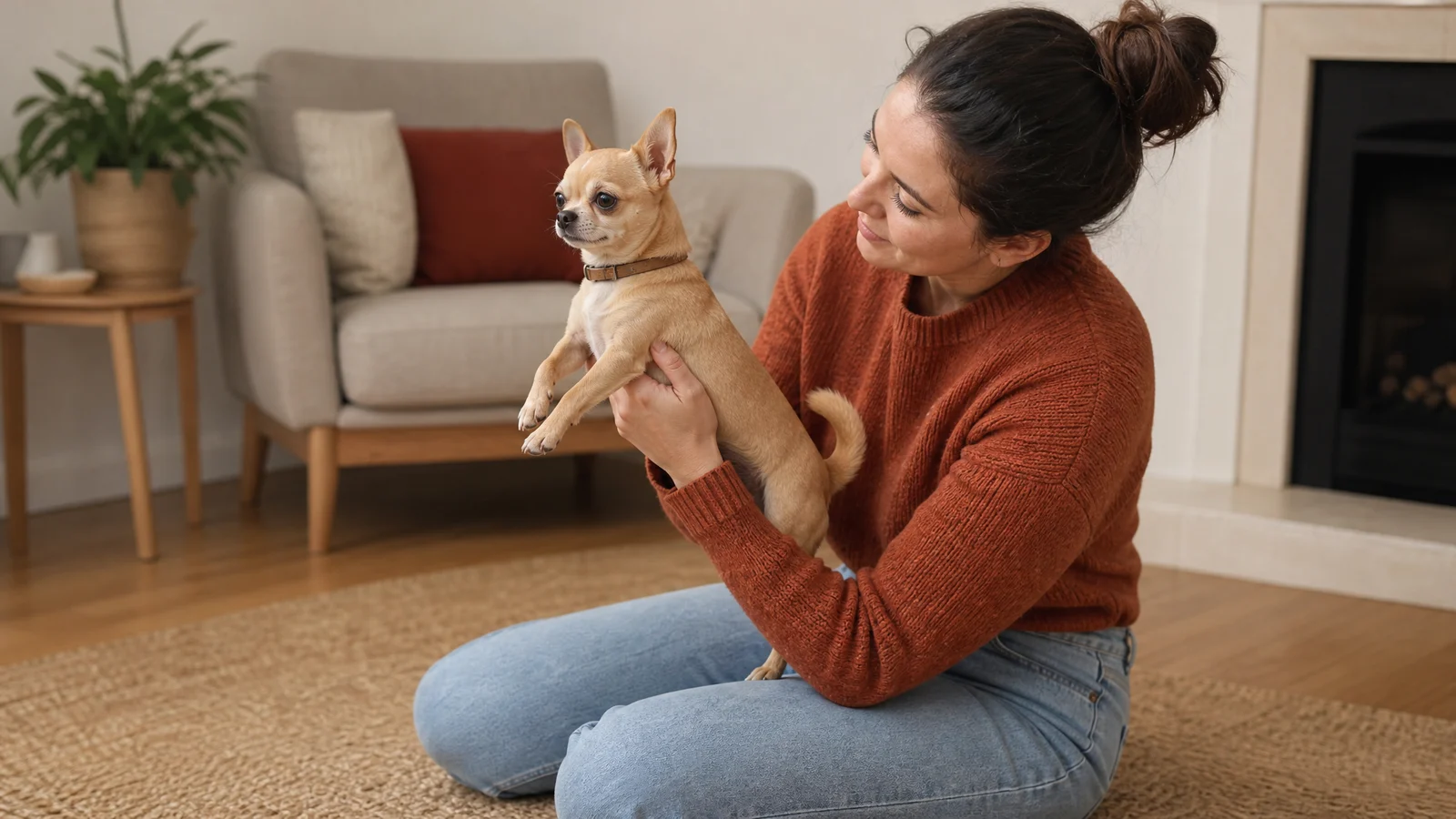
If your Chihuahua growls when picked up, put the lift on a spoken cue, pay with a treat after every lift, and handle them the way a show judge would: straight on, unhurried, never looming. A tiny dog who gets grabbed learns to dodge your hands, and a dog who can't dodge learns to growl and then snap.
We reviewed 415 Chihuahua owners' first-hand accounts, and some owners describe handling bites that grew after unpleasant experiences such as vet shots or a bad nail trim, then spread to baths and being picked up. A well-taught lift reverses that spread and gives you a dog who steps into your hands.
We'll walk you through the lift itself, the cue that announces it, how to support such a small frame, and how to let your dog say no, then the step that replaces many lifts and the signs that tell you whether it is working.
Basics of Picking Up
Being picked up is a trained skill for a dog this size. A Chihuahua who has never practiced it is being asked to trust an enormous animal to carry them off the ground, and for some small dogs the sudden rise is disorienting, frightening, uncomfortable or even painful. Many owners say their dog behaves far better for the vet or groomer than at home, so the practice has to happen in your own living room. Break the lift into approach, hands and set-down.
Approach From the Front
Walk up in plain view at a steady pace. Show judges are asked to approach straightforwardly rather than tentatively and to examine deliberately without being heavy handed. A creeping, hesitant approach looks odd to an alert little dog, while a direct, calm one is predictable.
Skip the lean-over. Most dogs dislike a person bending above them, and the dislike is much stronger in small dogs. Sit on the floor or crouch so your face is closer to theirs, and keep your breathing slow.
Hands That Do Not Rush
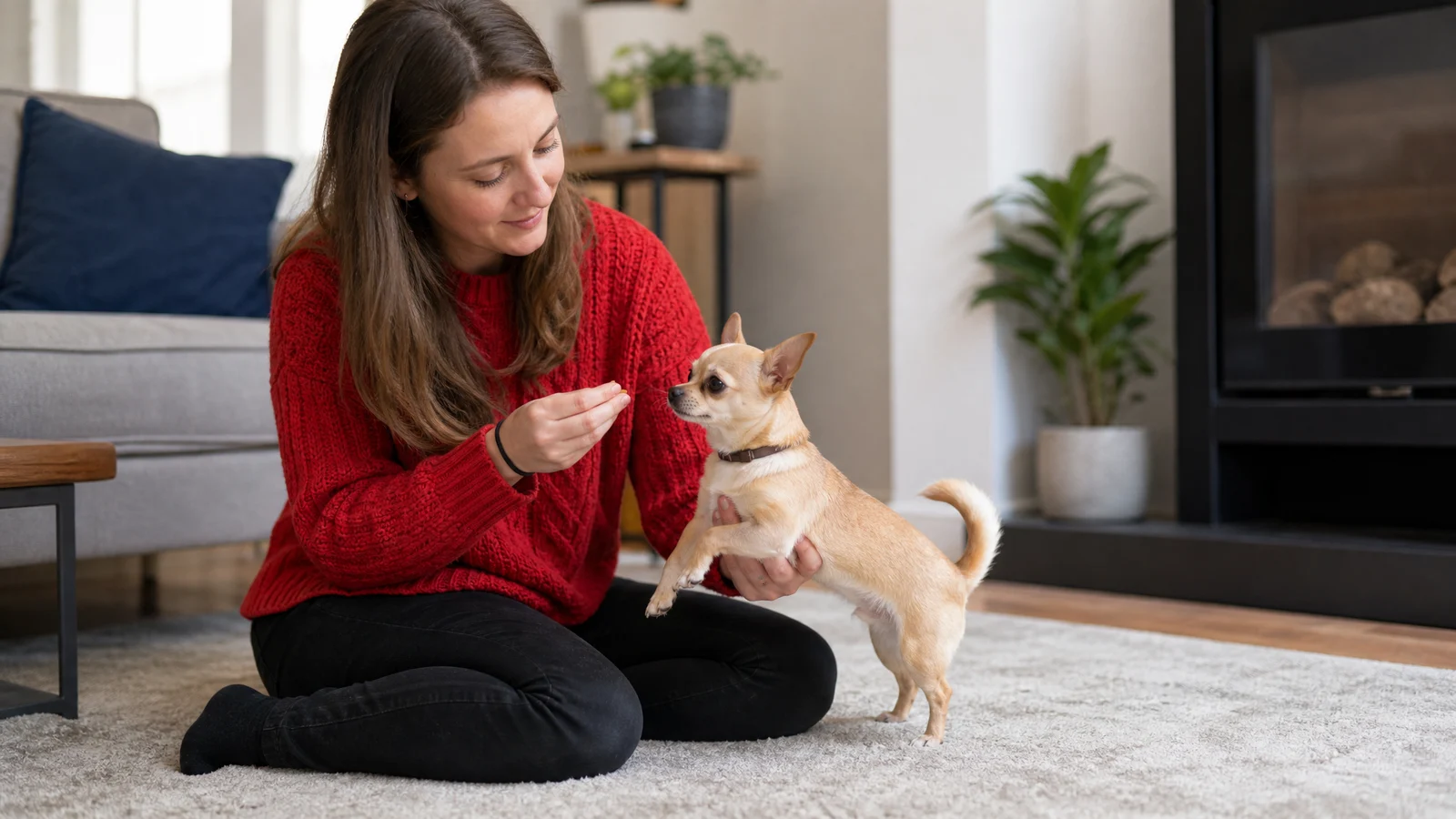
When your dog seems unsure, offer the back of your hand and let them sniff before you touch. Very quick, unexpected movements can upset a small dog who is about to leave the floor, so slow everything down. Build touch first: once a dog accepts touch all over, you can move on to handling individual body parts. Touch the chest, pause, treat, and only then lift.
Set Down on a Treat
Lower your dog all the way to the floor or step before your hands open. A dog released mid-wriggle learns that being held ends badly. Hand over the treat just as the paws land, so the end of the lift is the best part of it.
A Cue Before Picking Up
Pick one short word, say it every time, and pause a beat before your hands arrive. If you will ever lift your dog, putting the lift on a cue means they are never startled, and rewarding afterward builds a good feeling about being held. That pause gives your dog time to lean in or step away instead of bracing. Chihuahuas are quick, eager learners, so a clear cue pays off fast when you stay consistent.
Start in a quiet room, seated on the floor. Cut treats tiny, because a dog of about six pounds fills up fast and too many treats lead to obesity. Work through these stages and stay on each one until it feels boring.
Begin with the first stage: say the cue, wait for a look or a lean, lift a short way, set your dog down and give a treat. Once that feels boring, say the cue again, lift to your chest, set down and treat. The next stage adds a few steps while you carry them before you set them down and reward. Then repeat the whole sequence in other rooms, and finally ask another family member to do the lifting.
Deliver the treat at nose level while you sit or hold your dog close. Reaching down from above to feed brings the looming straight back.
Everyone in the house uses the same word. Chihuahuas know how cute they are and how to get what they want, so a pleading look that earns a silent scoop teaches your dog to demand lifts without any cue. The reverse also holds. Bites that grew from one bad event are best undone by a long run of predictable, rewarded lifts, each one a small deposit of trust.
Chihuahua Body Support
The breed club calls the Chihuahua somewhat fragile, and toy breeds have finer bones than a big dog, so a squeeze or a fall costs more. We found no breed-specific carrying instructions, so what follows is our reading of that fragility. The aim is simple: keep your dog's whole body supported and close, with nothing dangling or flailing.
Chest and Hindquarters
Support the chest and the rear together so no part of your dog hangs loose, then draw them in against your body once they are up. Paddling legs in open air panic a dog, and a panicking dog is the one who wriggles free. Sit or stay low for early lifts so any slip is short.
Head and Legs
Avoid yanking your dog up by a single limb. A molera, the soft spot on top of the head, needs no special rules. The standard accepts a skull with or without a molera, and the club says many puppies are born with one and that a molera is nothing to be alarmed over. Ordinary gentle handling is enough, though a sensible habit is to keep pressure off the top of a puppy's head. If you have questions about your own dog's soft spot, ask your veterinarian.
Visitors and Other Hands
Strangers who scoop up a toy dog can frighten them and may drop them. Ask guests to greet on the floor and let your dog come to them. A few house rules make this easy to enforce:
- Guests sit down and wait instead of reaching in from standing height.
- Children lift only while sitting on the floor with an adult beside them.
- Nobody lifts a dog who is dozing, eating or tucked into a favorite spot.
- If your dog walks away mid-lift, the lift is over and they get set down.
Your Chihuahua's Choice
Whenever it is safe, ask first and let your dog answer. Offering small dogs the choice and respecting signs of discomfort keeps the cue honest. Say it, hold your hands low and still, and watch. Stepping toward you, leaning in or staying loose means yes. Turning away, freezing, lip licking, backing off or a stiff body means not now.
Treat early signs as seriously as a growl, and stop at the first one. A dog who learns that you honor the whisper rarely needs to shout.
Read the whole dog, because single signals mislead in this breed. Owners describe shaking that comes from cold, fear, excitement, needing to go out and vet trips alike, and ear carriage shifts with movement and mood. A trembling dog leaning into your hands is probably asking for the lift, while a still, stiff one is not.
If your dog declines, don't chase. Walk away and invite them over, since inviting rather than approaching gives a dog choice and control. Many owners report snaps when a tired dog is moved off a lap or sofa. Invite a dozing dog down with a treat instead of lifting them.
Some Chihuahuas pick one person. If your dog is wary of a particular family member, have that person deliver treats and calm, predictable care. When snapping is already routine, read our guide to why Chihuahuas snap and how to help.
Steps Instead of Picking Up
The easiest lift is the one your dog does themselves. Use a lure or front-paw targeting to guide a hop onto a low step, stool or sturdy box, then add the verbal cue up. Pay when all four paws are on top, then let your dog hop back down. Your dog reaches your level on their own terms, and you never handle them from above. Place steps wherever you would otherwise hoist:
- A step or ramp beside the sofa or bed, which also spares small legs from big jumps.
- A low platform where you hand out treats, so your dog reaches your hands without a lift.
- A bench or rock on walks, so up becomes a calm way to get height or put an object between your dog and a passing stranger.
Common advice says to scoop a small dog the moment another dog appears, and a minority of owners do exactly that before a trigger gets close. We would not make it the default. Chihuahuas often pick fights with much bigger dogs instead of fearing them, and a dog in your arms can look like a toy to a larger one. The motion of lifting can add to a fixated dog's arousal, and a dog already reacting may redirect a bite to your hand.
Lifting also does nothing about how your dog feels, so the trigger stays a trigger. Pay for calm looks at a distance, use the step when you need height, and keep the lift for a crowd or a real emergency. Our piece on helping a scared or nervous Chihuahua lays out that work, and the complete Chihuahua training guide covers the wider picture.
Signs Picking Up Is Easier
A Chihuahua who can see the lift coming, say no, and get paid for yes has no reason to dodge or snap. So judge progress by your dog's body, not by whether the lift got done. You want a dog who agrees to being lifted, which is different from one who puts up with it. Regular vet visits belong in the plan too, since pain can hide behind a snap. These signs say the training is working:
- Your dog walks toward you or leans in when you say the cue.
- Their body stays loose in your hands, with soft eyes and a relaxed mouth.
- They take the treat gently afterward and don't scramble to get down.
- They hop onto the step on cue and wait for what comes next.
- Other family members can lift them without trouble.
These signs mean it is time to call your veterinarian or a trainer who uses rewards, since pain and fear can look alike:
- Yelping or crying out when picked up, which can point to pain.
- Stiffening, freezing or going rigid as your hands approach.
- Snapping or biting around lifting that does not ease with the steps above.
- Hiding or fleeing the moment you say the cue.
- Handling fear that spreads from lifting to baths, nails or touch in general.
 Bossy with big dogsSocializing a Chihuahua With Kids, Dogs and Strangers
 Hates being picked upChihuahuas That Yelp, Growl or Snap When Lifted
 Time aloneChihuahua Separation Anxiety: Teaching Alone Time