 Chihuahua
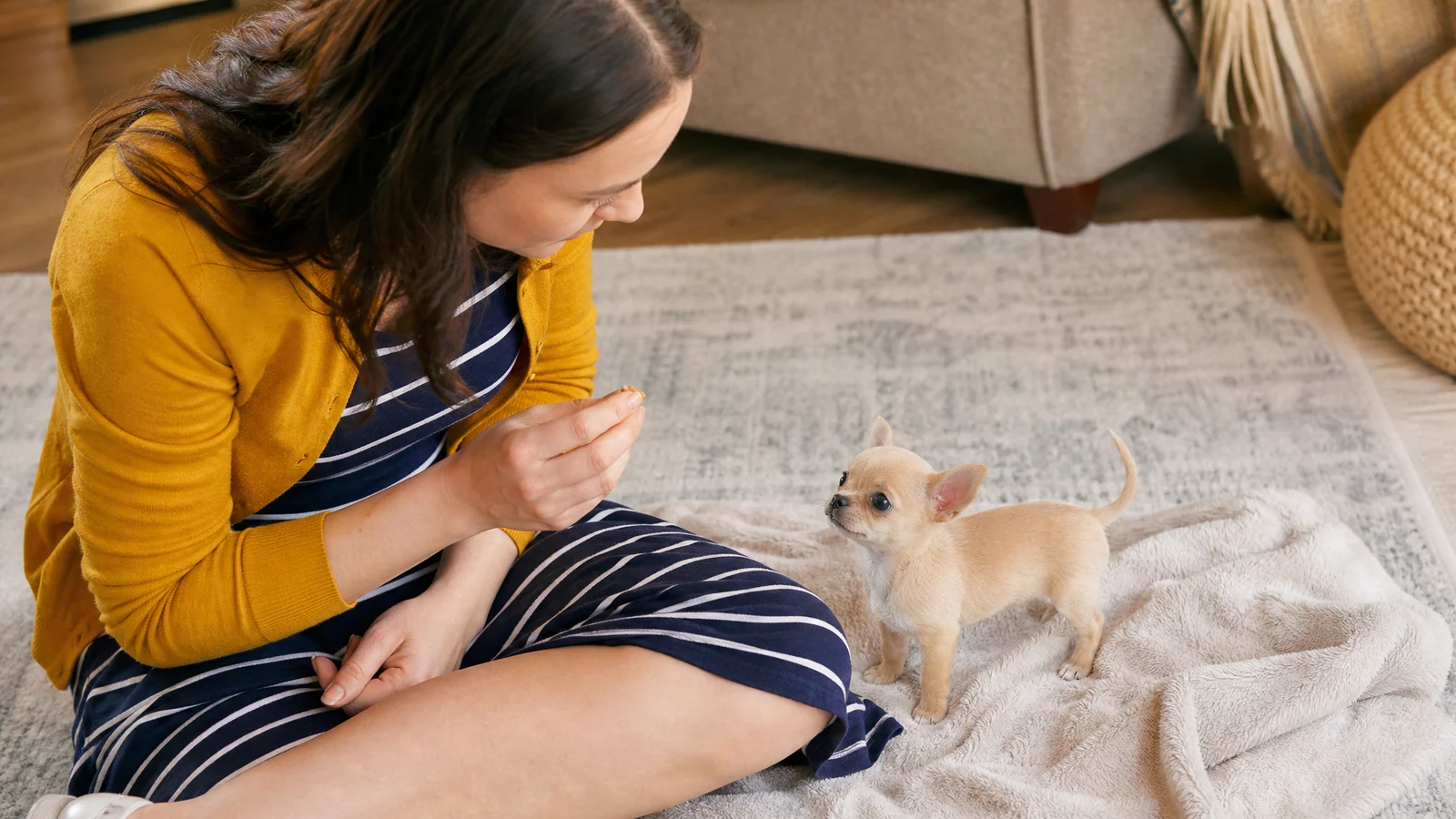
Short, warm sessions matter more for a Chihuahua puppy than for almost any other dog, because low blood sugar is a real risk in a toy-sized body. A puppy who starts out bright, then slows, drifts and sits down is giving you information, not being stubborn or sulky. A listless puppy is a reason to stop, so end the session, keep them warm and make sure food is within reach, and if they do not perk up right away, call your veterinarian.
The fix is brief, warm, food-backed practice that finishes while the puppy is still keen, repeated across many months. That habit protects a small body today, and a steady, trusting adult is what a Chihuahua gives back later.
Below, you'll find how long a session should last at each stage, how to read a puppy who goes dull, how to feed around practice, and how to socialize before vaccines are finished, including what to add as your puppy grows and how to hold your rules through adolescence.
Chihuahua Puppy Sessions Stay Short and Warm
In the early weeks, a Chihuahua puppy does best with very short sessions, a few times a day, in a warm room with a soft place close by. You stop while the puppy is still glancing up at your hands for more, and you let that glance, not the clock, decide when the lesson ends.
This is not softness. A toy-sized body burns through fuel quickly, and the breed club warns that a puppy who goes too long between meals, gets chilled or becomes stressed can slide into low blood sugar. Low stress is therefore a health matter here and not only a preference. A good session in these weeks runs like this:
- Start with a puppy who is fed, awake and warm, with a handful of tiny treats already in your hand.
- Ask for one thing, such as a name response or a sit, and pay the instant it happens.
- Finish on a success and a calm moment, then let the puppy rest before the next round.
- Stop the moment the puppy slows, looks away or lies down, even if you planned more.
Length grows slowly after that. No source gives a calendar for this breed, so we read it from the puppy: through the middle months, if they are still bright at the end, add a minute or two, and if they fade, drop back to what worked. By the second year a session is more about polishing known cues than adding new ones.
The rules do not get softer because the puppy is small. Chihuahuas know how cute they are and learn fast how to get their way, and a puppy should never be allowed to do anything that would be unacceptable in an adult.
Common advice says a dog this tiny can be forgiven the small stuff, and that is the slip that costs the most later. Decide the house rules together, begin on the first evening, and remember that owners of small dogs tend to be less consistent than owners of big ones, which is exactly where obedience slips.
A Listless Puppy Is a Reason to Stop
It usually unfolds quietly. The puppy who bounced through the first sit takes a beat longer to turn their head, settles onto their belly with a dull look, accepts one treat and then ignores the next, and may wobble a little when they stand again.
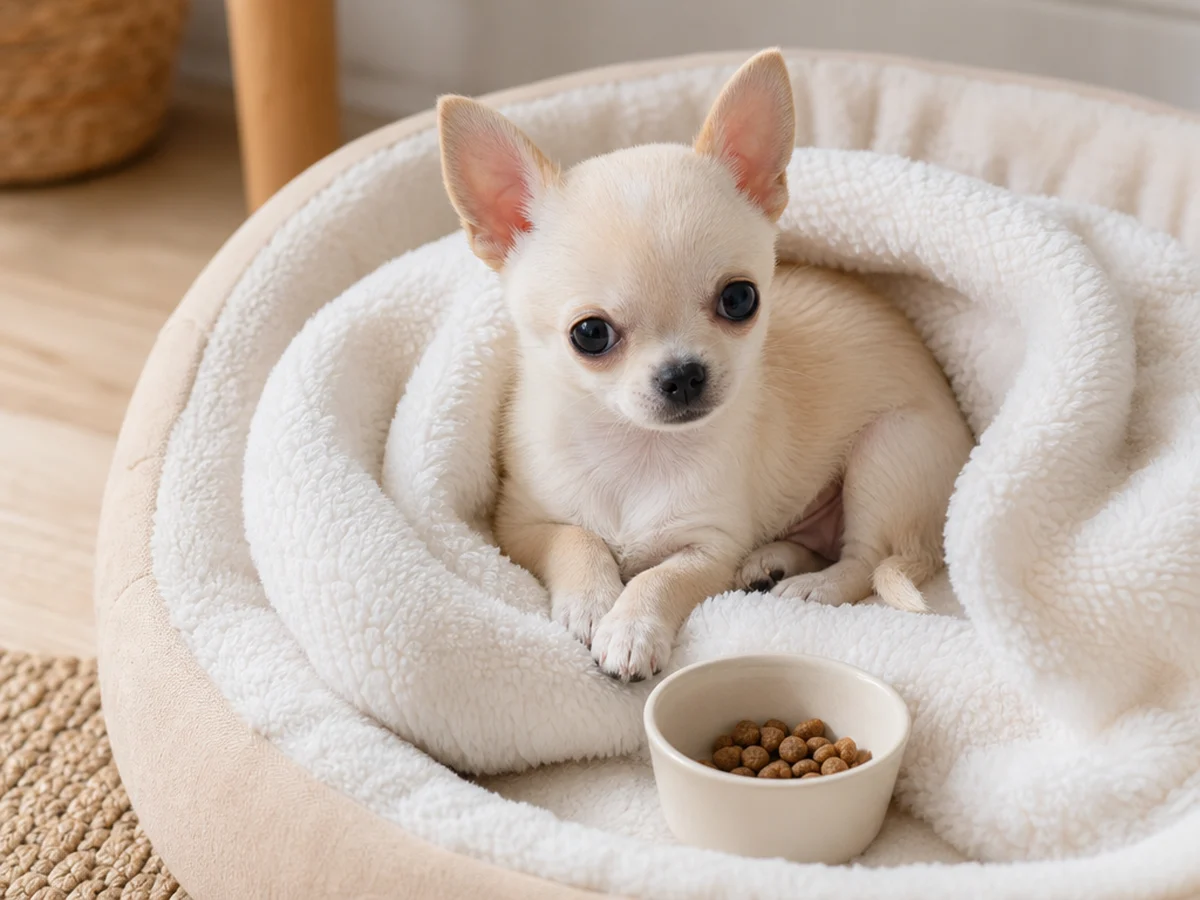
The natural reading, especially in a breed known for an independent streak, is that they have decided they are finished and need coaxing. Resist that reading. The club's flier says a puppy who becomes hypoglycemic will lack energy and become listless, and a puppy in that state is not being stubborn, so the session ends there.
What to Do in the Moment
Stop the lesson without fuss, wrap the puppy in something warm, and put food within reach in a quiet place, then watch closely. A puppy who brightens and eats is telling you the plan ran too long or landed too late in the day. A puppy who does not respond right away needs veterinary help quickly, because low blood sugar can be life threatening, and calling the clinic early is better than waiting to see.
Small Signals Count Too
Ordinary stress follows the same rule. When a puppy begins to shut down or show stress, pause, return to the last step where they felt sure of themselves, or swap in a different plan for the day. Lip licking and turning away deserve the same attention as a growl, and a small dog's distress is never just cute. Ears pinned back can simply be a Chihuahua greeting, so read the whole dog and not one signal.
A puppy who trusts you to step in at the first sign of trouble tends to grow into a steadier adult, and a puppy who stops is asking for food, warmth and rest, not for an argument.
Does a Tiny Puppy Need Food Before Training?
Yes, and for the same reason that listlessness is a warning. Hypoglycemia means low blood sugar, and in a Chihuahua puppy it can follow too long between meals or a spell of being chilled or stressed. Young puppies should have food available at all times, and adults are fed twice a day because of higher metabolisms, so training fits inside that pattern and never replaces a meal.
A lot of general advice says to train a hungry dog because hunger sharpens motivation. For a toy puppy we would turn that around. Practice after a meal or while food is still within reach, begin in a warm room and not a drafty one, and keep the treats tiny so they add to the day's eating instead of crowding it out.
The Club's Low Blood Sugar Advice
The club's flier names corn syrup, or honey diluted 50-50 with water, as items to give a puppy to restore sugar balance, and says to seek veterinary help if the puppy does not respond immediately.
Regular vet visits are where you learn what is normal for your own puppy, including whether the feeding plan should change as they grow, and they are worth keeping even when everything seems fine. If a puppy seems weak despite food, treat it as an emergency and call your veterinarian right away.
This is general information, not veterinary advice. Please ask your veterinarian ahead of time what to keep at home, how often your own puppy should eat, and how to handle a low blood sugar emergency.
Puppy Socialization Starts at Home, Not the Sidewalk
Socialization advice for toy puppies can seem to contradict itself. The breed club says puppies should be kept close to home until all their shots are done, yet the best learning window runs from 3 to 14 weeks, and work done before about 20 weeks is what the term technically means. Both are true, so the answer is to start at home and plan outings around your veterinarian's vaccine advice.
Waiting passively for the last vaccine is the part of the common advice we would push back on, because the first three months are when a puppy's view of the world forms. Early socialization is a must for this breed, which is rated on the reserved side with strangers, and tiny puppies are the ones who miss it because people assume they do not need it.
The pattern owners describe is consistent. Chihuahuas who are good with children are often credited to early, positive exposure, owners of wary dogs say theirs never met children young, and many dogs accept their own children yet nip unfamiliar ones.
Toy breeds need the same socialization as any other dog, and sheltering a tiny puppy from other dogs leaves them without that early experience. Our guide to socializing a Chihuahua goes further. A workable order at home, as our own reading and not a fixed calendar, looks like this:
- In the first week, introduce surfaces and handling: tile, a rug, a bath mat and a towel, each paired with a treat, plus gentle touches of paws, ears and mouth.
- In the second week, add sounds at low volume, such as the vacuum in another room, the doorbell and the dishwasher, turned up only while the puppy stays relaxed.
- In the third week, invite calm visitors who sit on the floor, ignore the puppy at first and toss treats instead of reaching over their head.
- In the fourth week, begin carried trips in your arms or a carrier at quiet times, as far as your veterinarian says is safe.
Expect a wobble, because normal fear periods are common, often around 8 to 11 weeks, and a puppy who loved the vacuum last week may flinch at it now. Keep going at the puppy's pace with more distance and better treats. When outings begin, start at quiet times, walk the outer edge of crowds, and make sure the smallest dog in the room always has somewhere to duck into. Your living room is a perfectly good first classroom.
What Changes for a Chihuahua Puppy After Four Months?
Less than owners expect, and more than they notice. By now the puppy knows the home, the schedule and the voice that comes before a treat, so the work moves from introductions to habits. No source gives milestones by month for this breed, so treat any calendar as a guide and let the puppy set the pace.
Mouthing, Teething and Chewing
Many owners describe a puppy who settles in calmly and then becomes a hard biter within the first weeks, going for hands and faces, and teething keeps it going. Stop the game when teeth touch skin, turn away briefly, and hand over a chew when the puppy returns calm. Owners report mixed results from yelps and time-outs, so watch what your own puppy does with each. More detail is in our guide to puppy biting and chewing.
What to Add
Focus lengthens now, which makes room for a recall practiced in a secure room, settling on a mat while the household is busy, and grooming handling, with short daily touches of paws, ears, lips and teeth, each followed by a treat, so exams feel ordinary later.
House training stays a work in progress. Owners report anywhere from about a month to a year or more before a dog is reliable, those with other small dogs often say their Chihuahua was slower, and some adults are never fully reliable.
What helps is the standard method run more often: outings every hour or two and after naps and meals, big praise and a treat the moment the puppy goes, and a smaller pen while learning. Cold, wet weather tends to cause setbacks. See potty training a Chihuahua puppy for the full routine.
What to Keep Easy
Keep outings brief and warm, treats generous and alone time gradual. Owners split on crates, and both camps have a point. Some make the crate rewarding with treats, praise and the same time every day, and their dogs come to nap there, while others find a dog-proofed room or gated area with the crate door open calmer. Our guide to crate training a Chihuahua covers both paths, and the right one is whichever lets the puppy settle.
Chihuahua Adolescence Tests Puppy Rules Again
This is the stretch when a puppy who once answered every cue starts to second-guess them, and it rarely means you did something wrong. Adolescence in dogs is a long, uneven stage with big hormonal shifts and a rebuilt brain. In dogs generally, the start can fall anywhere from 6 to 12 months of age, and the finish anywhere from 18 to 24 months. No source narrows that down for Chihuahuas, so treat these ages as a guide and not a rule.
We have trained this breed for many years, and this is the stage where owners most often write off a dog who is really just rebuilding. Expect an old cue to be ignored, barking at things that were fine last month, and house-training slips, since some owners report a regression around the first birthday. Fear phases can return, and some young adults lose their recall around other dogs or seem to stop listening altogether.
Reset Without Pressure
Go back a step. Use better treats, shorter distances and a quieter room, ask for cues the puppy can do, and end on one that works. Keep the house rules exactly as they were, because this is when consistency pays back, and keep sessions short, since tiredness looks like defiance. Research on small dogs links shared training and play with owners to better obedience, so make practice part of the day and not a separate chore.
Barking and Other Dogs
Barking at sounds, people and dogs outside tends to rise, so reward calm and reduce access to the trigger, for example by blocking the view from the window. A well-socialized dog need not greet every dog, so practice focusing on you at a safe distance. For a dog who missed early socializing, pairing triggers with rewards can reduce barking or lunging.
Hold the rules, lower the difficulty, and let the teenage months pass.
Two Years of Small Wins Build a Steady Chihuahua
By the second year the puppy looks like an adult and the work becomes polish and upkeep. This breed has an independent streak but is happy to please when asked, and trainability rates a 3 out of 5, neither eager nor self-willed, so steadiness comes from asking often with real rewards and not from any single lesson.
If training turns into a struggle at any age, a trainer experienced in positive reinforcement can help, and regular vet visits let your veterinarian check whether pain or illness explains a sudden change in behavior.
A Chihuahua grows reliable through many tiny, happy, well-fed repetitions, one warm five-minute session at a time, and a puppy who stops is always telling you something. Keep the rules the same as you would for a big dog, feed before you teach, and the steady adult follows. For the next two weeks, give five minutes a day, always after a meal and in a warm room:
- Every day in week one, practice name response and sit, paying each success with a tiny treat.
- Each day that week, add one new surface, sound or handling touch, such as a bath mat, the vacuum in another room or a gentle paw touch, always with a treat.
- Every day in week two, add a short recall in a secure room and then settling on a mat, and stop the instant the puppy slows.
- Once during these two weeks, take a carried trip at a quiet time if your veterinarian says the vaccine schedule allows it, and book the next regular vet visit.
 Training basicsChihuahua Small Dog Syndrome: House Rules From Day One
 Crate cryingCrate Training a Chihuahua: Crates, Dens and Carry Bags
 Puppy nippingHow to Potty Train a Chihuahua Puppy