 Chihuahua
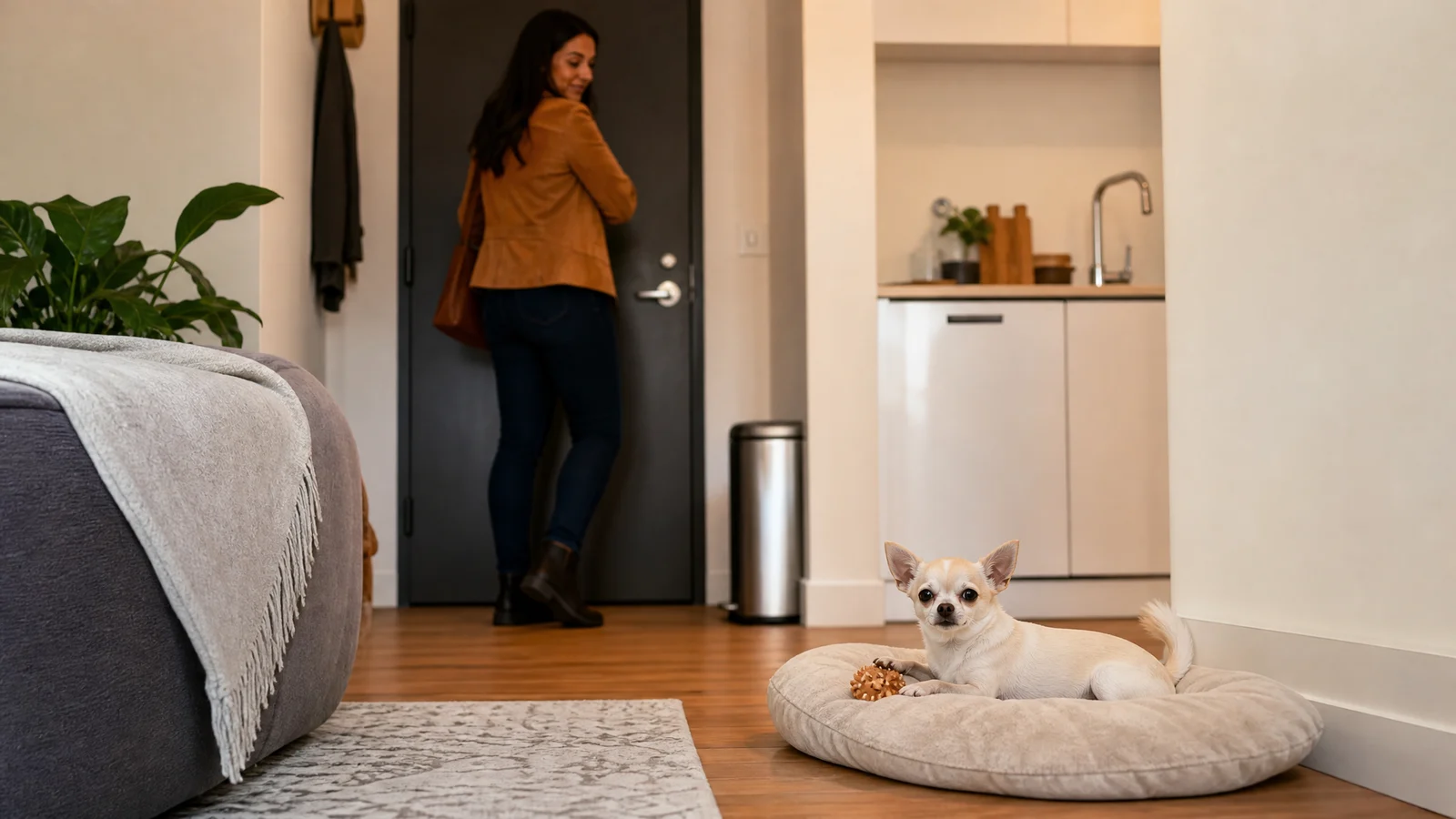
How long a Chihuahua puppy can be alone changes by weeks of practice, not by a fixed date. A puppy new to your home may manage only moments out of your sight at first, then a few minutes, then a longer stretch once the earlier steps feel boring to them. A rescued adult climbs the same ladder, starting from wherever they are today.
Timing matters for this breed because Chihuahuas are devoted to their person, and that closeness can turn into panic when the steps come too fast. Get the pace right and you gain a dog who naps while you shower, run errands or sit in another room.
In this article, we'll go through what you hear, what you see and what you find on coming home, then the safe den and the graded steps that fix each sign, and finally a two-week plan.
At-Home Chihuahua Separation
Not every symptom is a sound. Some owners see a dog who trails them from room to room or panics the moment they step away. Naming the difference between a habit and a worry tells you how much work lies ahead.
Following as Habit Versus Distress
A habit looks relaxed. The dog trots after you, flops down nearby and settles when you stop. Distress looks tense. Owners describe dogs attached to one person who cry non-stop when that person is away, withdraw to their bed until the person returns, or need to be held. The first needs little more than gentle practice. The second needs the full ladder below.
Either way, the fix starts while you are home. Reward your dog on their bed, then walk around the room and reward again, stretching the distance slowly. The same go-to-bed cue keeps a tiny dog out from underfoot while you work, so it earns its place twice.
The Bathroom Door
Crying at the bathroom door is a small, clear picture of the larger problem. The closed door is a barrier between a devoted dog and their person, and the dog cannot tell whether you are coming back.
Start with the door open and a treat on the bed in view. Close it for a moment, open it before any fuss, and reward. Build from there across the week.
Lap-Time Dependence
Lap time is part of this breed's charm, and we would never take it away. The trouble starts when a lap is the only place your dog can relax. Offer laps by invitation, then cue a move to the bed after your dog is calm, and let other family members take a turn with treats and cuddles so one person is not the whole world.
Some owners rearrange life around the dog, taking them everywhere and never being apart. It feels kind, and it works until the day you cannot. Teach calm lifts on a cue, as in picking up a Chihuahua, so being carried never becomes the only comfort.
Separation Practice Across Three Homes
These steps take your dog from seconds to longer absences. The method is simple, but it only works if you move at your dog's pace. Progress is real, though gradual, and each step below has a job.
Departure Cues and Greetings
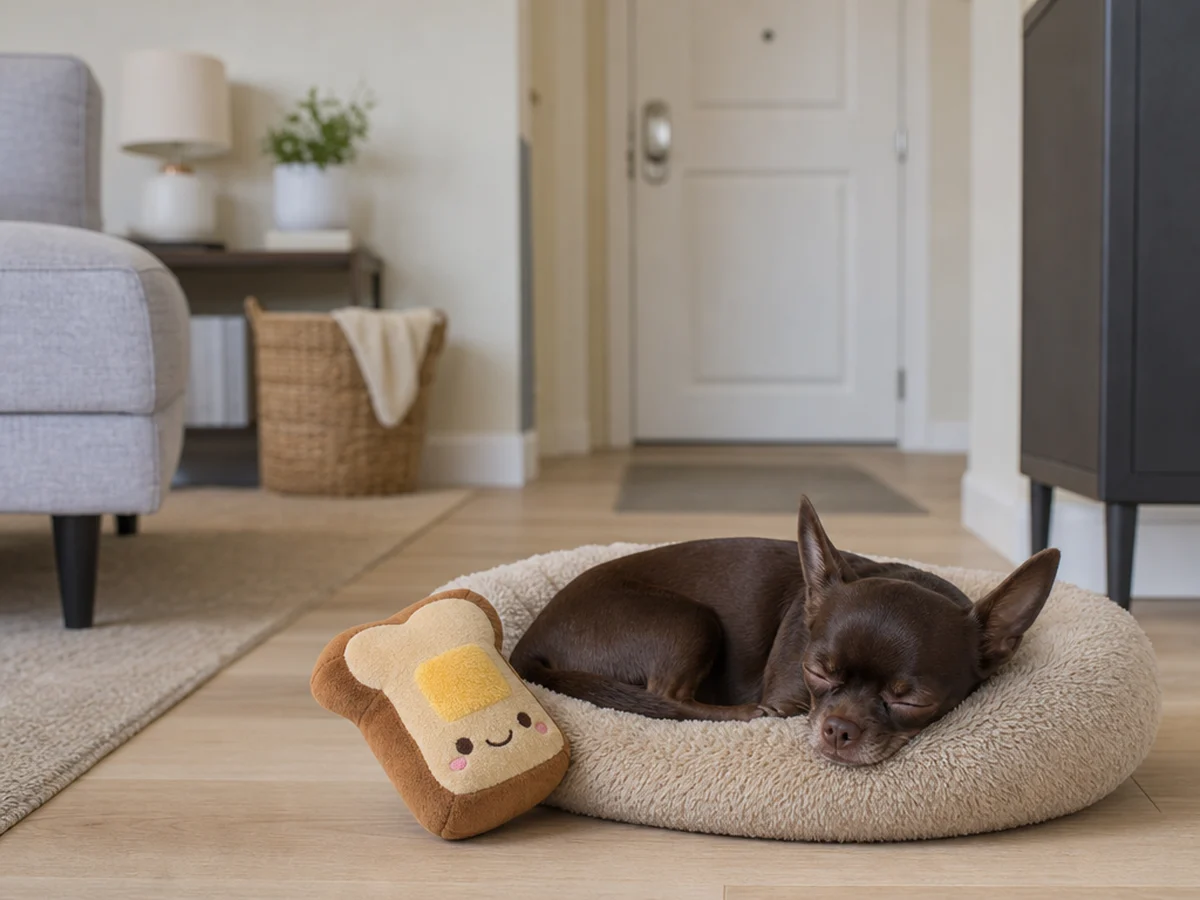
Keep leaving and coming back casual. Owners who improved alone time stayed low-key at both ends, waited until the dog was calm before greeting, and gave a food toy on leaving. Offer the toy only at departures so it stays special, choose one sized for a tiny mouth, and test it while you are home. Take it away when you return.
Timing Each Step
Move up only once your dog has stayed relaxed through the current step several times in a row. Use a camera if you can, because it shows whether your dog calmed or merely went quiet.
- Feed meals and treats in the den with the door open.
- Cue your dog to the den, reward, take a step away, then return and reward.
- Go out of sight for just seconds, come back before your dog fusses, and stay neutral.
- Add time in small amounts, mixing shorter and slightly longer absences.
- Hand over the food toy as you leave and collect it on return.
- Build toward a minute or two, then longer. Owners who see progress grow absences gradually from very short ones.
When Your Chihuahua Backslides
Setbacks are normal after a move, a houseguest, a schedule change or adolescence. Drop back to the last step that felt easy, stay there for a few days, and rebuild. If progress stalls, a trainer who uses positive reinforcement can help you read your dog's body language.
First-Week Chihuahua Separation
Let's define the goal first. Separation-related behavior is distress that comes from time alone, appearing before you leave or soon after. It grows like wading into a pool from the shallow steps, so the timeline is a ladder your dog climbs, not a date on a calendar.
Chihuahua behavior and training is our specialty, and we would rather give you an order than a number of hours, because no figure is reliable for this breed and dogs vary widely. A newly arrived puppy starts with moments out of sight, then a minute or two, then longer. An hour comes from stacking many calm short absences, never from trying it on a busy Saturday.
Why the Early Weeks Matter
The early weeks matter most because Chihuahuas are known for devotion to their handler, and many want to be on a lap most of the day. A puppy who is always held gets no chance to learn that quiet time alone ends well. The hardest cases owners describe are dogs in their first days or weeks after adoption, so give a newcomer time to settle before you test any absence.
Owners of puppies and young dogs often see distress fade with age and routine, but it fades because calm was practiced, not because time passed. Adults and seniors can learn too and start on the same bottom step. Distress tends to begin within a few to 30 minutes of your leaving, so watch that window closely. A minority of dogs are fine alone from the start, which is a bonus and no reason to skip the groundwork.
Crying During First-Week Separation
Sound is the symptom owners notice first, so the map starts there. Each kind of noise has a likely cause, and the cause tells you which fix to try first. A little complaining as you leave is common. What matters is whether the noise fades or builds.
Whining at the Door
Whining at the door usually means your dog has read a departure cue and wants to come along. Owners describe dogs who notice shoes, makeup or the morning shower and respond by blocking the door, hiding, glaring or refusing the last toilet trip. The cause is prediction, not spite.
The fix is to make the cues dull. Pick up your keys, put on your shoes, then sit down and read. Repeat through the day without leaving, and pay a treat for any calm moment, so the cue stops predicting your exit.
Crying in the Den
Crying inside the den means the space has not yet become a happy place, or the absence outran your dog's comfort. Owners who crate successfully describe making it rewarding with praise and treats at the same time each day, and their dogs now nap there. Others found a gated area with the crate door open far calmer than a closed door.
Go back to meals and treats in the den with the door open, and shorten the next absence. Never lengthen a stay to wait out a dog who is crying hard.
Noise That Rises or Fades
Here is a term worth learning: the settling curve. Watch how the noise changes over the first few minutes. Noise that tapers to a sigh and a nap shows learning. Noise that climbs into howling shows panic, and the lesson being taught is that your leaving is frightening.
Common advice says to ignore all crying until it stops, and we disagree. Waiting out brief fuss is fine, but waiting out panic makes the next departure harder. End the session when you see these signs:
- Howling that does not pause or gets louder over several minutes.
- Drooling, panting or pacing that builds instead of fading.
- Frantic scratching at the door or attempts to escape the pen.
- Refusing a treat or food toy that is normally welcome.
Do not count on company to fix it. Several owners report that a second dog or a cat did not stop the howling, so work on your own dog's confidence. A steady background sound can be part of the setup you build for alone time. If the noise is alarm barking at doorbells instead, see common Chihuahua behavior problems.
Work-Block Chihuahua Separation
The third kind of evidence is what you find when you come home. Damage and mess can have different causes, and reading them correctly keeps you from treating panic as bad manners or boredom as anxiety. Look at where, when and with what other signs.
- Distress leaves clues around the exit: scratched doors, shredded bedding near the door, drool, panting, pacing, or soiling alongside other signs of worry. When these come with distress while you prepare to head out, separation anxiety is the likelier explanation, not poor manners.
- Boredom looks scattered. Chewing spreads across the room, the dog seems relaxed on video and greets you happily.
- Incomplete house training shows up whether or not you are home. A tiny body cannot hold it as long as a large dog's, so a puppy schedule needs shorter gaps than generic advice suggests.
Some distressed dogs escape pens and injure themselves, so walk the room at dog level before every session. Remove cords and small objects, check the pen's gaps and height, and take off a collar or tag that could catch on bars. If your dog is still trying to escape, shorten the absence instead of adding locks.
Safe-Den Setup for the Work Block
Every fix in this article depends on a place where your dog learns that being alone is safe. Choose a quiet corner in a room you use, away from the front door and from windows with foot traffic, since a den beside the door turns every arrival into a trigger. Keep it draft-free, with soft washable bedding your dog can burrow into, and add a worn shirt if your scent soothes them.
Size matters for a tiny dog. A crate should hold a bed and room to stand, turn and lie down, while a small playpen or gated room gives more space without a locked door. A gate also keeps a tiny dog apart from bigger dogs when nobody can supervise.
Owners split on crates, and the split is reasonable. Inside the crate, a dog with real separation anxiety stays worried and may soil, howl or injure themselves, so a safe room often works better. The first move is always to begin with the door open, as laid out in crate training a Chihuahua.
Safety is the one firm rule the breed club gives: never leave a Chihuahua alone outside. Keep every practice session indoors, in the den.
Comparing Three Chihuahua Separation Setups
Advance by the dog's recovery, not by the date. The useful starting point differs across these homes, but the rule is shared: add time only after the current repetition ends with a loose body, normal eating and an easy return to rest.
| Setup | Starting repetition | Ready to advance | If the dog struggles |
|---|---|---|---|
| Newly adopted dog | Meals in the open den and a moment behind the door | The dog eats and settles after the door moves | Return to the open door and shorten the absence |
| Someone home all day | Bed rewards while the person moves one room away | The dog stays on the bed instead of following | Reduce the distance and reward before the dog rises |
| Longer work block | A potty-gap check and a camera-recorded brief exit | The dog rests without chewing, pacing or an accident | Shorten the exit and review the den and potty setup |
Calm alone time is taught in small steps, not endured. Chihuahuas are devoted by nature, so success is a dog who can rest because departures have become predictable and safe. Keep regular vet visits, and ask sooner about sudden accidents or injuries from escape attempts.
 Guarding foodChihuahua Resource Guarding, Jealousy and Guarding Their Person
 Shaking at noisesHow to Help a Scared or Nervous Chihuahua
 Training basicsChihuahua Behavior and Temperament: Are Chihuahuas Easy to Train?