 Chihuahua
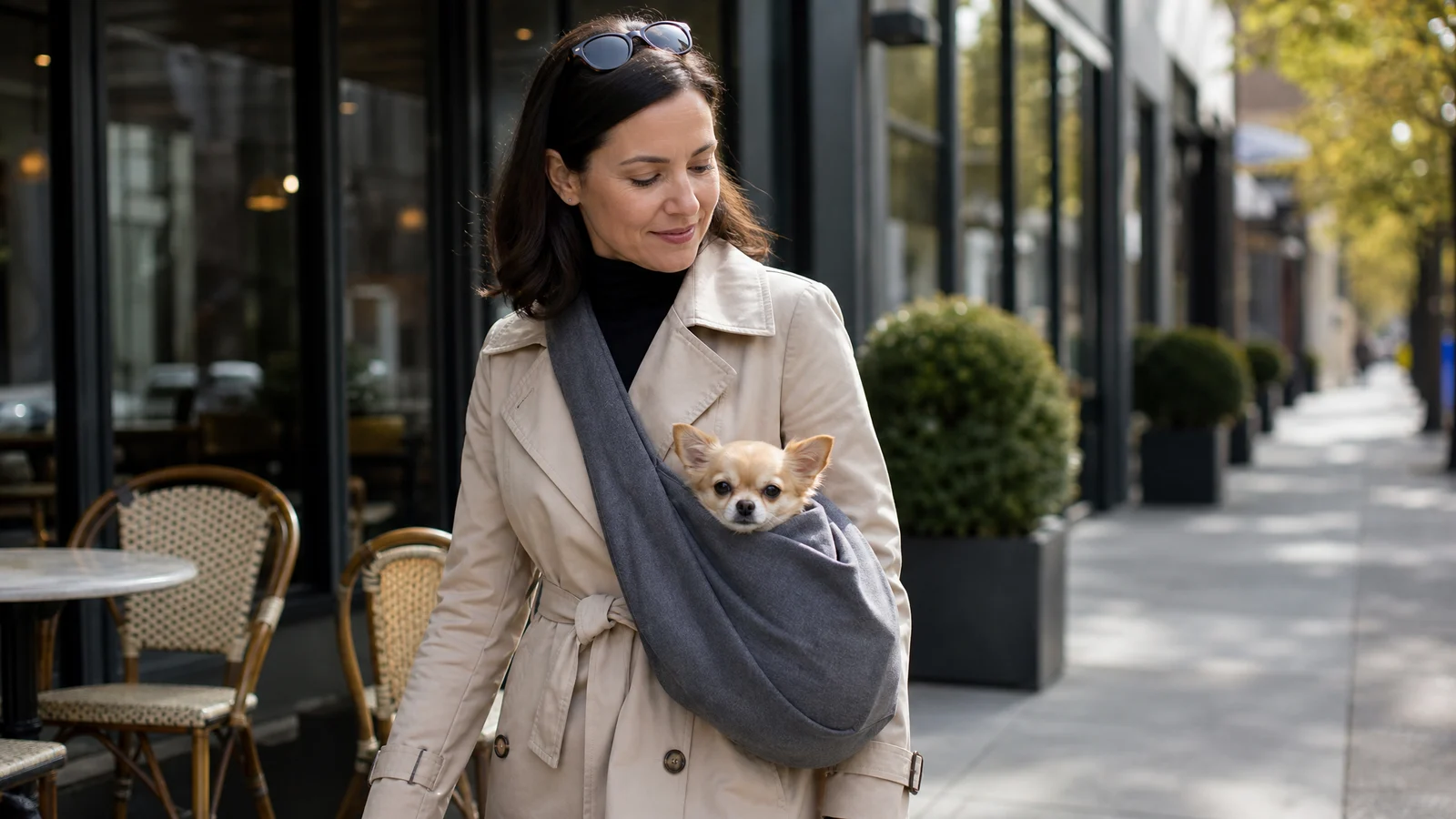
Some Chihuahuas hear a single word and trot to their bed, then ride in a sling with their chin on the edge. Others weave around your ankles in the kitchen, squirm out of the bag as soon as the zipper moves, or scream the moment a door closes. Temperament plays a part, but history plays a bigger one. The first dog learned, treat by treat, that small enclosed spaces predict good things. The second was asked to cope.
This article looks at the sounds and behaviors Chihuahua owners meet around crates, pens and carry bags. Read on to learn why screaming, refusing, bolting, chewing and shadowing happen, how to fix each, when a gated pen beats a crate, and how to tell ordinary fussing from real distress. For a dog this small a panicked scramble can injure them, so calm conditioning is a safety measure.
Why a Chihuahua Underfoot Needs a Go-To-Bed Cue
A Chihuahua is small enough to disappear below your line of sight, so the dog trotting at your heels is the one a dropped pan, a swinging door or one heavy step can hurt. Small and toy breeds have finer bones than big dogs, which means a bump that a larger dog shrugs off can do real damage here.
A cue that sends your dog to a crate or bed while you cook, sweep or carry laundry is therefore a safety tool first and a manners tool second, and it sets up everything else below, because the crate, pen and bag are all places your dog learns to enter for a reward.
Your dog follows you because you are the most interesting thing in the house, so the cue has to offer something better than your ankles. A cue you only reward on some days becomes optional. Pick one word, have everyone in the home reward it the same way, and keep treats tiny.
You will use a marker word, a short sound such as "yes" that pins down the exact instant your dog did the right thing. Teach from the floor beside the bed, so your dog can approach the bed easily.
- Toss a tiny treat onto the bed and mark the moment all four paws touch it.
- Say "bed" just before your dog steps on, then mark and reward.
- Take one step away, come back and reward, so the bed stays interesting while you move.
- Add ordinary household noise such as sweeping, rewarding calm waiting every few seconds at first.
- Add a release word so your dog knows when the job is over.
Our complete guide to training a Chihuahua covers marker words and food rewards in more depth.
Screaming or Barking When the Crate Door Closes
Protest at a closed door usually has stacked causes. The door may have shut before your dog learned that closed does not mean abandoned. The crate may predict isolation because it only appears when you leave. And once shouting gets the door opened, shouting becomes a skill. The fix follows the causes: slow the departures down, change what the space predicts, and stop paying for noise.
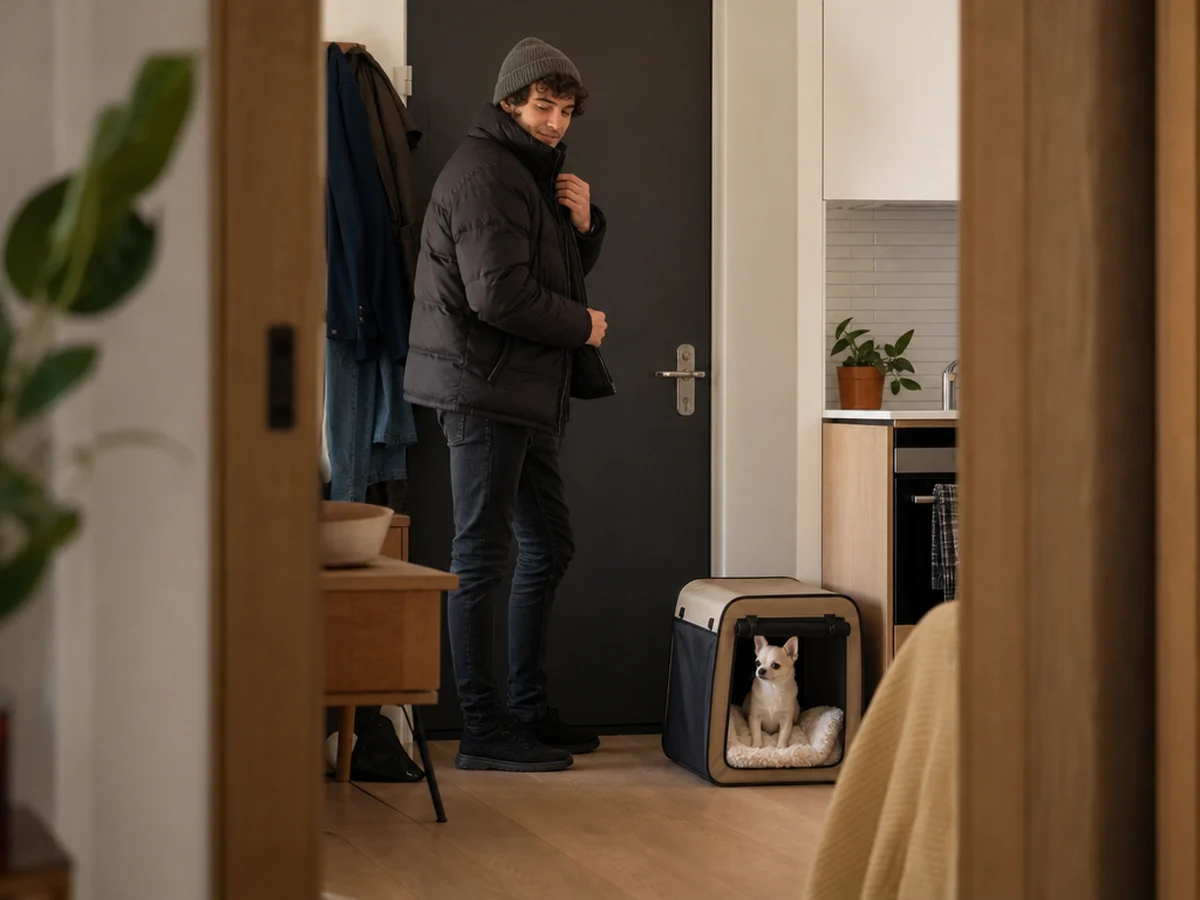
Across the 415 Chihuahua owners' accounts we reviewed, opinions on crates split. Some made the crate rewarding with treats, praise and the same time every day, and their dogs now nap there. Others found a dog-proofed room or gated area with the crate door left open much calmer. Early nights are hard in both camps, and some puppies scream as soon as the owner walks away even after good crate work.
- Close the door for a moment while you stay put, treat through the bars, and open it before your dog gets upset.
- Build to sitting nearby, then standing, then stepping out of sight, moving on only while your dog stays quiet.
- When protest starts, pause for a brief lull in the noise before you open the door, because releasing a vocal dog teaches them that noise brings you.
- Hand over a food-stuffed toy as the door closes, so the closing itself predicts something good.
- Keep the crate in a room where people spend time, so it does not feel like exile.
After a night potty trip, take your puppy out calmly, skip the play, and return them to the crate. If they have had ample chance to eliminate, ignore a little whining and they should settle.
When a Gated Pen Is the Better Choice
A crate does not suit every dog. Crates calm some dogs who treat them as a private retreat, yet they raise stress in others, and for those dogs the suggestion is a single room behind a baby gate. A gated room or playpen with the crate door left open is a sensible choice for a dog who panics inside a crate.
We lean toward the pen for any dog who keeps panicking after patient practice. Check it for gaps, anything climbable and anything chewable, and keep the crate inside as an optional retreat. Some owners let a newcomer walk into an open crate at their own pace, and some use the crate only at night.
Refusing to Enter the Chihuahua Crate or Bed
A dog who plants their feet at the crate has usually learned something about it. Perhaps it was where they were put when you left, perhaps a hand carried them in, or perhaps the space is cold, drafty or far from the family. Because the cause is an association rather than stubbornness, you rebuild the picture with food and choice. A good target is a comfortable refuge where your dog can rest, sleep or take downtime.
Chihuahuas seek out warm spots indoors and are known to burrow under blankets in bed. Our reading is that a washable blanket to push into suits that habit, and a warm, quiet corner will beat a bare plastic floor. No source says a covered crate suits the breed, so try a light cover over part of it and remove it if your dog seems bothered.
Tie the door open so it cannot swing shut and startle them. Toss a treat near the entrance, then just inside, then deeper over several sessions, and feed meals beside the crate before moving the bowl in. If they back away, return to the last step that felt easy and stay there longer. Lifting or nudging a reluctant dog inside only confirms the worry.
Placement matters too. Keep the space away from drafts and heating vents, since this breed was built for warmth and needs extra care in the cold. A timid newcomer or rescue may need weeks, and owners who simply wait for the dog to emerge on their own describe dogs who open up with time.
Wriggling, Bolting or Trembling in the Chihuahua Carry Bag
A Chihuahua will spend a good part of life in a bag, sling or basket, and each deserves the same patient conditioning as the crate. Wriggling has a physical cause as much as an emotional one. A bag swings, tilts and rustles, and being lifted off the floor is disorienting or frightening for some small dogs. A bag introduced on the morning of a trip starts that trip badly, so allow plenty of time between buying it and needing it.
- Leave the bag open on the floor near the bed and drop treats inside, letting your dog step in and out freely.
- Feed a meal beside the bag, then just inside it, and reward calm sitting in it.
- Close it partway for a few seconds while you treat, then open it before any worry shows.
- Zip it fully for short sessions at home, with your voice and treats close.
- Lift it just off the floor and set it down, then carry it a few steps, then walk around the room.
Put being picked up on cue as well. Say a word, lift, then reward, so a lift predicts something good and never startles. If your dog trembles, lower the bag and go back a step. Bolting usually follows an open zipper and loose straps, so keep the bag closed or held against your body near doors, and clip on a leash whenever your dog is out of it.
Portability brings extras. Many airlines allow small dogs in the cabin when they are secured in a bag, so comfort in it is a real travel skill. Pick your dog up in tight crowds where they could be stepped on, and carry them home if they are panting and working hard to keep up. Leave them out of places that are not dog-friendly, which can cause access problems for service-dog teams.
Crate Accidents and Chewing While You Are Out
Soiling and chewing while you are gone point to one of two causes: the stretch was too long for a small bladder, or stress has taken over. Small dogs need to go more often than large ones, so a reliable dog who suddenly soils is telling you something about the setup. Scratching or licking at the door reads the same way, and owners describe destruction that sometimes injures the dog.
A common rule says a locked crate should be the default whenever you leave. We would not apply it to a Chihuahua whose chewing or soiling comes with panic, because a distressed dog is not safer in a box. Dogs with true separation anxiety stay panicky inside a crate and can soil, howl or hurt themselves trying to get out. Many owners find a dog-proofed room calmer, and a camera shows what really happens.
Shorten the gap, offer a trip outside right before you go, and add indoor play such as hide and seek, which suits a dog this size. Leave a food toy sized for a small mouth. Keep leaving and returning low-key, and greet your dog only after they calm, since a big hello makes your return the main event.
Owners who improved things built absences up from a minute or two, and some reached about two hours that way. Keep regular vet visits as well, because pain or illness can change toileting and chewing habits.
Following Your Chihuahua's Owner From Room to Room
Following you everywhere is normal for this breed, and trotting after their people is a large part of how Chihuahuas get their exercise. Shadowing becomes a concern when it comes with crying at the bathroom door, needing to be held, or withdrawing to bed until one particular person returns. Several owners describe exactly that attachment. The likely cause is practice: a dog who is never apart from you has never had the chance to learn that you come back.
So build independence in small separations your dog can win. Put a baby gate across a doorway and toss treats to the far side, so distance brings food. Send your dog to the bed with your cue, step out of sight for a second, then return to mark and reward before they follow. Lengthen the gap a little at a time and mix easy trials with slightly harder ones.
Some dogs read departure cues such as shoes, makeup or the morning shower, then block the door or hide. Practice those cues without leaving, so they stop predicting your exit. A second dog or a cat does not reliably fix it, since owners with pairs report howling in chorus. Puppies often follow everywhere and become easier to leave as adults, but for a fuller plan see our guide to teaching Chihuahua alone time.
Crate Pacing, Panting and Drooling Mean Real Distress
Ordinary fussing is brief: a few whines, a turn or two, a sigh, then a settle, often within minutes of a chew or food toy. Real distress persists and looks different. The cause is fear rather than bad manners, so simply adding more crate time does not help. The table below sets the two side by side.
| Ordinary fussing | Real distress |
|---|---|
| A few whines, then quiet | Long stretches of howling or screaming |
| Settles with a chew or food toy | Refuses treats the dog normally loves |
| Normal breathing in a cool room | Panting and drooling |
| Turns around and lies down | Pacing that does not stop |
| Dry, clean bed afterward | Soiling, scratching the door, attempts to escape |
If you see the right-hand column, end the session, make the next one much shorter, and keep your dog below the point where distress begins. Panting, restlessness and toileting changes can also have medical causes, so book a vet visit before assuming the problem is behavioral. If signs persist, ask about a referral to a qualified behaviorist who uses reward-based methods.
Many of the hardest cases are dogs newly adopted, in their first days or weeks, so give a new arrival extra time. Our article on a scared or nervous Chihuahua covers fear that reaches beyond the crate.
One Chihuahua Cue to Practice Today
Every symptom above traces back to the same root: a tiny, fast-learning dog closely tied to their people who has not yet decided that small spaces are good. The cure is the same for the crate, the pen and the bag. Make each place a source of food and calm, and let your dog choose to go in.
So do one thing today. Open the crate or the carry bag, toss a tiny treat inside, say your cue once as your dog steps in, then mark and reward. Leave the door open and the zipper undone. Tomorrow, drop a treat a little deeper and watch whether your dog starts heading there on their own.
 Puppy nippingHow to Potty Train a Chihuahua Puppy
 Barking at visitorsHow to Train a Chihuahua: The Complete Guide
 Training basicsLeash Training a Chihuahua: Pulling, Lunging and Loose-Leash Walking