 Chihuahua
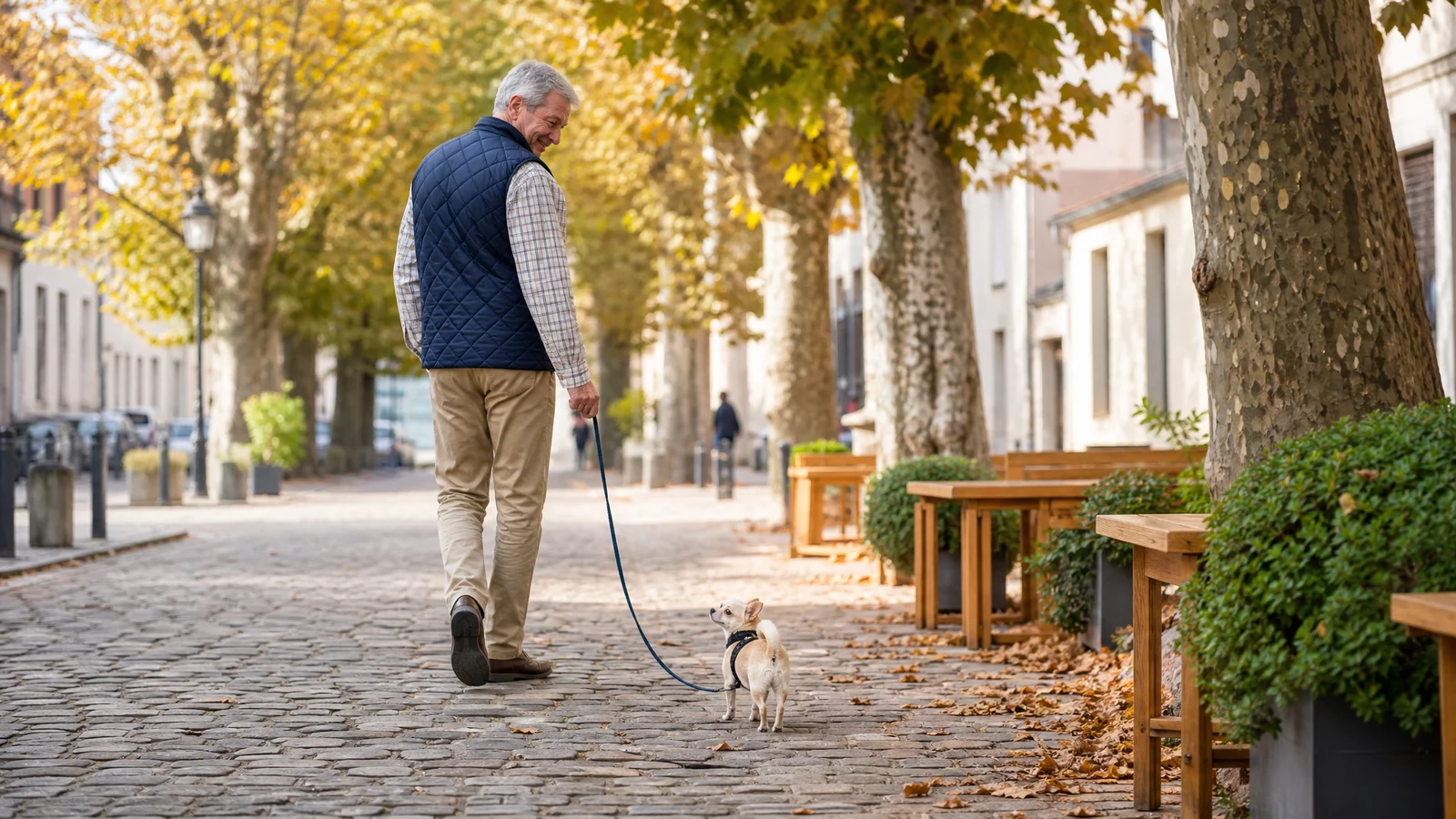
Early training is a must for a Chihuahua, and what owners really want to know is how many weeks until the pulling stops. Nobody can honestly give you a date. It depends on how often pulling still pays off and how steady your walks are.
For a dog this small, the stakes are practical. The wrong gear puts strain on a delicate neck, and a dog who lunges at every stranger turns each outing into a chore. Done well, the walk becomes the easy part of your day. Read on for harness fit, indoor practice, what slack looks like on a tiny dog, how to make pulling stop paying, what lunging usually means, and how to handle big dogs.
Chihuahua Leash Pressure Belongs on a Harness
The first principle is equipment, and we don't think it's up for debate. Walk your Chihuahua on a harness so leash pressure never lands on the throat.
The evidence is general, so we won't stretch it. One veterinary article lists pressure on the dog's neck among the things that can worsen the cough of a collapsing trachea, and names a harness instead of a collar as part of managing it. The condition mostly appears in middle-aged and older dogs and in certain toy breeds. The article doesn't single out the Chihuahua. Still, a harness costs little and removes the risk.
Owners describe walking on a harness rather than a collar, citing tracheal worry or a vet's advice. They keep a light collar for ID tags, if at all.
The harder problem is finding one that stays on. Many owners report a Chihuahua who slips out of collars and most harnesses, so fit took several tries. That matters beyond comfort. A Chihuahua should be leashed whenever you're in public, so you can move them out of harm's way and they can't bolt when frightened. A scared dog backing out of a loose harness defeats that purpose.
- Fit the harness with your dog standing, then let them back up and wriggle in the living room. If the shoulders slide free, adjust it or try another style.
- Put it on for a few seconds at a time and hand out treats, so wearing it predicts something good.
- Recheck the fit whenever your dog gains or loses weight.
- If you ever need to lift your dog away from trouble, treat it as an emergency exit, not a steering tool.
This is general information about dogs, not breed data. A dry, honking cough or any trouble breathing needs your veterinarian right away. Regular vet visits are also the place to ask which gear and how many treats suit your own dog.
Loose Leash Begins Indoors, Not on the Sidewalk
Many small-dog owners don't think leash manners are necessary for a tiny dog. We think that's a mistake. Little dogs learn the way big ones do, and a Chihuahua is quick, so the sidewalk shouldn't be the classroom.
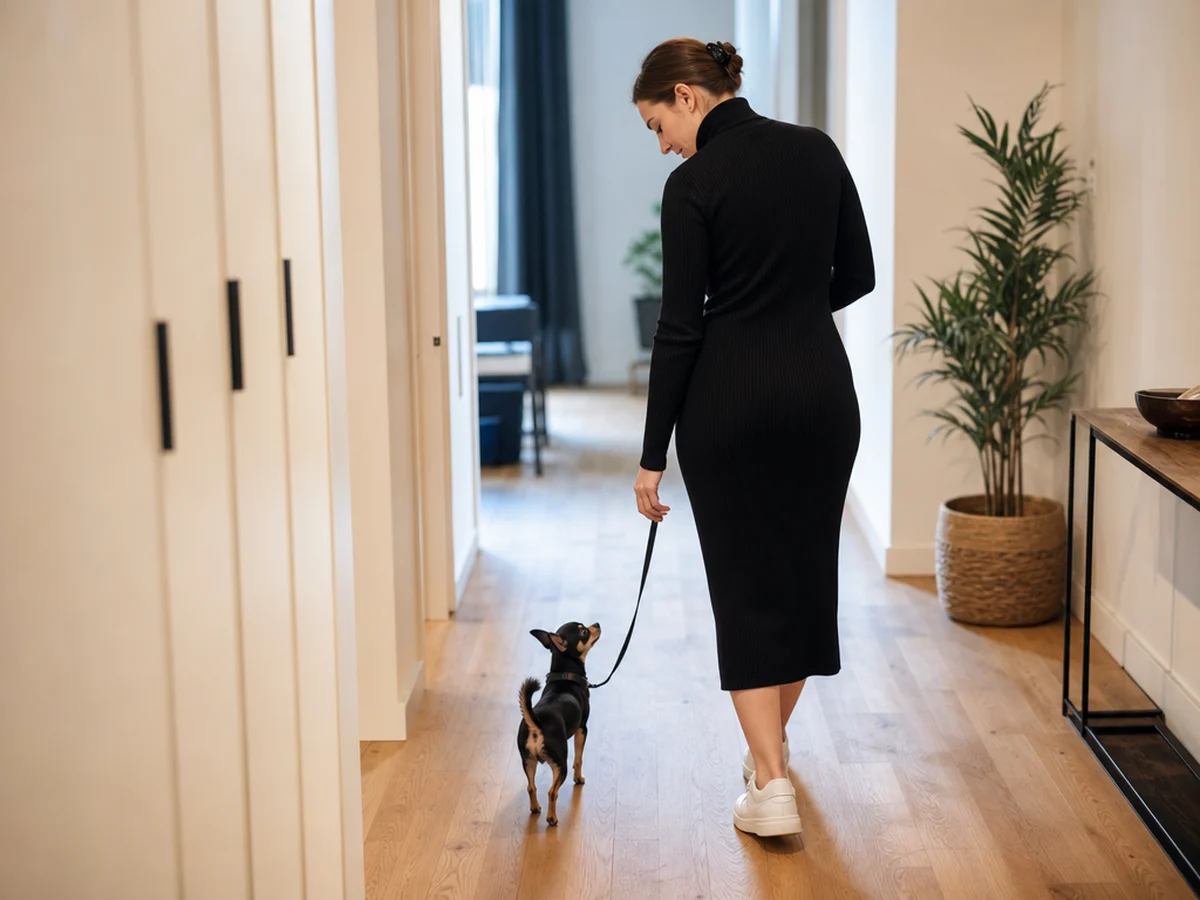
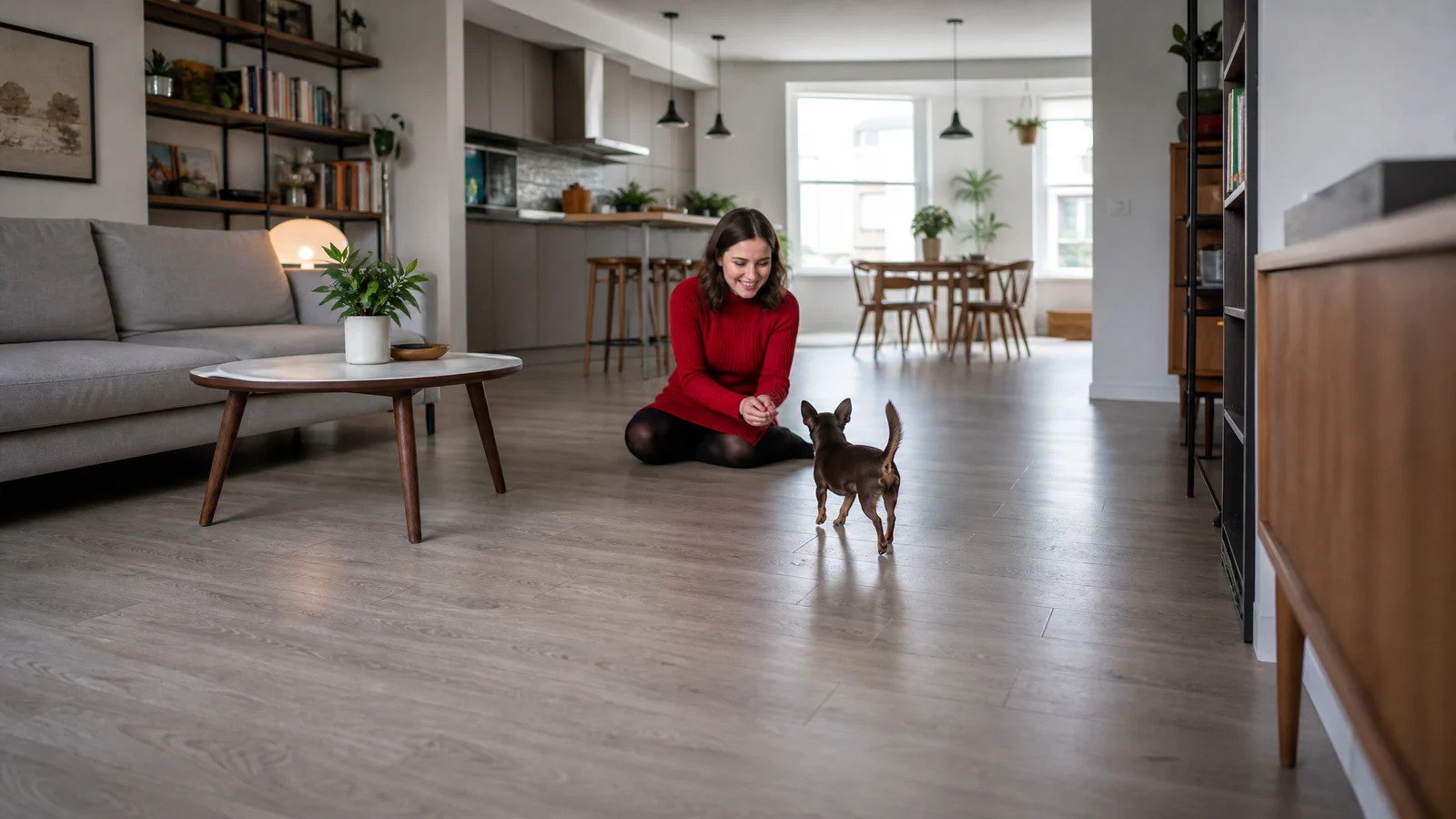
Start on a hallway or room floor, where nothing outranks you. Clip the leash onto the harness and let your dog drag it for a minute while you hand out treats. Then teach the spot beside you: say your marker word and pay when your dog is at your side.
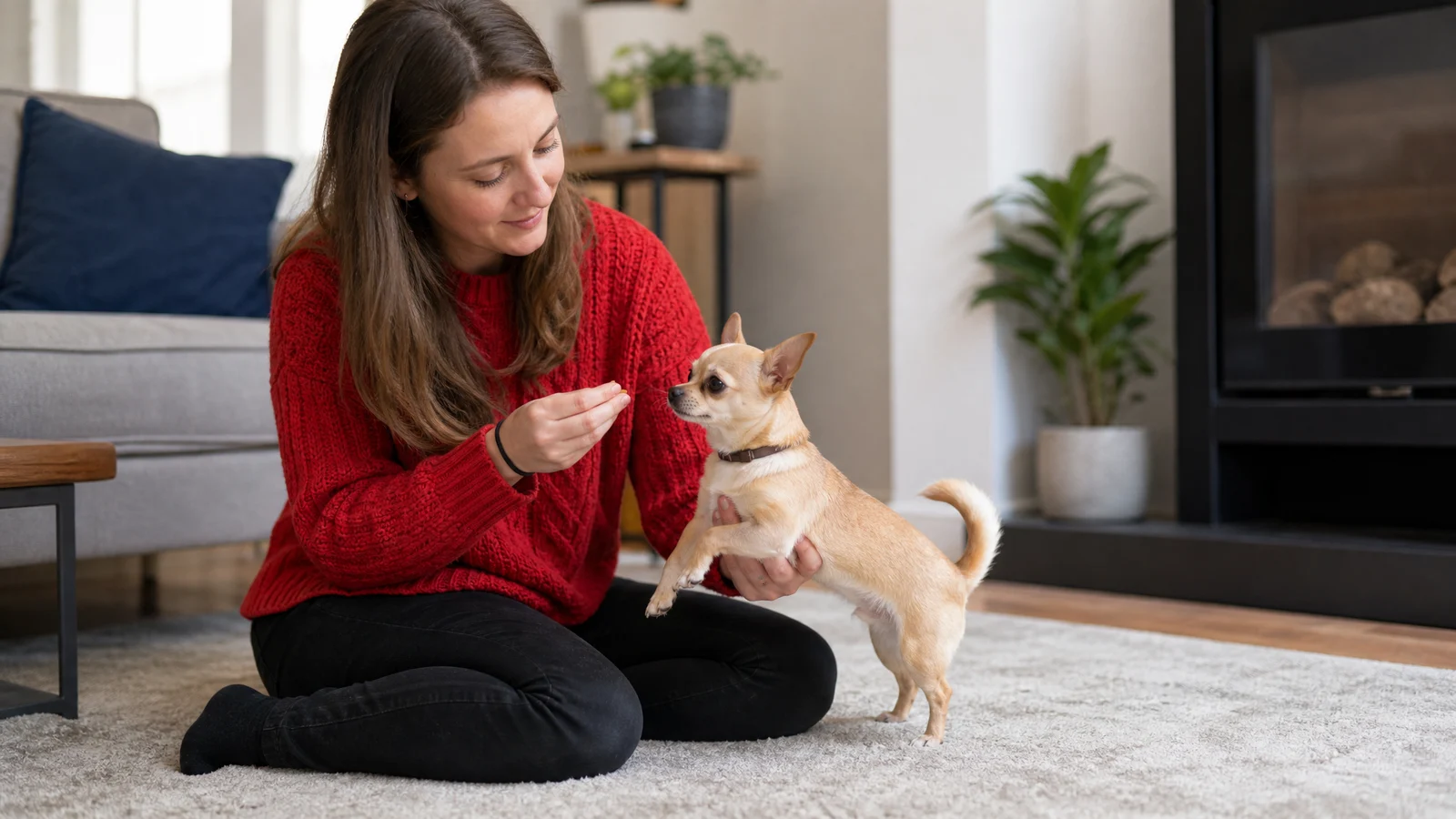
Paying a dog this small without folding in half takes a little engineering. Spread something soft on a long spoon or spatula and lower it to them. Most dogs dislike being loomed over, and small dogs dislike it more. Sitting on the floor works just as well.
- Reward every step or two beside you, with the leash hanging in a loose curve.
- Add a step, then a turn, then a few steps in a new direction.
- Move to a second room, then a doorway, then a quiet porch.
Keep the pieces tiny and count them as part of the day's food. Some Chihuahuas gain weight easily, and extra pounds shorten life more in the smallest dogs. Food drive varies too. Some dogs work happily for kibble, and others need something better.
Practice coming when called in this same setting, during play, so that returning to you and going back to play are equally rewarding. A Chihuahua's recall belongs on the hallway floor and on a leash outdoors, not in an open field.
How Much Leash Slack Does a Chihuahua Need?
Loose does not mean limp. On a dog this small, the right amount is a gentle J-shaped curve between your hand and the harness, with no tension in either direction.
Use a light leash. A heavy clip and thick webbing hang on a tiny dog and make slack feel like pull. Keep your hand low and relaxed so the line doesn't tug upward and lift the front end. Never let the leash drag along the ground under their feet, where it can catch a paw.
Slack also depends on speed. Short, slow walks suit this breed, so match your pace to theirs instead of asking a Chihuahua to trot to keep the line loose. If you keep having to hurry them, the walk is too long or too fast.
Capacity itself varies enormously. Owners report dogs who hike several miles and dogs who manage half a block before asking to be carried, and size doesn't predict which. Some owners cap walks for willing dogs who would push past their limit. Many keep a sling, backpack or stroller so the dog can ride for part of the outing and walk again when ready.
Stopping Pays Better Than Leash Pulling
A dog pulls because pulling works. Every step that gets them to the lamp post teaches that tension is the way to travel. Your job is to make slack the faster route.
The PDSA's advice is to stop walking as soon as the dog pulls and simply wait. The goal, as one animal welfare charity puts it, is that not pulling becomes the fastest way to get where the dog wants to go. When your Chihuahua turns back or the line loosens, mark it, pay beside your leg and move on.
If waiting isn't enough, turn and walk the other way, then reward as they turn with you. Changing direction suits a small dog, who can pivot in a heartbeat.
Here we push back on a common habit. Carrying a Chihuahua past every awkward stretch feels kind, but reinforcing loose-leash steps with treats teaches more than carrying does.
One pattern deserves its own note. Many owners describe a dog who refuses to walk away from home but speeds up on the way back. Carrying them a few houses away first, then setting them down, often gets the walking started. Cold and rain stop some dogs completely. A dog who won't walk in bad weather isn't being stubborn, so shorten the outing.
Is Leash Lunging Fear Rather Than Aggression?
The likely reason is fear or overexcitement, and the two look identical from the other end of the leash. Owners, especially of rescues, describe Chihuahuas who are sweet with the family but bark, snarl and lunge at passers-by and other dogs. The triggers are often oddly specific: eye contact, hoods, wheels, scooters, wheelchairs, even yard decorations.
A tiny dog facing something big and unpredictable has few options. Lunging either makes the scary thing go away or lets the excited dog reach it. Read the body before the bark. Stiffness, staring, trying to escape and pinned ears all say the dog is stressed. Lip licking and turning away deserve as much attention as a growl.
Some owners see the opposite, a dog who is quiet and meek outdoors and does all the barking at the door or in the yard. Watch your own dog before deciding where the trouble is.
Timing of the food is what worked for owners who reduced walk barking. They got their dog's attention and paid the moment a trigger appeared, or paid for passing quietly, using a "look at me" cue or the Look at That game. Those who waited until the dog was already worked up found even excellent treats ignored. Pay before the reaction, not after.
Our article on the reactive Chihuahua on walks lays out the full plan. Expect it to be slow. Owners describe reactivity training as gradual and long, starting at home, then moving to quiet places, then working near triggers.
Distance From Big Dogs Buys a Chihuahua Calm
Space is the cheapest tool you own. A dog who can still take a treat can still learn, so work at the distance where your Chihuahua notices the other dog but stays loose.
Pair the sight of the big dog with food, and turn away before your dog tips over the edge. Room to retreat lets a dog regroup, and confidence built this way keeps barking from escalating. A well-socialized dog doesn't need to greet every dog. Practice from afar so yours learns to look at you and ignore the big one nearby.
Scooping up can feel like the obvious fix, but we'd retire it as a habit. Lifting doesn't address how the dog feels, so the same scene repeats next week. If the other dog is staring and close, the sudden movement can wind yours up further, and an aroused dog may twist around and bite the hand holding them. Use it when safety demands, and otherwise move away with your dog on their own feet. Our guide to Chihuahuas and big dogs covers safe meetings.
- Turn and walk the other way early, while your dog is still taking treats.
- Cross the street or step behind a parked car before the other dog gets close.
- Teach a cue for hopping onto a step or going behind an object, as an alternative to being lifted.
- If you can't train at that moment, walking very early or late, when few dogs are out, is a fair way to manage the problem.
Short Happy Walks Make a Steady Chihuahua
Everything above comes down to one idea. A Chihuahua is best served by brief, rewarding, consistent harness walks, not long corrective ones. Keep the outings short, the harness snug and the pay steady for the position you want, and keep your dog far enough from triggers to learn. A dog who finishes every walk wanting a little more starts the next one willingly.
Once the basics hold, owners tend to wonder about a few things:
- How far should we go, and what else does a Chihuahua need each day? See How Much Exercise Does a Chihuahua Need? Plus Brain Games.
- Which cues make walks easier, such as a hand target or a quick turn? See Tricks to Teach a Chihuahua.
- Is training this breed different from training other dogs? See How to Train a Chihuahua: The Complete Guide.
Whatever you tackle next, the goal stays the same: short, happy walks on a snug harness.
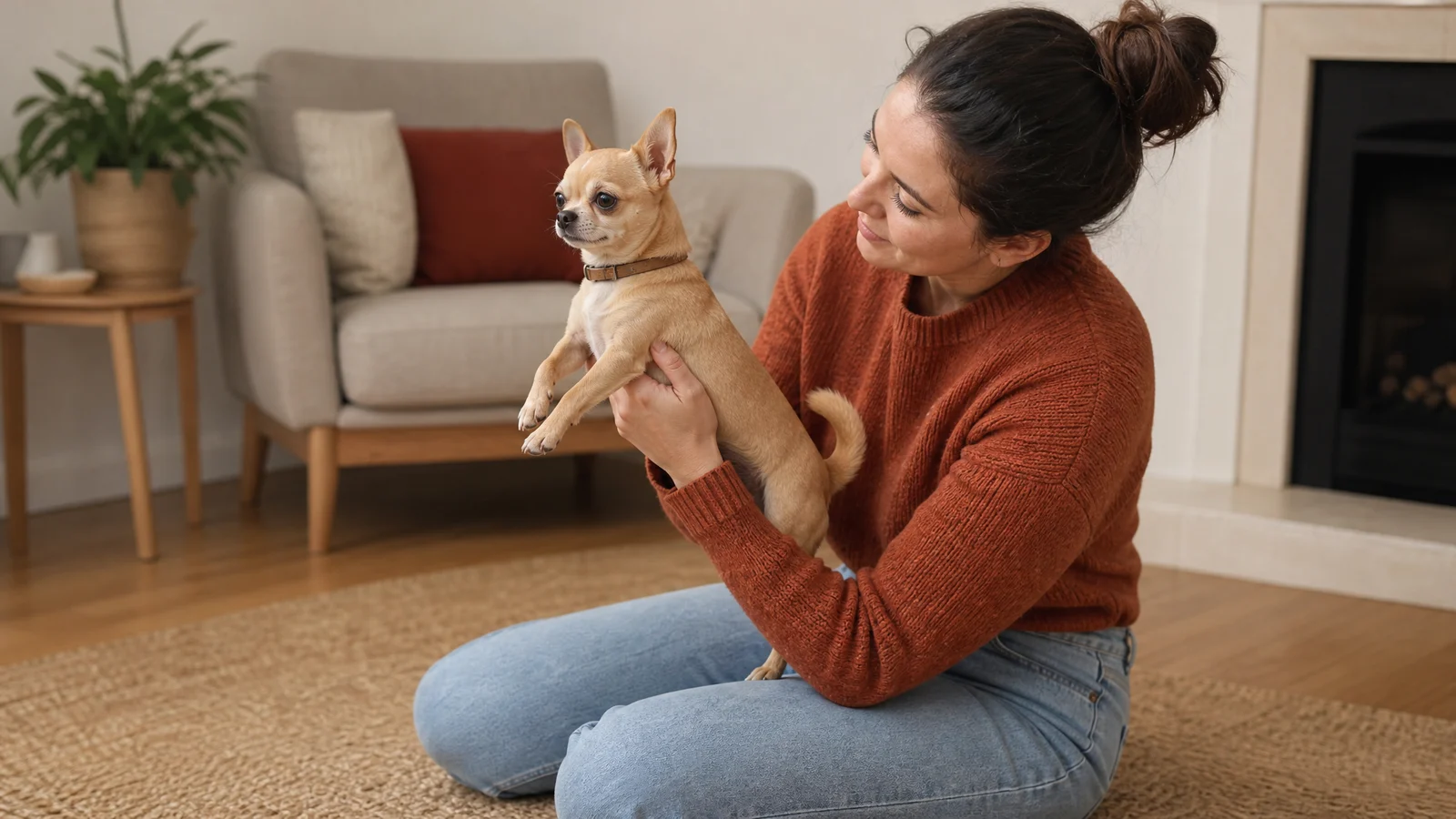 House trainingPicking Up a Chihuahua: Calm Lifts on a Cue
 Bossy with big dogsSocializing a Chihuahua With Kids, Dogs and Strangers
 Hates being picked upChihuahuas That Yelp, Growl or Snap When Lifted