 Chihuahua
Start training your Chihuahua the day they arrive, with the same house rules a big dog would get and rewards cut into crumbs. Do that consistently and you will have an adult who is pleasant company instead of one who runs the house.
The breed gives you a reason not to wait. Chihuahuas seem well aware of how cute they are and learn how to get their way, so an untrained puppy soon discovers that trembling, protesting and a tiny frame buy carrying and forgiveness. Among the 415 Chihuahua owners' accounts we reviewed, many describe praise and reward games teaching new behavior quickly. A mind that learns fast picks up manners as readily as bad habits.
In this article, we'll go through the household agreement and supplies, the rules for day one, housetraining, the first cues, the socializing year and the upkeep of a grown dog.
Train the Household Before Your Chihuahua Arrives
Training begins with the people, so hold a short household meeting before the dog arrives. If one person lifts the puppy onto the sofa and another lifts them off, the puppy learns only that the rules depend on who is watching. In the owner survey on small dogs, more consistent owners had more obedient dogs at every size, and small-dog owners were the less consistent group.
Put the agreement on a single page: which furniture is allowed and how the dog reaches it, which word means which behavior, who hands out rewards, and how visitors should greet. Then gather what the first hour will need:
- A crate or gated playpen with a soft bed, so the puppy can rest without being stepped on or handled constantly.
- Baby gates for stairs, plus steps or a ramp for couch and bed. Toy breeds have finer bones, and a leap that is trivial for a big dog can injure a Chihuahua.
- A well-fitted harness. Many owners walk their Chihuahua in one, and many report dogs who slip out of collars and several harness styles, so budget for a few tries.
- Two or three tiny treat options. Food motivation varies widely: some dogs work happily for plain kibble, others are lukewarm about everything until the food gets richer.
Teaching at Chihuahua Height
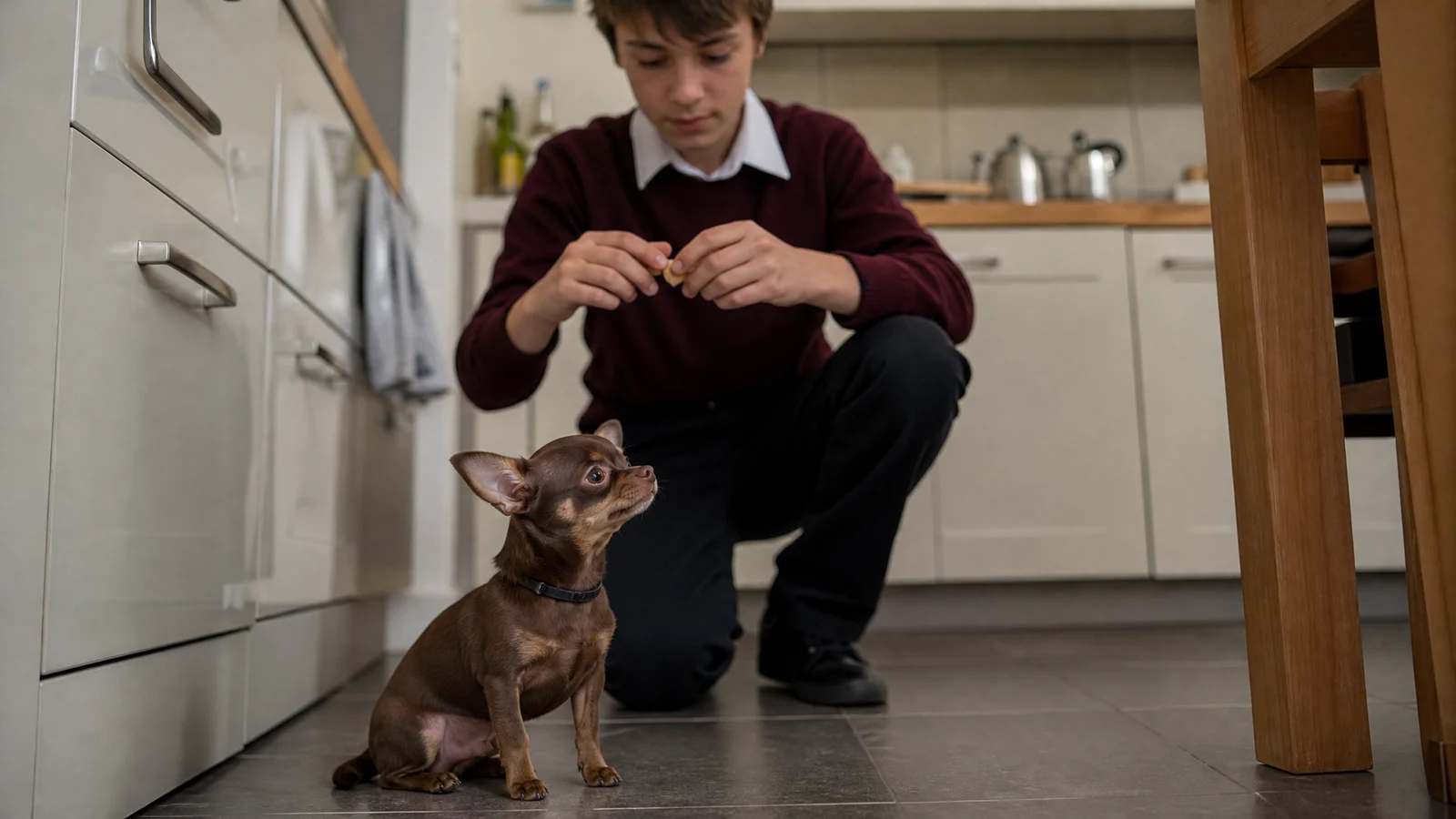
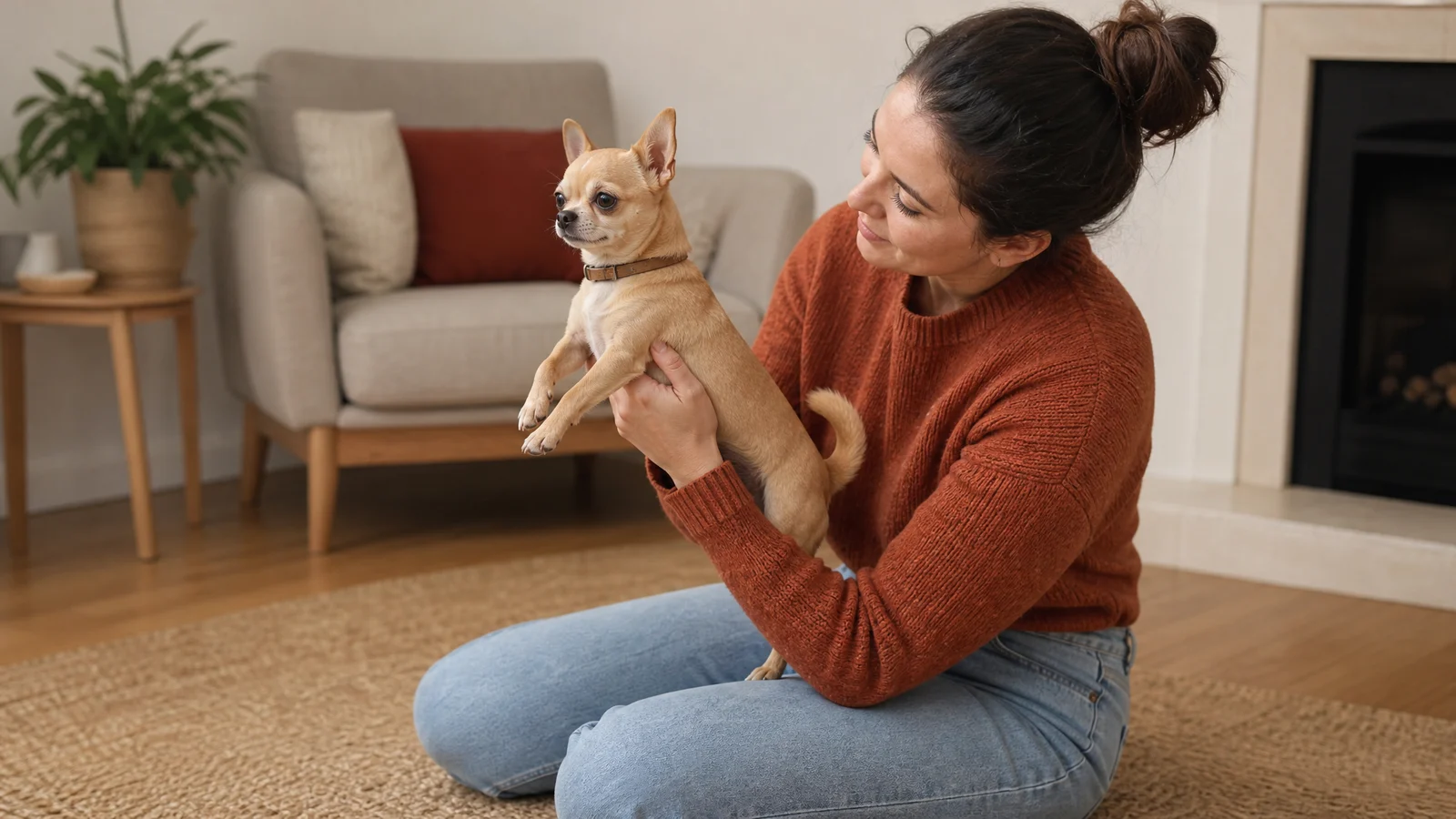
A person looming over a dog is uncomfortable for most dogs, and small dogs feel it far more. Sit on the floor for lessons, or place the dog on a couch cushion or low platform so your hands and face stay close to their level. For leash practice, spread a soft treat on a long spoon or spatula and lower it down to the dog. That way you can pay for a good position without folding yourself in half.
Another handy skill is teaching the dog to place both front paws on your leg, so treats travel from your hand to their mouth without a deep stoop. Lessons given at the dog's own height are easier for them to absorb.
Which House Rules Should Training Cover on Day One?
All of them, set at the adult standard. The principle is that a Chihuahua puppy should never be allowed to do anything that would be unacceptable in an adult. A puppy who jumps on guests, begs at the table or claims the sofa with a stare is not passing through a cute phase. They are rehearsing, and each success makes the habit sturdier. This is what the first day's rulebook looks like:
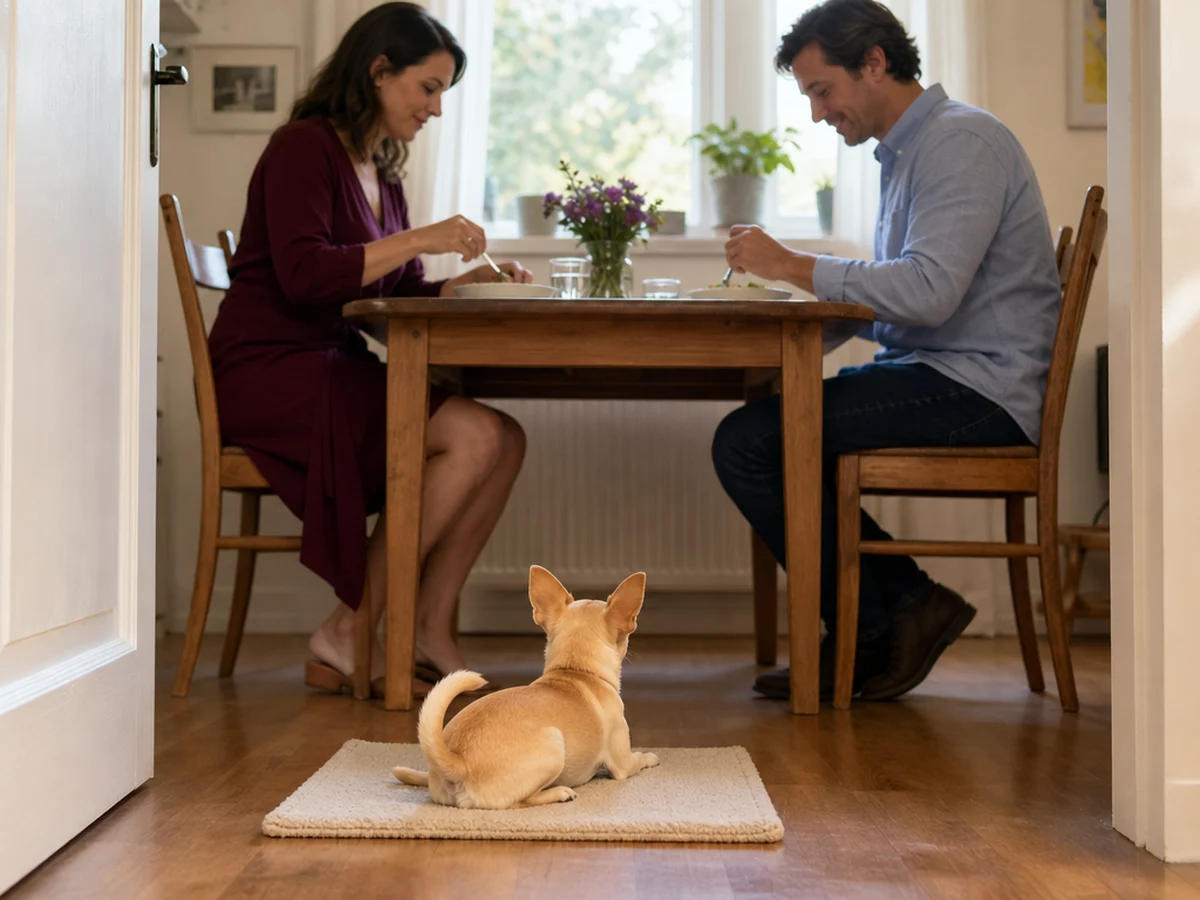
- Begging never pays, and settling on a bed while the family eats is what earns a crumb.
- Greetings happen with four paws on the floor, and jumping makes everyone calmly turn away.
- The sofa is reached by invitation and by steps, never by demand.
- Food and toys can be traded for a treat, so a reaching hand always means good news.
- Being picked up is announced with a word and followed by a treat, so lifting never startles.
Plenty of people say a tiny dog is simply like that and cannot be held to the same standard. We disagree. Small dogs are dogs, not accessories, and small breeds tend to get less training time than big ones, which is exactly why untrained ones collect more behavior problems.
The second reflex is to answer a bad habit with a time-out. Many owners who tried time-outs, a kennel used as a time-out, or a plain "no" for snapping report that none of it stopped the behavior. Some dogs became more wound up, some puppies barked harder, and several grew to dislike their kennel.
Research points the same direction. A study of 92 companion dogs found that dogs from reward-based training schools displayed fewer stress behaviors and had smaller cortisol increases after sessions. A veterinary behavior society notes that several survey studies found higher obedience with reward-based methods. And in the small-dog survey, dogs punished more often were more anxious and quarrelsome, with a bigger effect in smaller dogs.
So when a rule slips, remove the chance to repeat the habit, teach the alternative and pay well for it. If a puppy snaps when asked to leave the sofa, a small treat offered for hopping down is a sensible reward-based trade, and calm, predictable handling can follow once they are on the floor.
Housetraining Your Chihuahua Through the First Weeks
A small body cannot hold on as long as a large-breed puppy's, so your schedule needs shorter gaps between trips than a generic puppy chart shows. The method is the one used for any dog, supervision plus consistency, just with more repetitions. Go to the same spot after waking, after meals and after play, and whenever the puppy sniffs and circles. Reward on the spot, while they are still standing there.
Pads or a litter box suit some homes, and the rule is the same: choose one place and reward it every time. An accident behind a chair is easy to miss on a dog this size, so keep the puppy in sight or inside a gated area whenever you cannot watch. Regular veterinary visits belong in the plan from the start, and a trained dog who suddenly begins having accidents deserves a call sooner.
Making the Crate a Good Place
Treat the crate or pen as the nicest room in the house. Serve meals there, drop treats in while the puppy is looking elsewhere, and let naps happen there. Some owners found that a kennel used for time-outs turned sour, so keep yours for good things only. One steady sleeping spot also makes nights simpler.
A gated room or a playpen with the door left open is another setup to consider, especially for a dog who is uneasy in a closed crate. Either works if the dog is calm and safe. A newcomer who hesitates can be given time to come out on their own, with a treat as encouragement, so the crate stays a place they feel free to leave.
Tiny Rewards That Add Up
Food, toys and praise work because a behavior followed by something the dog values tends to be repeated, and many small payments teach more than one rare jackpot. Chihuahuas learn quickly when treats are involved, but a dog of six pounds or less has no room for extras. Cut pieces to crumbs and count them as part of the day's meals, because some Chihuahuas gain weight easily and extra weight shortens life more in the smallest dogs.
This is general information, not a feeding plan. Your veterinarian can set a daily food amount for your dog and tell you how much of it can go to training treats.
Treat-Based Training for Sit, Name and Come
Keep lessons cheerful, brief and at dog level, and finish each one on a success. A few terms will help. A cue is the signal you give, a word or a hand movement. A lure is a treat held at the nose to guide the dog into position, then faded once they understand. A marker is a short word such as yes, and it works like a camera flash: it captures the exact instant the dog got it right, and the treat follows.
Teaching the Name
Say the name once, brightly. When the puppy glances over, mark and reward. Repeat in different rooms and while they are busy, until hearing the name predicts something good. Owners who renamed rescues report the dogs learned the new name within days, which shows how fast a name takes hold when it reliably pays.
Sit With a Crumb
Hold a crumb at the nose and slide it slowly back over the head. When the rear lowers, mark and reward. Once that is easy, ask for sit before meals, at doorways and for greetings, so the cue earns its keep. Owners also report that heavy praise and reward games got dogs climbing onto furniture and steps by themselves, so the same patience teaches a ramp.
Recall That Pays
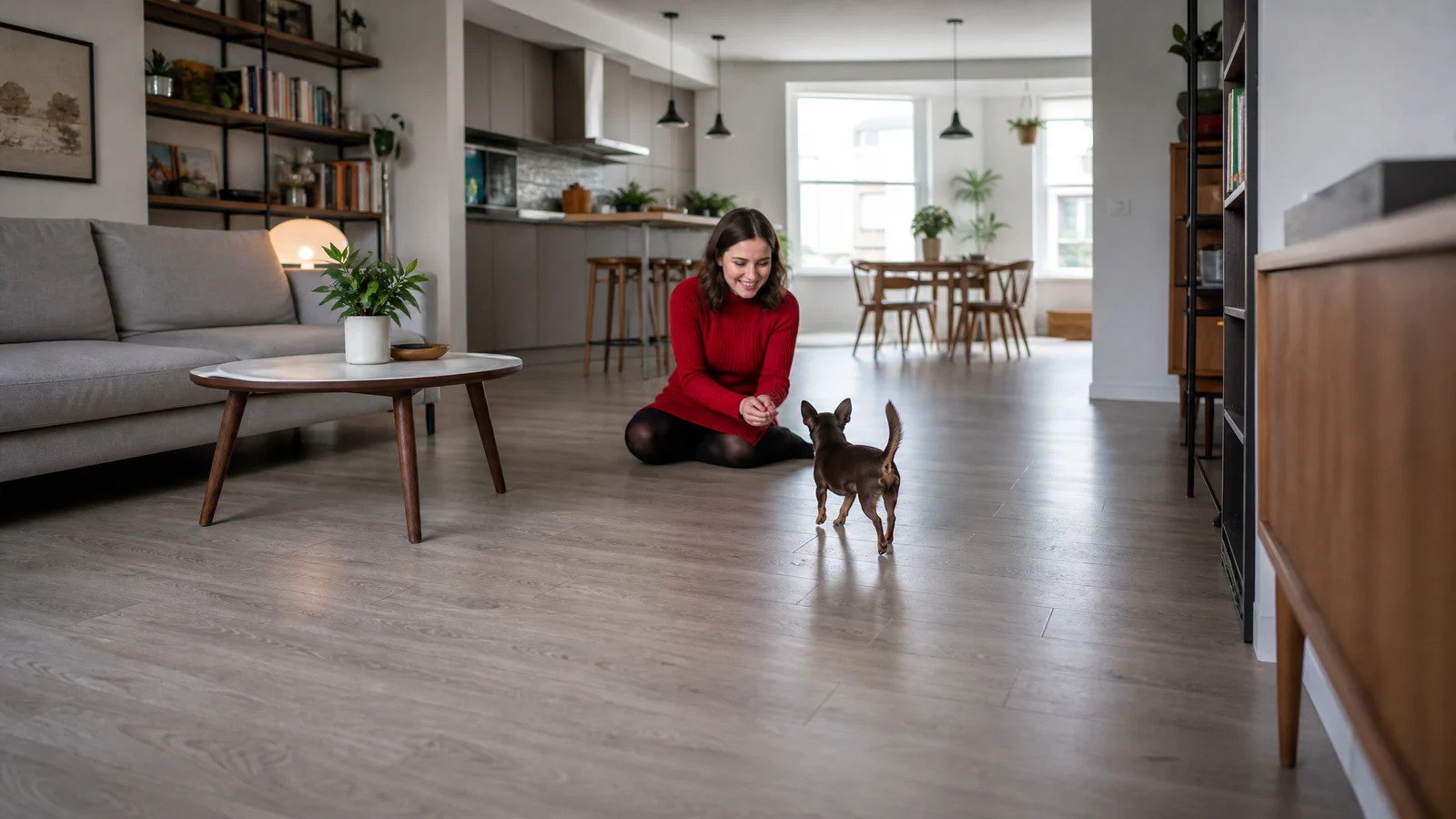
Start in a hallway. Call cheerfully, step back, and pay generously when the puppy arrives, so your voice always predicts good news. Then practice during play: call, reward, and release them back to the game, so coming to you and returning to fun feel equally good.
Small dogs in the survey were less reliable on Sit, Down and Come than big ones. The remedy is more practice, not lower standards. Use these early weeks to let the puppy wear the harness and take a few steps on a leash too, since a small, fragile dog belongs on a leash in every public place.
Socializing Your Chihuahua Through the First Year
Socialization means building good associations with the people, places, animals and handling the dog will meet as an adult. Toy breeds need as much of it as any dog, and sheltering them from other dogs backfires. A puppy class suits a Chihuahua well. Ask the instructor how play will be kept to suitable sizes, and look for a room where the smallest puppy can duck out of the crowd.
Handling, Visitors and First Outings
Touch paws, ears and mouth briefly and follow each touch with a treat. Say a word before you lift the puppy and offer the choice of being picked up whenever it is safe, since not every small dog enjoys it. Strangers who scoop up a dog can frighten them, so coach visitors to greet low and let the dog come to them. Move slowly around them too, because quick, unexpected movements can distress this breed.
Begin outings at quiet times and walk along the edge of crowds so nobody steps on a tiny paw. If the puppy starts to shut down, back up to where they felt confident. Lip licking and turning away deserve the same respect as a growl. A confident, curious dog is the breed ideal, so a fearful Chihuahua is a confidence-building project, and our guide to helping a scared or nervous Chihuahua goes deeper.
Meeting Other Dogs
Choose partners of similar size, because even a friendly paw-swipe from a big dog can injure a small one. A well-socialized dog does not need to greet everyone. Practice at a distance and reward the puppy for looking at you while another dog passes. Pause play regularly so they check back in with you.
Adolescence and Walking Habits
Adolescents often seem to forget what they knew and test the rules. Go back a step, raise the value of the rewards, and leave the rules exactly where they were. Walking quirks tend to appear around now as well.
Owners report walking capacity from half a block to hikes of 7 miles or more, and size does not predict it. Many cap the distance for dogs who would push past their limit, and carry a sling or stroller so the dog can ride part of the route. Dogs who refuse to leave home but speed up heading back often walk once carried a short way first, and cold or rain stops many.
Barking and lunging at passers-by is common, especially in rescues, even in dogs who are sweet at home. Triggers can be oddly specific: hoods, wheels, scooters, eye contact. Owners who improved things gave a treat before the dog reacted, rewarded quiet passing, and worked gradually from home to quiet places to nearer triggers.
Treats fail once a dog is already over the edge, so timing is everything. For the instincts behind this, see common Chihuahua behavior problems and the instinct behind each.
Do Chihuahuas Stay Trainable as Adults?
Yes. The breed has an independent streak but is happy to please when asked, and trainability scores a middling 3 of 5. Nothing in how dogs learn closes at a certain birthday. The difference is that an adult arrives with habits, so you are retiring old payoffs and building better ones. A behavior that has worked for years must stop working while the alternative pays more.
Snapping is a good example. Owners describe it over resting places, such as being moved off the sofa or lap when tired, and around handling that worsened after unpleasant experiences like shots or a rough nail trim. Predictable handling and trading a small treat for giving up the spot are sensible reward-based steps, and patience matters as much as either. Our guide on how to stop a Chihuahua from biting covers the full approach.
Rescues deserve extra patience. Owners describe adopted dogs arriving timid or shut down and opening up over weeks to a year. If a dog distrusts one person, having that person deliver meals and treats calmly and predictably is a sensible reward-based way to build trust, and it works best when given time.
Reactive behavior improves gradually. Reports range from about a month to several months to years of daily reinforcement, so measure progress against your own dog, not the calendar. If training becomes a struggle, a trainer who uses positive reinforcement is a sensible next step.
Keeping Adult Chihuahua Training Sharp
Upkeep rests on shared activity and consistency. In the small-dog survey, the more training and play owners and dogs did together, the more obedient the dog appeared, and small-dog owners spent significantly less time on it. Short refreshers on name, sit and come, in new rooms and then outdoors, keep skills alive, because a cue that works in the living room often needs rebuilding in the park.
New cues keep a clever dog interested. Tricks, mat settling and using steps are easy additions. Agility, obedience, rally and tracking are all open to the breed, and a good-manners award makes a practical goal, though aptitude varies from dog to dog. For ideas that suit small bodies, see how much exercise a Chihuahua needs, plus brain games.
Slips will happen. A guest feeds the begging dog, or a holiday loosens the routine. Return to the rules, reward the right behavior right away, and ask everyone to hold steady. Pain can look like disobedience, so regular veterinary visits are part of training too.
Your Next Two Weeks of Training, Planned Out
This plan fits a new puppy or a newly adopted adult. Week one is for routines, the name and sit, and week two turns to rules, handling and short outings. The table lays out the order, and you should move at the pace your dog sets.
| When | Focus |
|---|---|
| First few days | Set up the crate or pen, start the potty routine with a reward at the spot every time, and find the treat your dog likes best. |
| Rest of week one | Teach the name and sit at dog level using crumbs from the day's food, and begin touching paws and ears with a treat after each touch. |
| Early week two | Apply the day-one rules everywhere: no begging, no jumping, sofa by invitation, announced pick-ups. |
| Midweek two | Add hallway recall games and brief indoor sessions in the harness. |
| End of week two | Take short outings to quiet places, stay at the edge, and reward calm looks at new things. |
One idea runs through all of it. A Chihuahua learns quickly what works, so rules held consistently from the first day, with rewards for good choices, shape a well-mannered adult who never needed to try their luck.
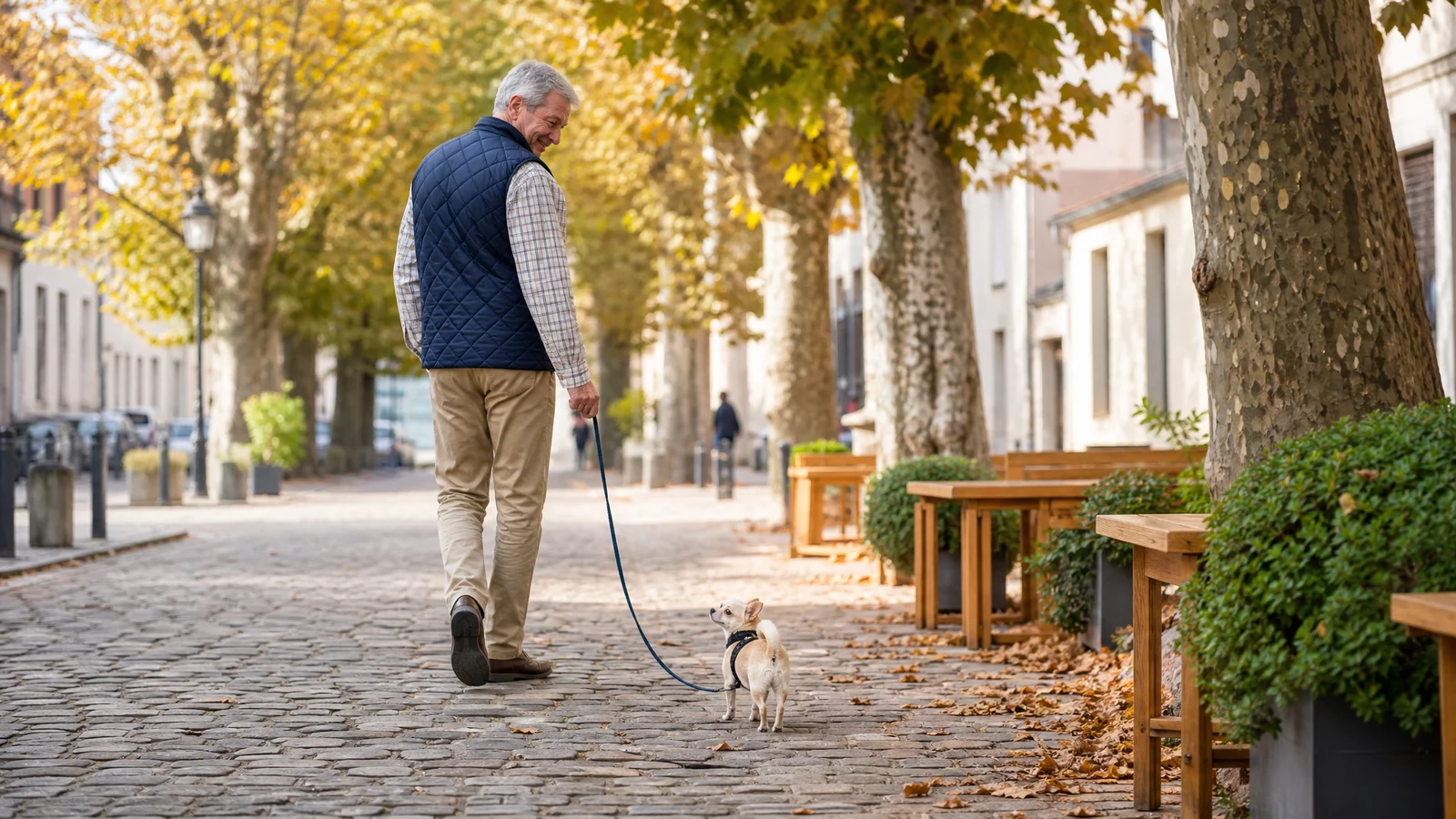 Training basicsLeash Training a Chihuahua: Pulling, Lunging and Loose-Leash Walking
 House trainingPicking Up a Chihuahua: Calm Lifts on a Cue
 Bossy with big dogsSocializing a Chihuahua With Kids, Dogs and Strangers